FIELD NOTES
Impact Stories
On the Ground, Off the Grid
We share what we’re learning in the field: press announcements, technical developments, workshop highlights, and stories from communities rebuilding with Footprint Project.



Spotlight
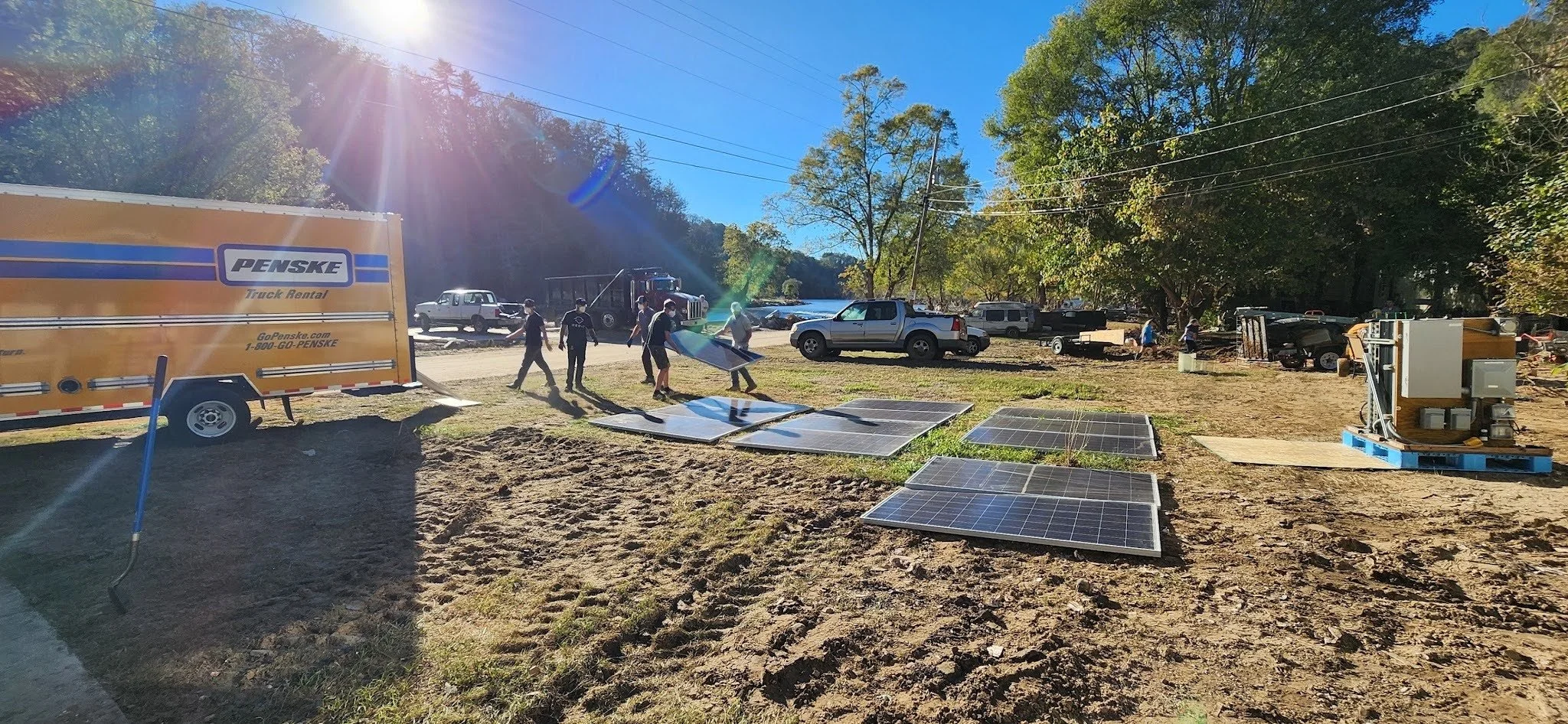
Two years ago, Hurricane Helene cut Western North Carolina off from power, water, and one another. Fire stations we kept running on temporary solar now have permanent microgrids. Donated equipment has reached more than 120 individuals and families, and many of the people we met in those first days are now our partners. Here's a look back at two years of renewable response and recovery, from the first solar generators in shelters to the resilience hubs powering communities today.
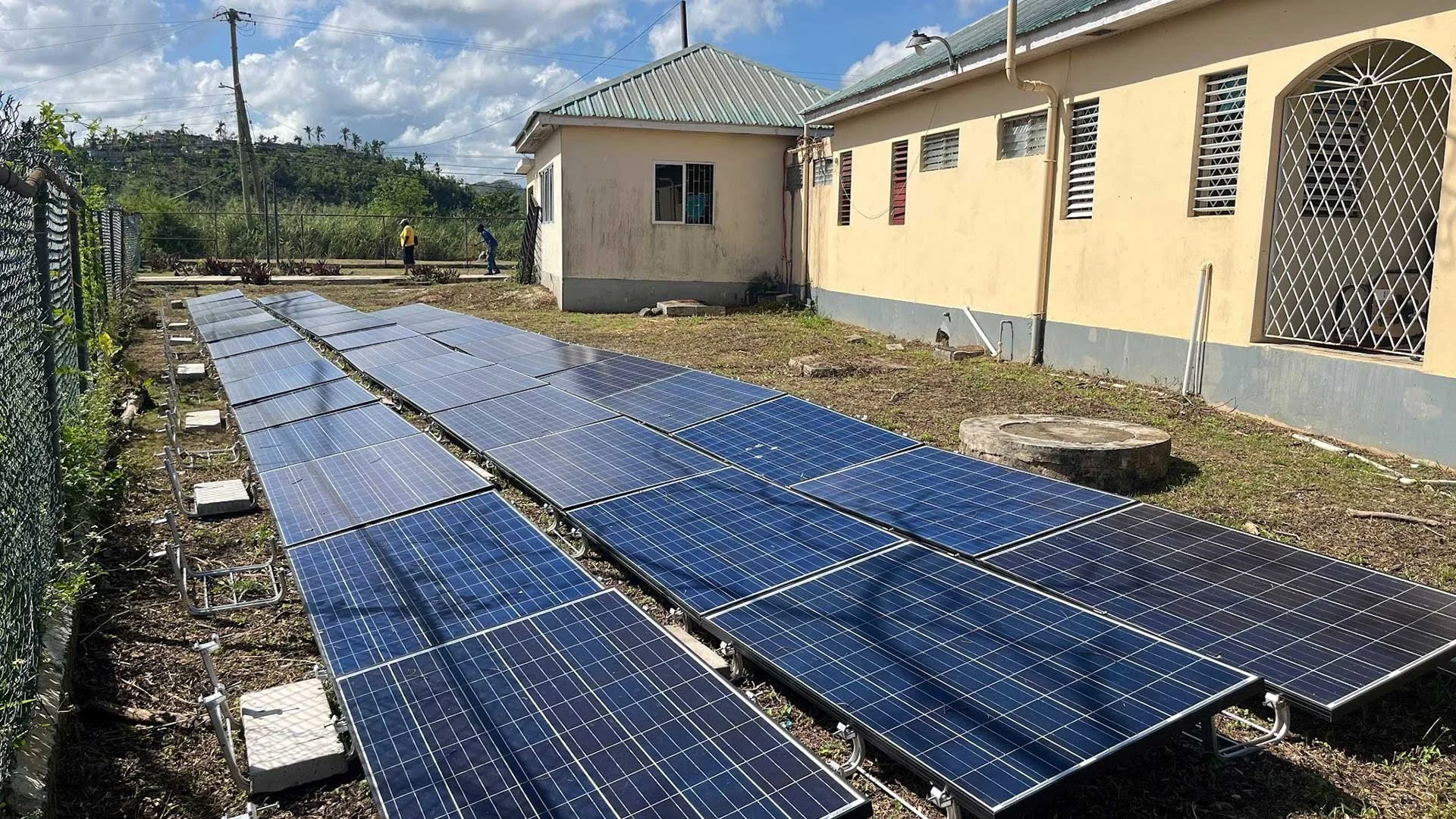
Late summer is the start of our busiest season. By the last week of August 2026, we received disaster support requests from communities reeling from fires in Washington and Nevada, floods in West Virginia, storms in Tennessee, and Hurricane Lala in Hawai’i. Read more about our work in response and resilience with clean energy.
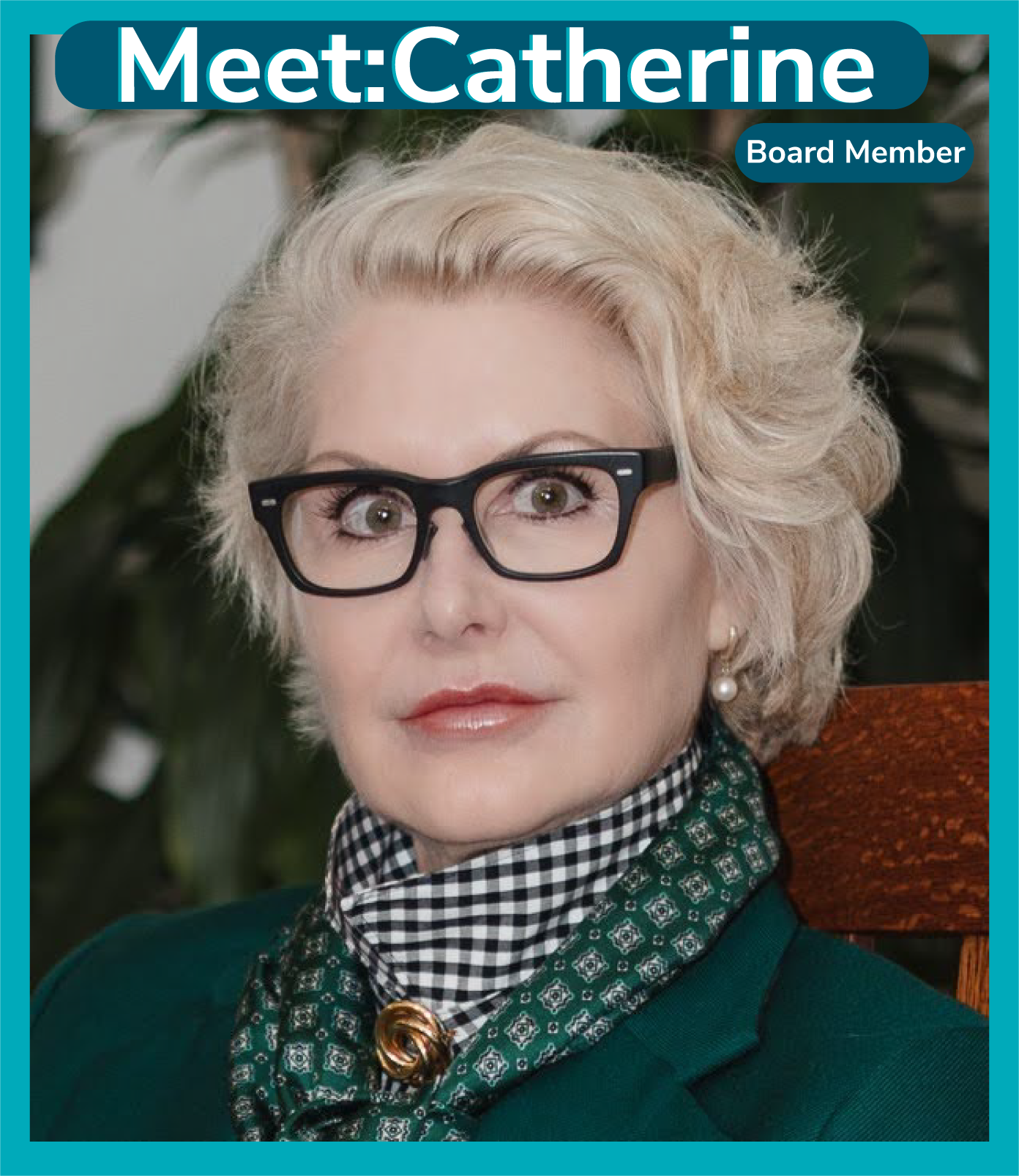
Catherine Von Burg is an entrepreneur, impact investor, and former CEO of SimpliPhi Power, the clean energy storage company she built and led to acquisition in 2021. She now advises and invests in cleantech companies driving the energy transition, with a career spanning policy, engineering, and equitable access to power.
![Situation Report: Venezuela Earthquakes Response [07/27/2026]](https://images.squarespace-cdn.com/content/v1/5b62523bc258b48b233cabe6/1785357179270-UPNOC6MPJHYMS9J9JFMU/7%3A27%3A2026+SIT+REP+Cover+PHoto.jpg)
Footprint Project's Rae Goldman, Associate Director of Operations, and Gabriel Pacheco, Caribbean Program Manager, arrived in Venezuela in early July to lead the response on the ground, focused on getting reliable power to families and institutions — including the churches and community foundations described below — that the broader response hasn't yet reached. Since activating on June 25, our Footprint Project staff, and a growing group of local volunteers, have logged more than 919 combined hours assessing sites, delivering equipment, and building the community partnerships needed to get reliable power where it's needed most.
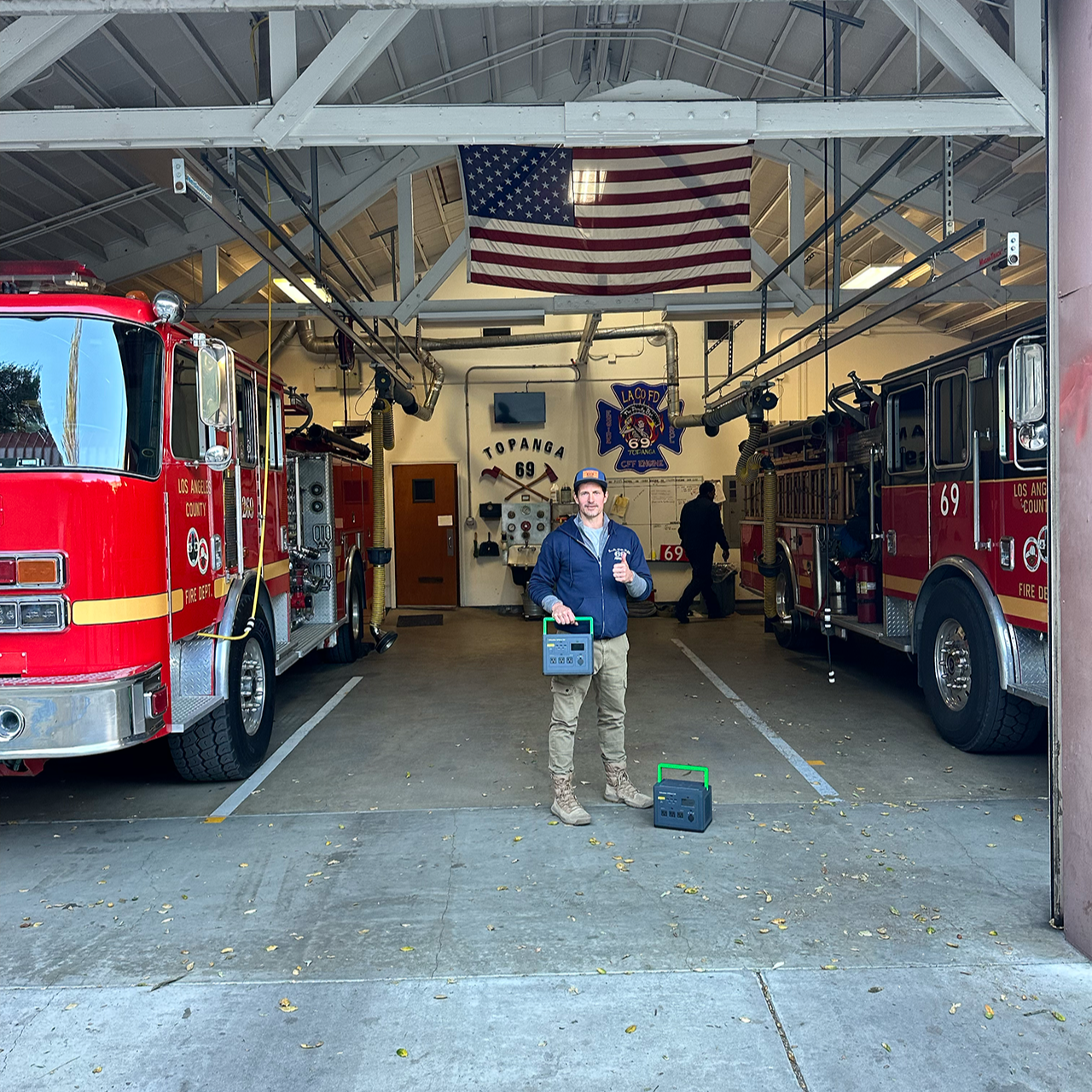
As multiple wildfires burned across Los Angeles County in early 2025, We partnered with the local film industry and the National Forest Service to replace 4 large diesel generators with solar and battery energy storage systems.
A team led by Footprint Project and Overdrive Energy Solutions worked with the U.S. Forest Service to replace diesel generators with Battery Energy Storage Systems (BESSs) at the Eaton Fire Incident Command (IC) Post at the Rose Bowl Stadium. The Rose Bowl Stadium and surrounding parking lots had been turned into a massive incident command post. Agencies involved included LA Fire, LA County Fire, CAL Fire, LAPD, and the U.S. Forest Service. Because the Eaton Fire was burning on federal forest service land, the U.S. Forest Service was leading the operation. During this crisis, the stadium turned into a staging ground for over 4,000 firefighters, national guard troops, and first responders from city, state, county, and federal agencies.
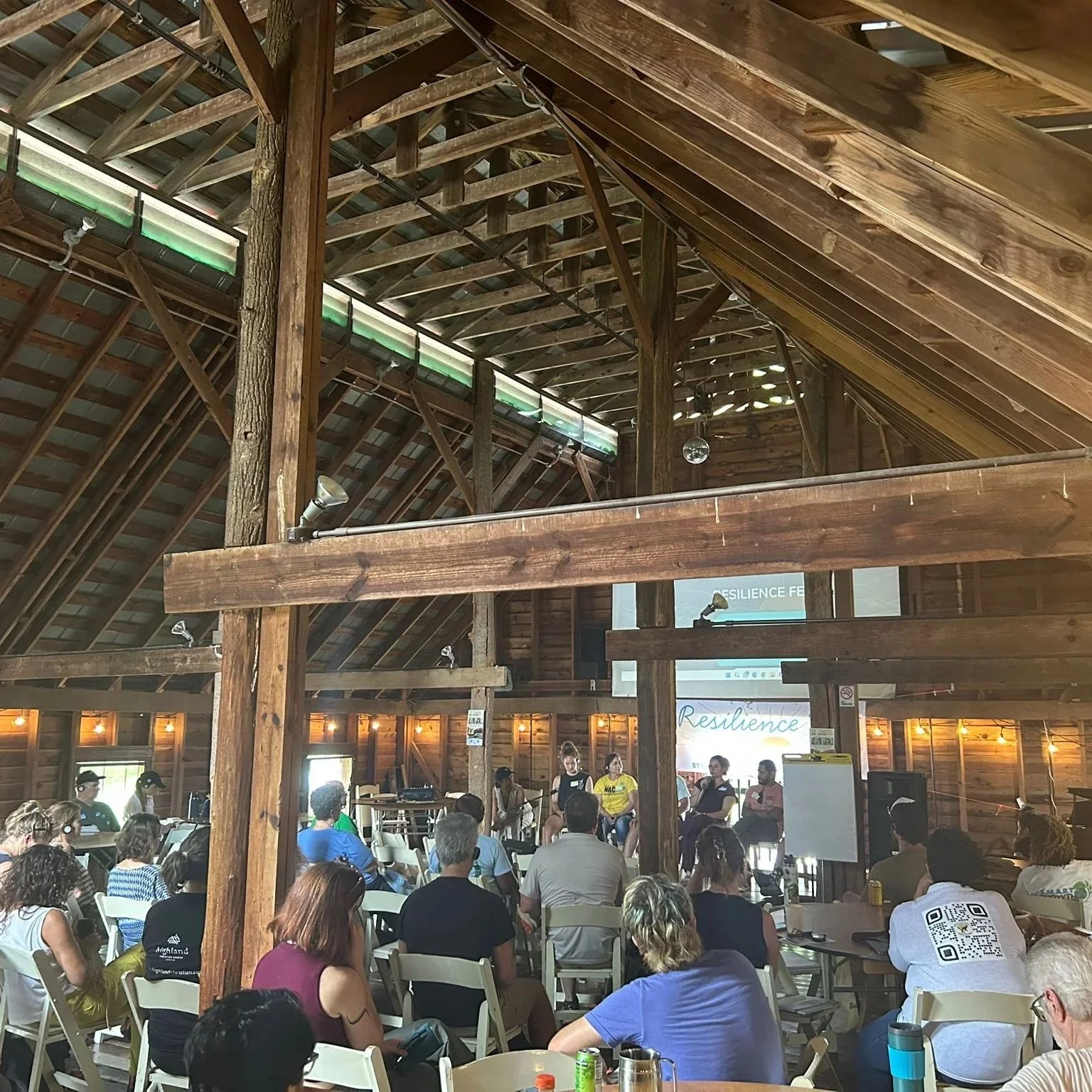
On July 30-31, 2025, we gathered 200 folks from 120 organizations within our community of responders in Black Mountain, NC, for the inaugural Resilience Fest. Not quite a conference and more than just a festival, this event brought together individuals and organizations with firsthand experience in sustainable, community-based disaster response and recovery. We met, laughed, cried, learned, danced, trained, shared, and prepared.
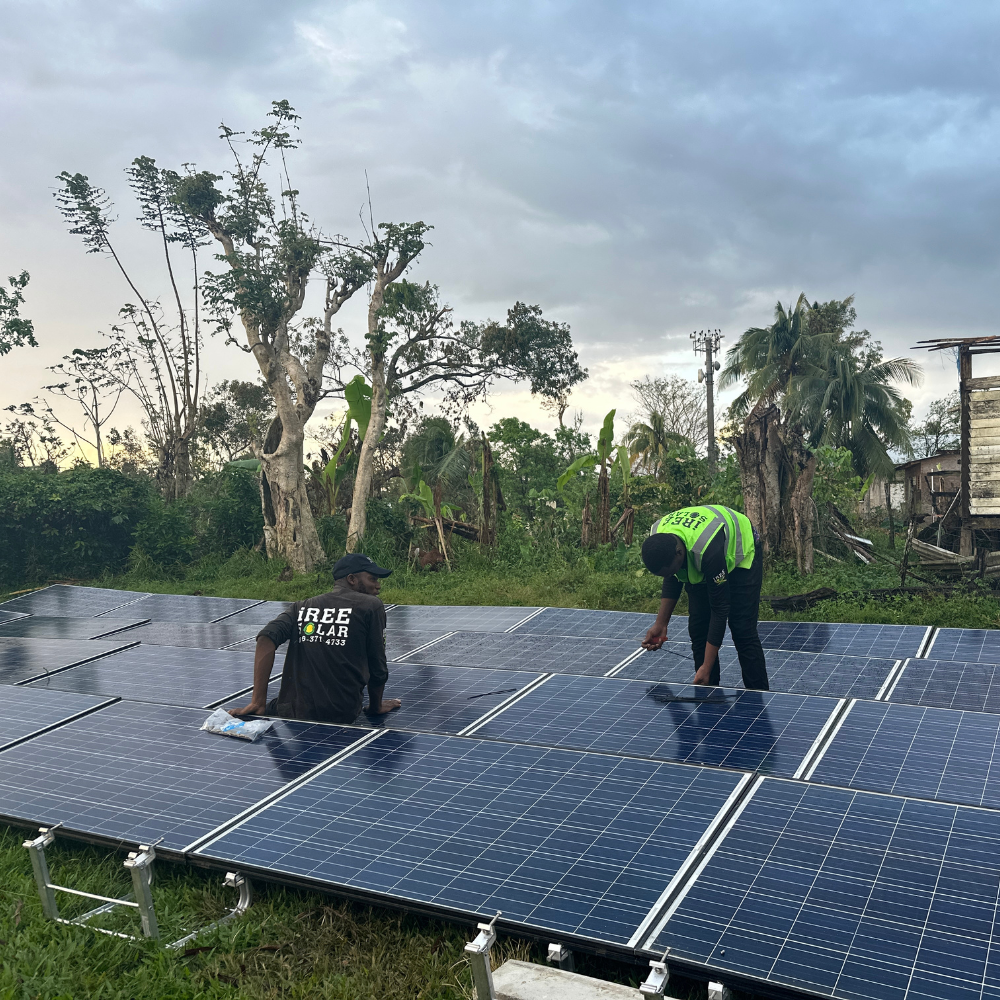
Hurricane Melissa closed out 2025 as a late-season hurricane -- the strongest storm to ever strike the island nation of Jamaica. This was our first in-person international response where we sent staff, volunteers, and renewable response technologies to respond to the devastating Category 5 storm. We worked with several local community partners and international humanitarian relief organizations to provide lifesaving communication hubs and mobile solar microgrid power for health clinics.
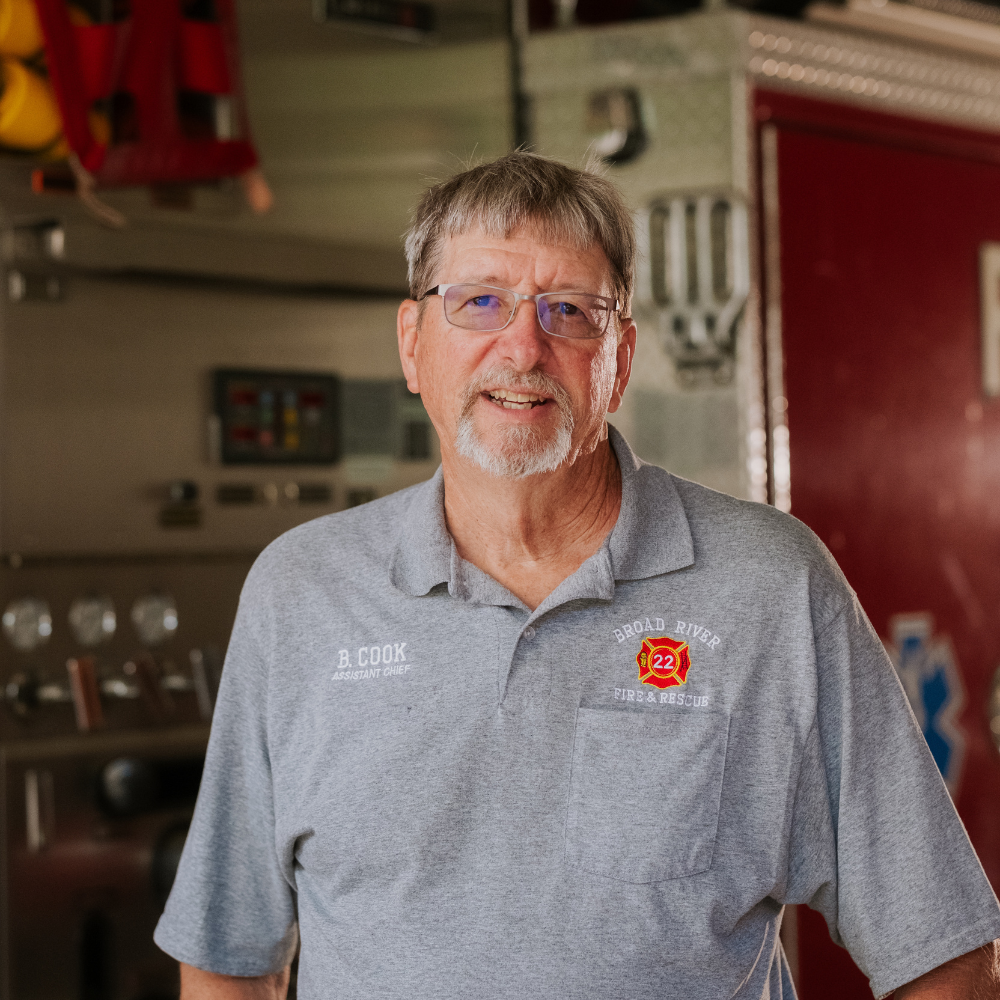
Before, powering Broad River Fire Department's Shumont Substation during outages meant relying on loud, polluting gas generators that needed constant refueling. Now, a solar microgrid powers the station and has created a resilience hub that's no longer reliant on the main electrical grid or gas generators. Community members can rest assured that they have a reliable place to go for clean water, emergency communications, and refuge when facing a natural disaster. Solar power serves as an integral tool to keep the fire department up and running.
Rapid Disaster Response
Two years ago, Hurricane Helene cut Western North Carolina off from power, water, and one another. Fire stations we kept running on temporary solar now have permanent microgrids. Donated equipment has reached more than 120 individuals and families, and many of the people we met in those first days are now our partners. Here's a look back at two years of renewable response and recovery, from the first solar generators in shelters to the resilience hubs powering communities today.
Late summer is the start of our busiest season. By the last week of August 2026, we received disaster support requests from communities reeling from fires in Washington and Nevada, floods in West Virginia, storms in Tennessee, and Hurricane Lala in Hawai’i. Read more about our work in response and resilience with clean energy.
Footprint Project's Rae Goldman, Associate Director of Operations, and Gabriel Pacheco, Caribbean Program Manager, arrived in Venezuela in early July to lead the response on the ground, focused on getting reliable power to families and institutions — including the churches and community foundations described below — that the broader response hasn't yet reached. Since activating on June 25, our Footprint Project staff, and a growing group of local volunteers, have logged more than 919 combined hours assessing sites, delivering equipment, and building the community partnerships needed to get reliable power where it's needed most.
As multiple wildfires burned across Los Angeles County in early 2025, We partnered with the local film industry and the National Forest Service to replace 4 large diesel generators with solar and battery energy storage systems.
A team led by Footprint Project and Overdrive Energy Solutions worked with the U.S. Forest Service to replace diesel generators with Battery Energy Storage Systems (BESSs) at the Eaton Fire Incident Command (IC) Post at the Rose Bowl Stadium. The Rose Bowl Stadium and surrounding parking lots had been turned into a massive incident command post. Agencies involved included LA Fire, LA County Fire, CAL Fire, LAPD, and the U.S. Forest Service. Because the Eaton Fire was burning on federal forest service land, the U.S. Forest Service was leading the operation. During this crisis, the stadium turned into a staging ground for over 4,000 firefighters, national guard troops, and first responders from city, state, county, and federal agencies.
Hurricane Melissa closed out 2025 as a late-season hurricane -- the strongest storm to ever strike the island nation of Jamaica. This was our first in-person international response where we sent staff, volunteers, and renewable response technologies to respond to the devastating Category 5 storm. We worked with several local community partners and international humanitarian relief organizations to provide lifesaving communication hubs and mobile solar microgrid power for health clinics.
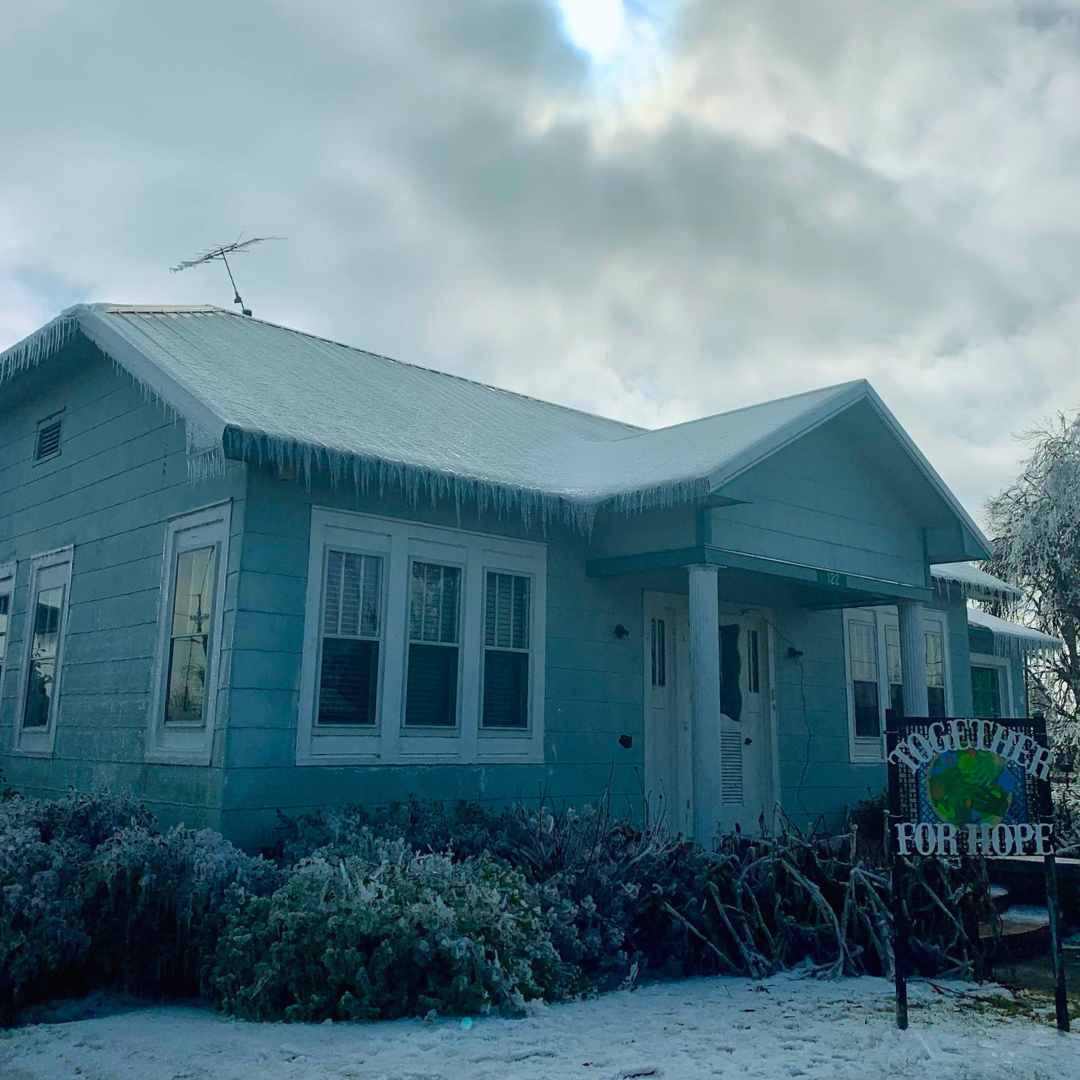
Ahead of Winter Storm Fern, our Appalachia team opened a battery library at our warehouse in Mars Hill, North Carolina, and preemptively supported the Buncombe County Emergency Operations Center, Black Mountain Fire Department, Swannanoa Resilience Hub, and Swannanoa Grassroots Alliance with power for communications at warming centers.
In Lake Providence, Louisiana, a small town in the Mississippi Delta where ice toppled trees and transmission lines, we partnered with Together Louisiana to power a warming shelter, heated blankets, and home health devices like feeding tubes, medical beds, and oxygen machines.
Power can protect communities. It can also terrorize them.

We sat down with PV Magazine to discuss the Maui wildfires, decarbonizing disaster response, and duck curve financing.

Early this spring, a series of tornadoes devastated several communities in rural Mississippi. We joined forces with local partners requesting emergency power: Delta Health Center in Rolling Fork, the Fannie Lou Hamer Center for Change in Eupora, and the Zion Baptist Association in Winona. These hubs would go on to serve as foundations of recovery and resilience in their communities.
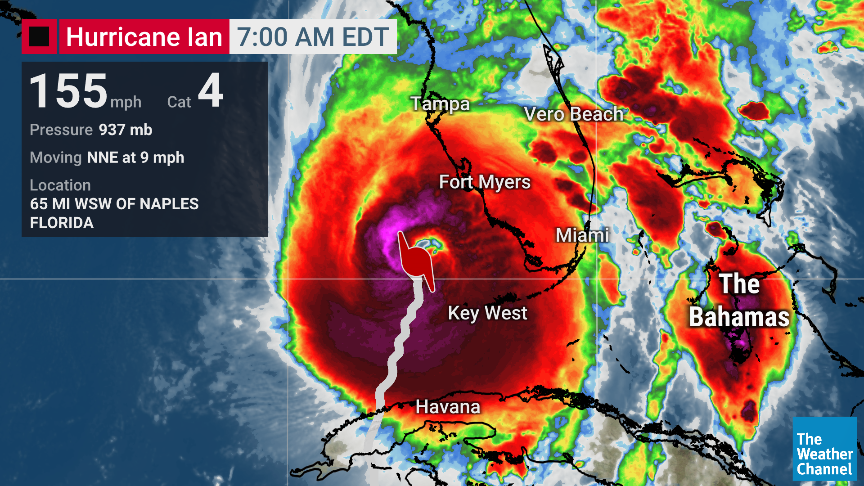
A few months ago, long before a tropical depression that would become Hurricane Ian formed in the Caribbean, the United Methodist Committee on Relief decided to invest in resilient power solutions for their disaster response teams.
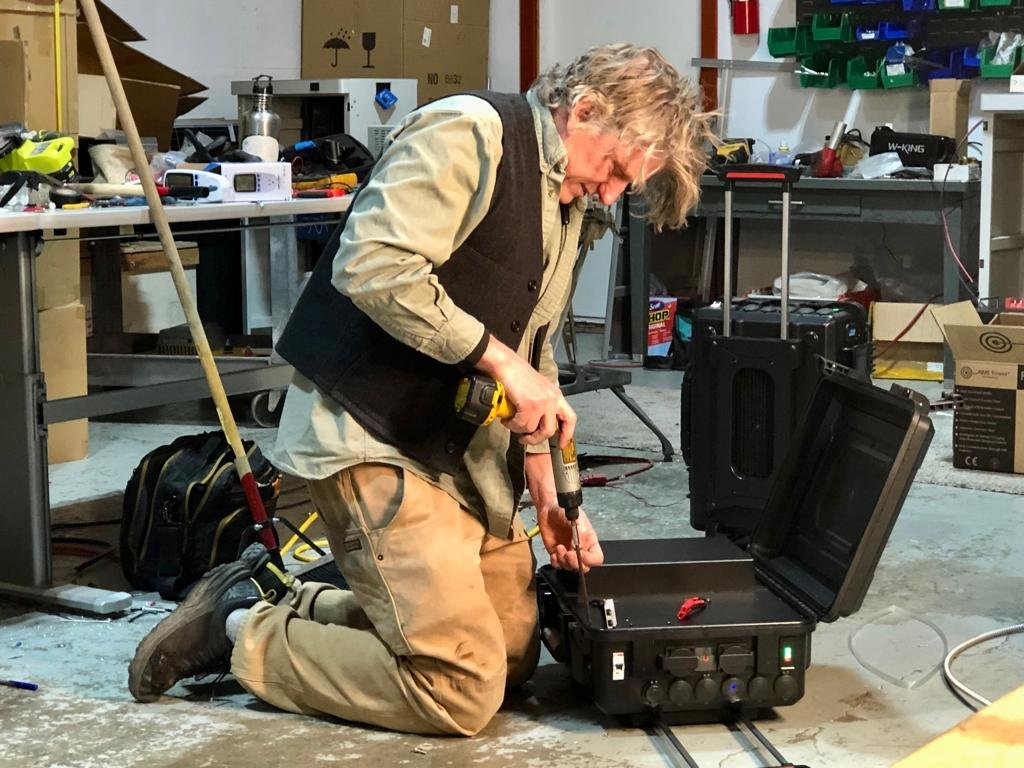
At Footprint Project, we focus on deploying solar generators to disasters in the domestic U.S. and Puerto Rico. Logistics, program sustainability, cultural competency, and overall need have always pointed us in the direction of our own backyard when it comes to building back greener - until Russia invaded Ukraine in February.
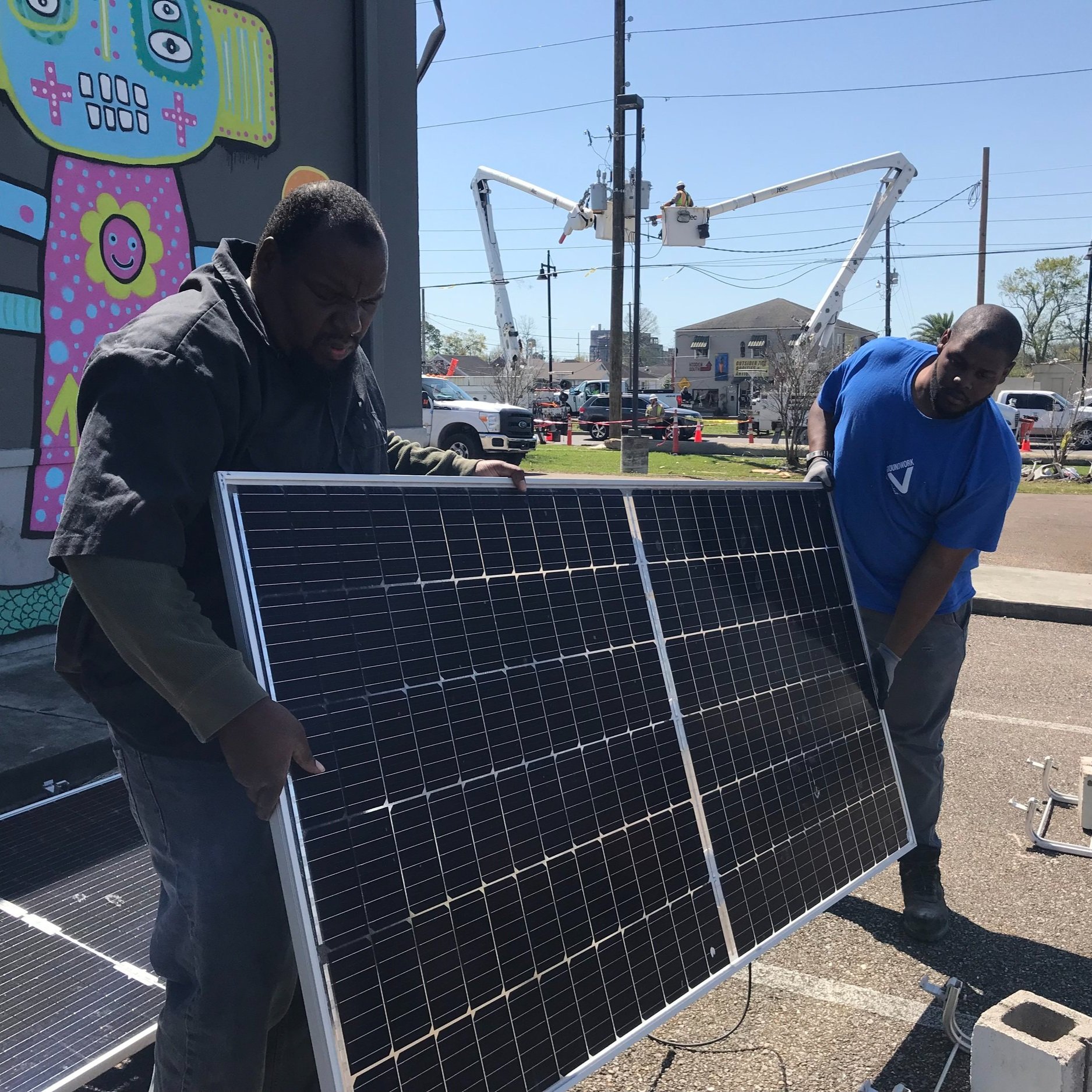
Less than 24 hours after a rare, EF3 tornado hit New Orleans, Footprint Project was on the ground to provide emergency clean power for neighbors in the hardest hit area of Arabi.

While many families were preparing to wind down for the holidays (including the Footprint Project team), tornado sirens rang out in states across the southeastern United States. With at least 88 fatalities, the “Quad-State Super Cell” became the deadliest December tornado event on record in the United States.

Footprint Project has been on the ground in Louisiana since September 3 deploying solar + batteries to communities affected by Hurricane Ida.

In February of 2021, the state of Texas began facing an ongoing crisis of water shortages, power outages, and extreme freezing weather conditions. Two storms- Uri and Shirley, caused record low temperatures reaching -2 degrees F, the coldest Northern Texas has been in 72 years. In response to requests from local responders, Footprint Project activated our Solar Energy Rapid Response Team (SERRT) to support Texas’s recovery. Beginning on February 21st, Footprint Project deployed solar equipment to power mobile communication and remote charging needs for the Information Technology Disaster Resource Center (ITDRC) and Fayette County Emergency Management (FCEM).

As summer comes to a close, a new door opens. The largest mobile solar generator microgrid Footprint Project has ever built is bringing mobile, sustainable power to communities in Puerto Rico.
The completion of this microgrid is crucial for the island’s disaster relief recovery. As back-up diesel generators continue to fail when communities deprived of power need it most, a solar generator microgrid will provide reliable, sustainable energy to people who no longer have to depend on a failing central power source.
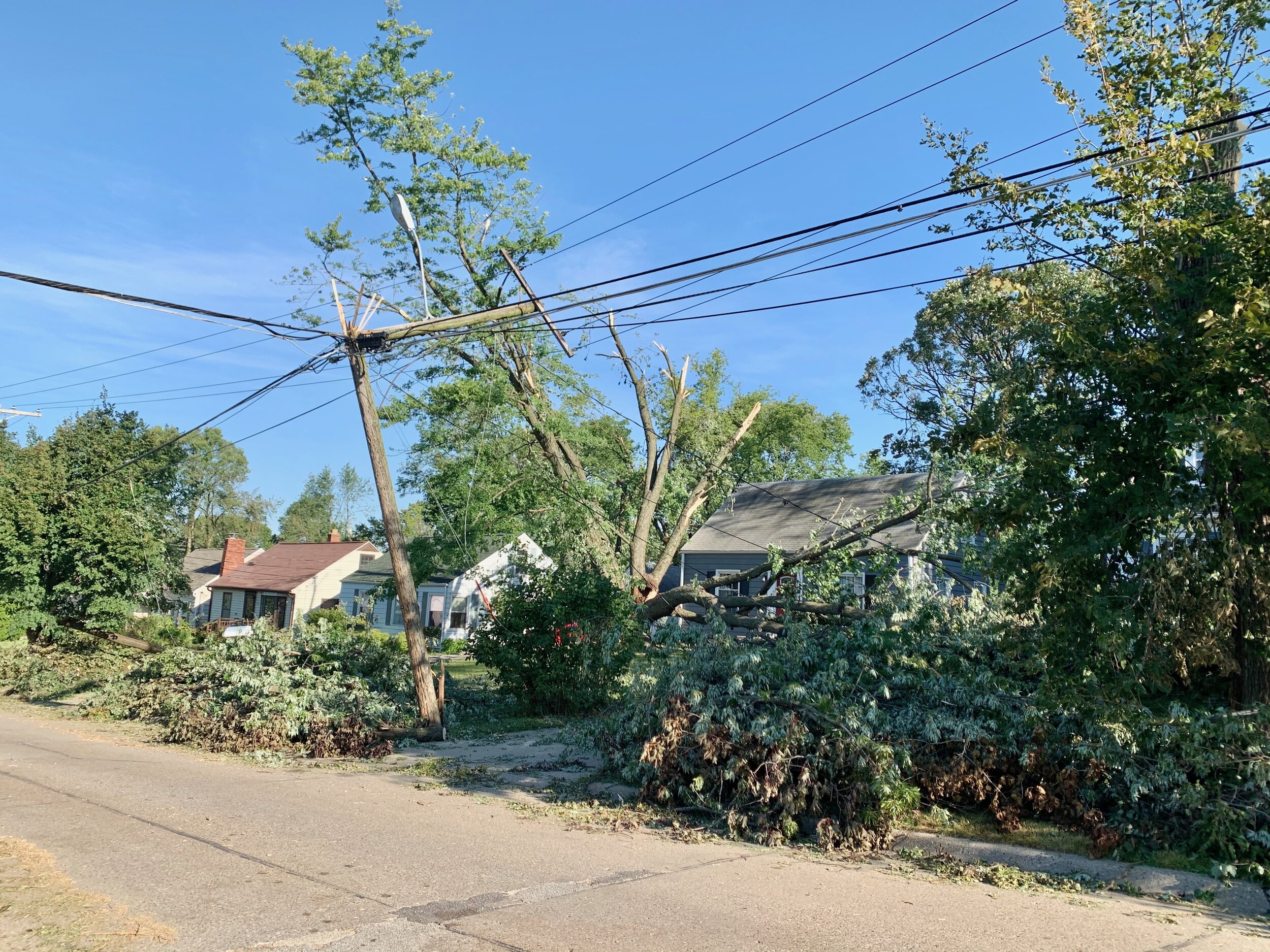
On Monday afternoon, the National Weather Service declared a one out of five “marginal risk” warning. They did not predict that a 100 mile per hour wind derecho would leave over 200,000 citizens in Iowa bereft of power. A derecho is a spanish term meaning “straight ahead,” and is defined as a line of intense fast-moving, damaging windstorms occasionally accompanied by thunderstorms. This type of environmental disaster is notoriously rare and difficult to predict. Although the average wind speed in these straight line storms is 50 to 70 mph, this derecho was particularly fierce, with a record 110 mph, resulting in hurricane force winds in Iowa.
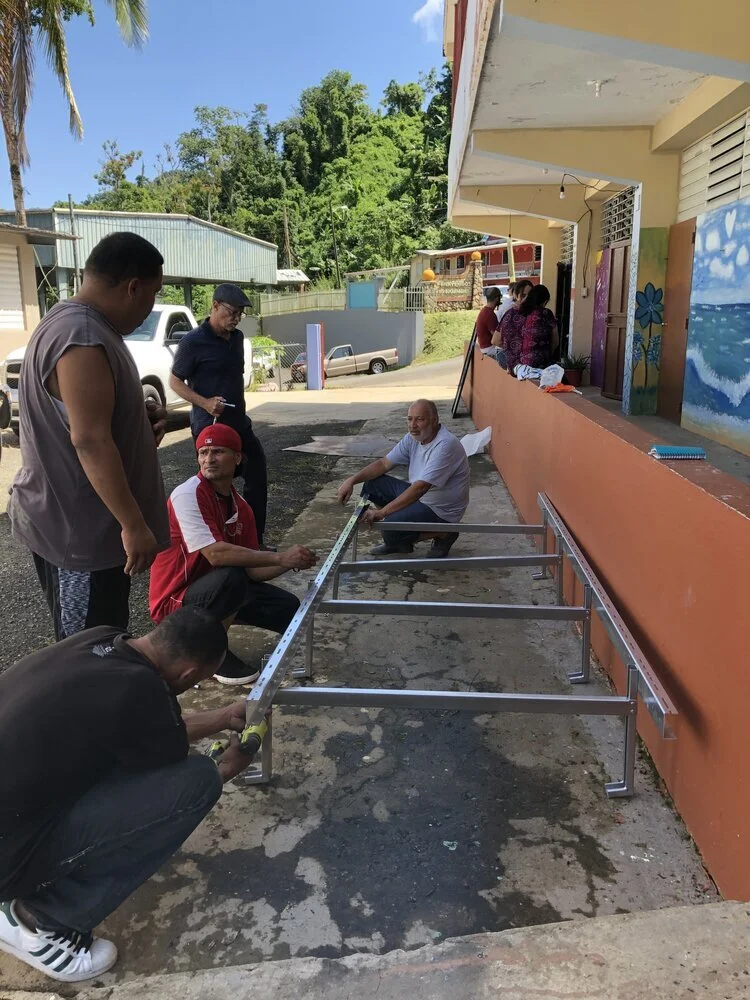
Severe weather forecasts indicate a brutal 2020. The U.S National Oceanic and Atmospheric Administration predicted 13-19 named storms, the majority of which will become hurricanes before reaching landfall*. As resources are already stretched thin in response to COVID-19 and the economic fall-out, first responders are concerned about what this means for disaster relief in places that are still recovering from past environmental emergencies. Recovery has been especially difficult on the islands of Puerto Rico.
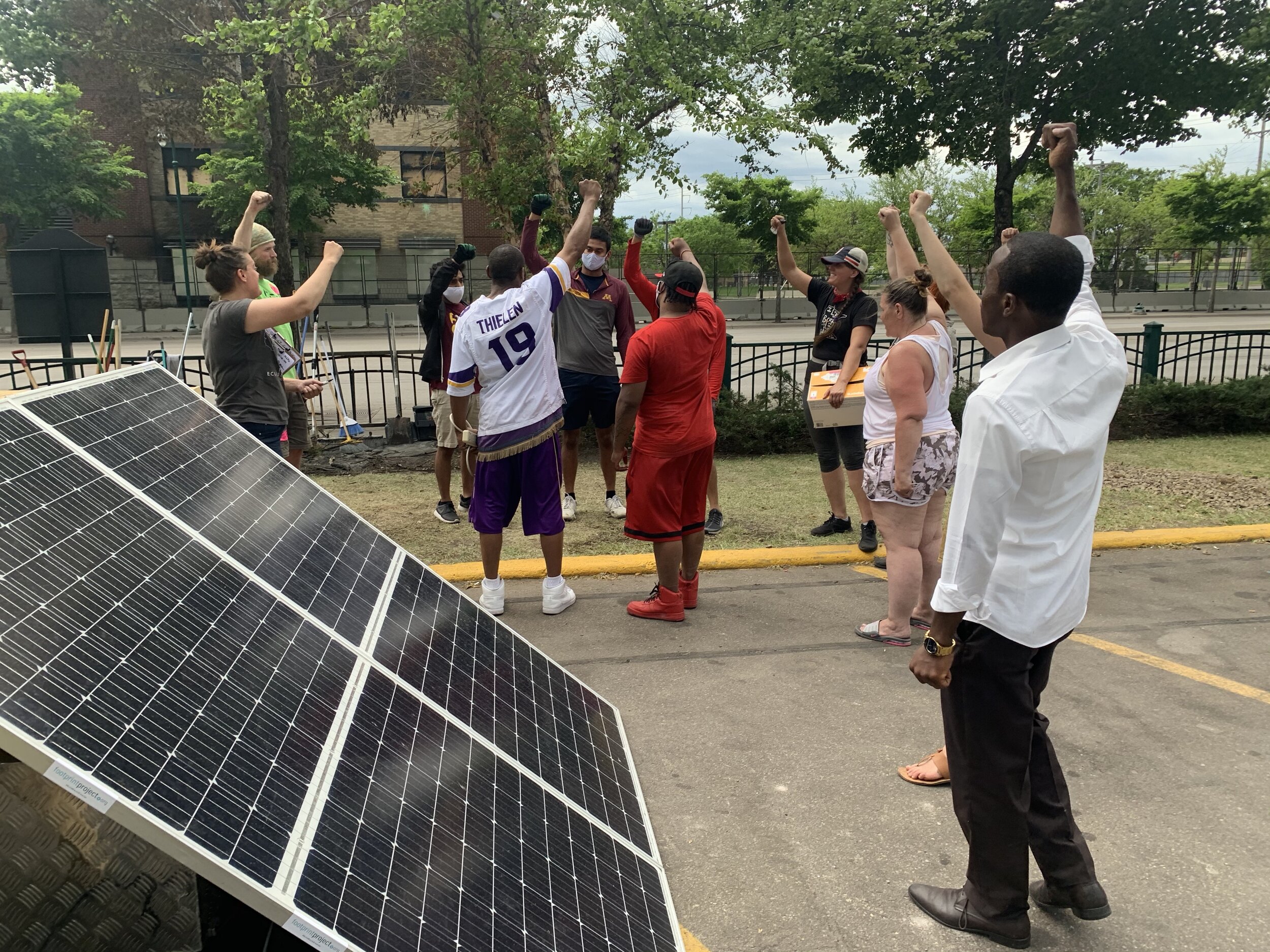
Our base of operations has had an eventful and demanding early summer. While we traditionally respond to environmental disasters, our work in Minneapolis has focused on empowering our community in the wake of the tragic murder of George Floyd. Footprint Project has partnered with community organizations on three solar deployments to energize relief spaces, memorials, and displaced-persons encampments.

In April of this year, the Footprint Project partnered with Global Response Management (GRM) to power the COVID-19 Clinic for the Matamoros Refugee Camp. The Footprint Project provided a solar tent and trailer which became the first operational Solar Powered COVID-19 Clinic supporting doctors and medics.
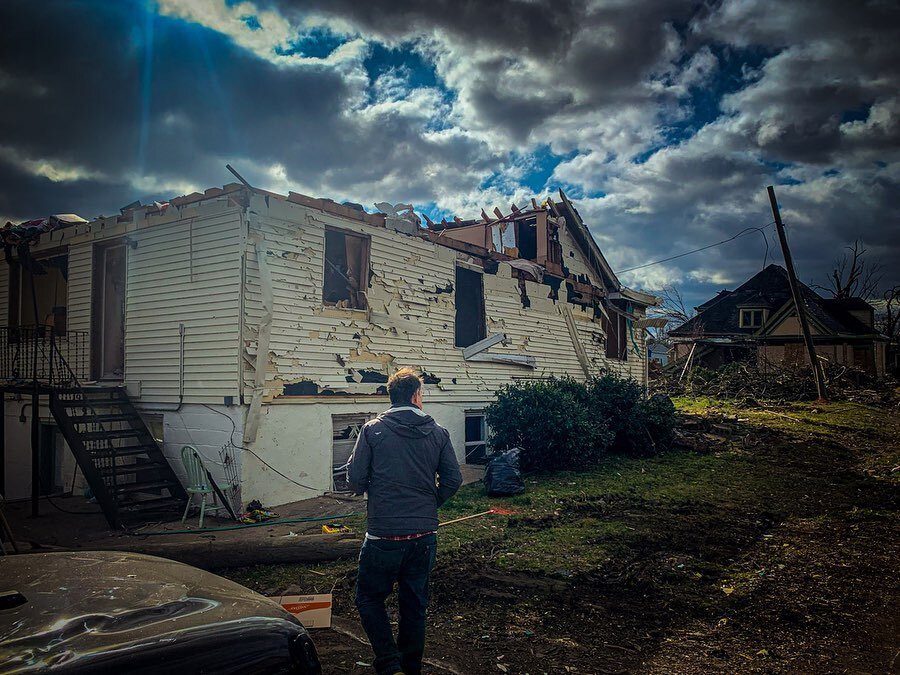
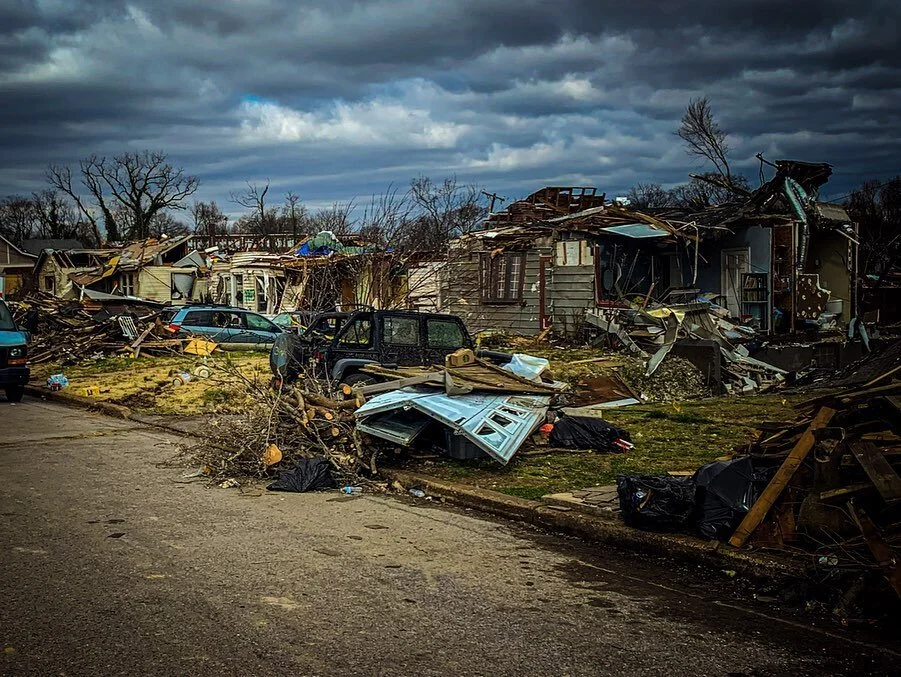
As COVID-19 began spreading across the United States in the early months of 2020, two devastating EF3 tornadoes hit Nashville and Chattanooga. These tornadoes rendered many neighborhoods and communities without shelter or power.

In early January, a swarm of earthquakes began striking off the southern coast of Puerto Rico, crippling centralized power production and leaving thousands displaced from their homes. Footprint Project’s responders were some of the first volunteers to begin relief efforts.
Long-Term Resilience
Two years ago, Hurricane Helene cut Western North Carolina off from power, water, and one another. Fire stations we kept running on temporary solar now have permanent microgrids. Donated equipment has reached more than 120 individuals and families, and many of the people we met in those first days are now our partners. Here's a look back at two years of renewable response and recovery, from the first solar generators in shelters to the resilience hubs powering communities today.
On July 30-31, 2025, we gathered 200 folks from 120 organizations within our community of responders in Black Mountain, NC, for the inaugural Resilience Fest. Not quite a conference and more than just a festival, this event brought together individuals and organizations with firsthand experience in sustainable, community-based disaster response and recovery. We met, laughed, cried, learned, danced, trained, shared, and prepared.
Before, powering Broad River Fire Department's Shumont Substation during outages meant relying on loud, polluting gas generators that needed constant refueling. Now, a solar microgrid powers the station and has created a resilience hub that's no longer reliant on the main electrical grid or gas generators. Community members can rest assured that they have a reliable place to go for clean water, emergency communications, and refuge when facing a natural disaster. Solar power serves as an integral tool to keep the fire department up and running.
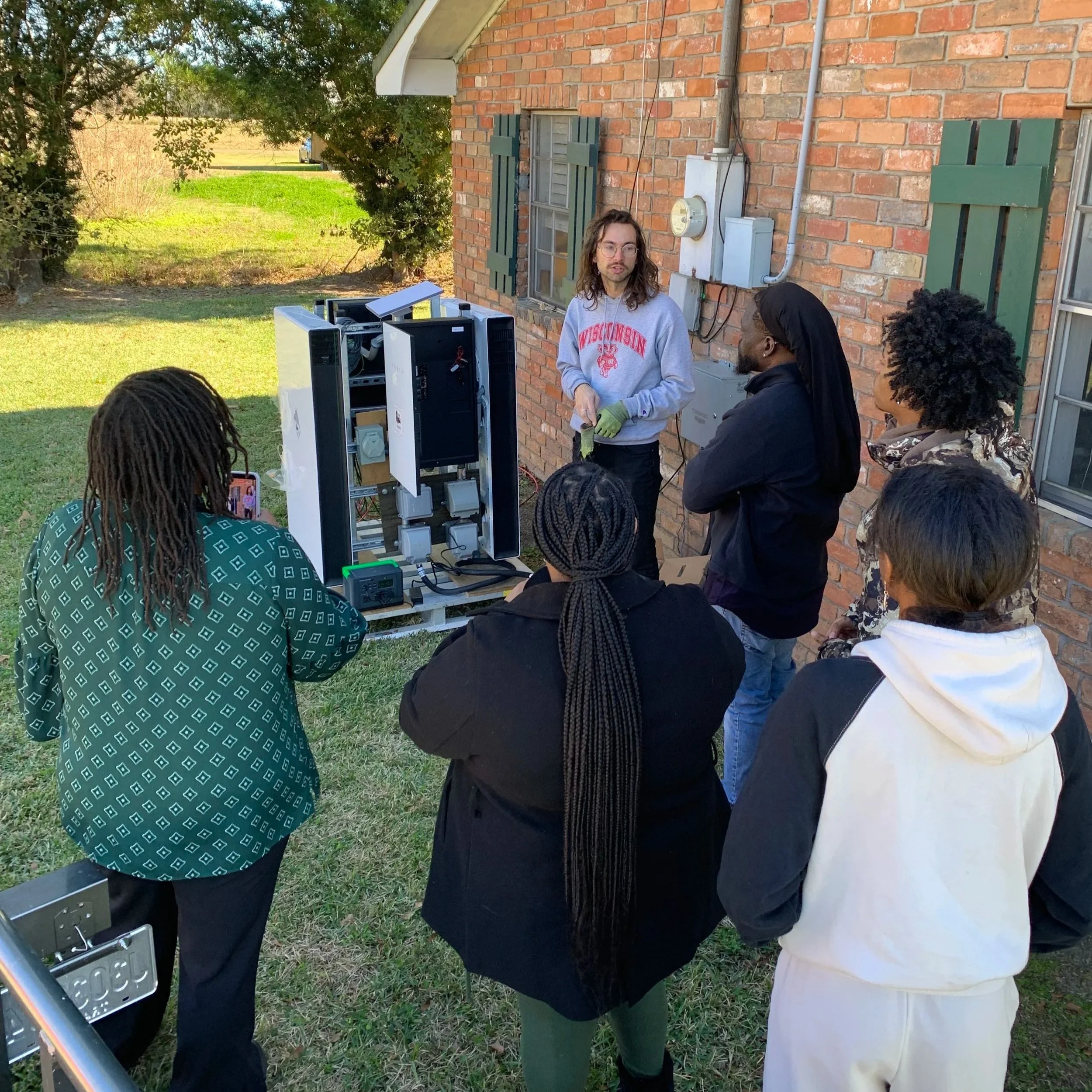
Headquartered in Metairie, Louisiana, Footprint Project deeply engages with the vibrant communities of the Greater New Orleans area. From this base, we also serve the entire Gulf Coast region and support our team and partners throughout the U.S. and Caribbean. In 2025, we strengthened and expanded our partnerships, focusing on:
Beehive Microgrids™ and Transfer Switches
STEM Education + Community Engagement
Serving as Footprint Project’s headquarters to support all of our other regions and programs
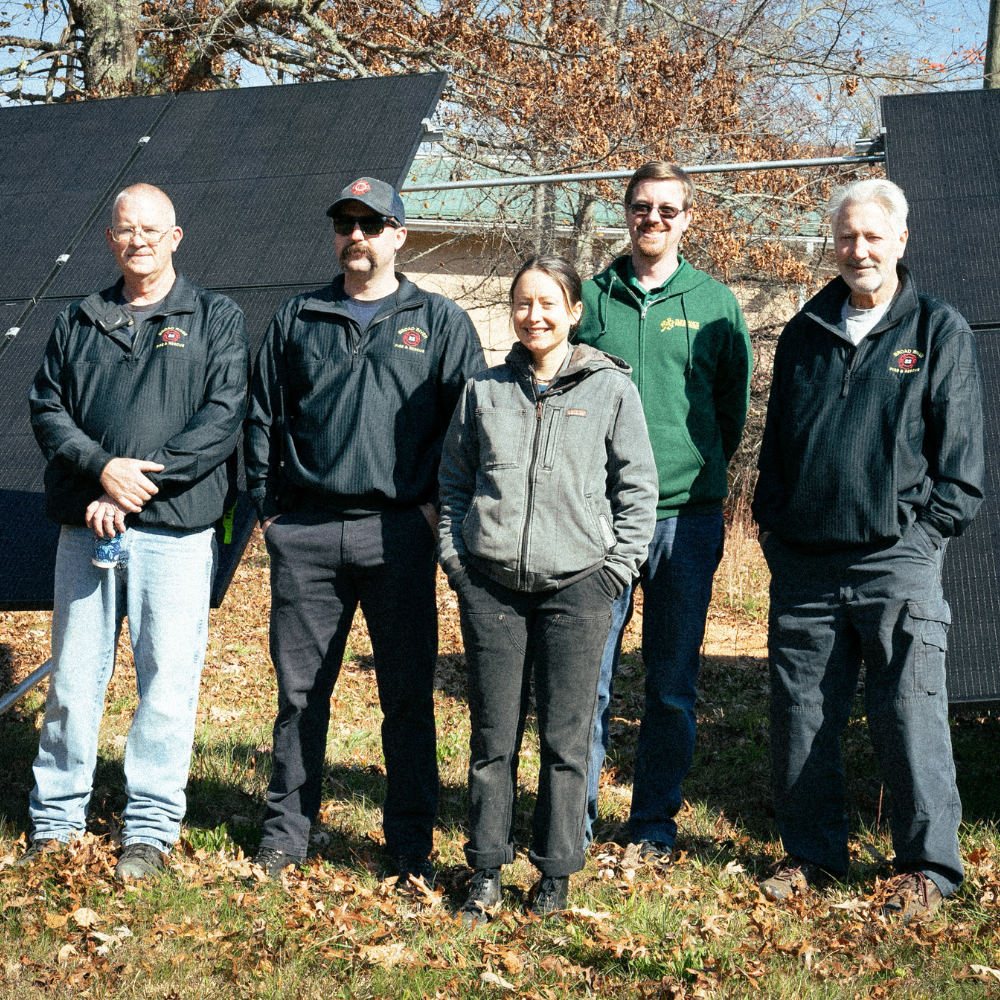
After Hurricane Helene in 2024, our rapid response program (and the partnerships we built within it) inspired the state of North Carolina to deeply invest in our unique model of resilience. In early 2025, we hired 5, new full-time staff and moved into our brand-new Appalachia Regional Hub in Mars Hill, NC. Now, our local team is simultaneously doing the very hard work of long-term recovery with individuals still struggling from Helene and driving forward innovation through the development of Beehive Microgrids. We have been transitioning sites from temporary, emergency power in the immediate Helene aftermath to permanent systems they’ll have ahead of the next storm. This full-circle climate resilience is something we’ve been working towards since the beginning.
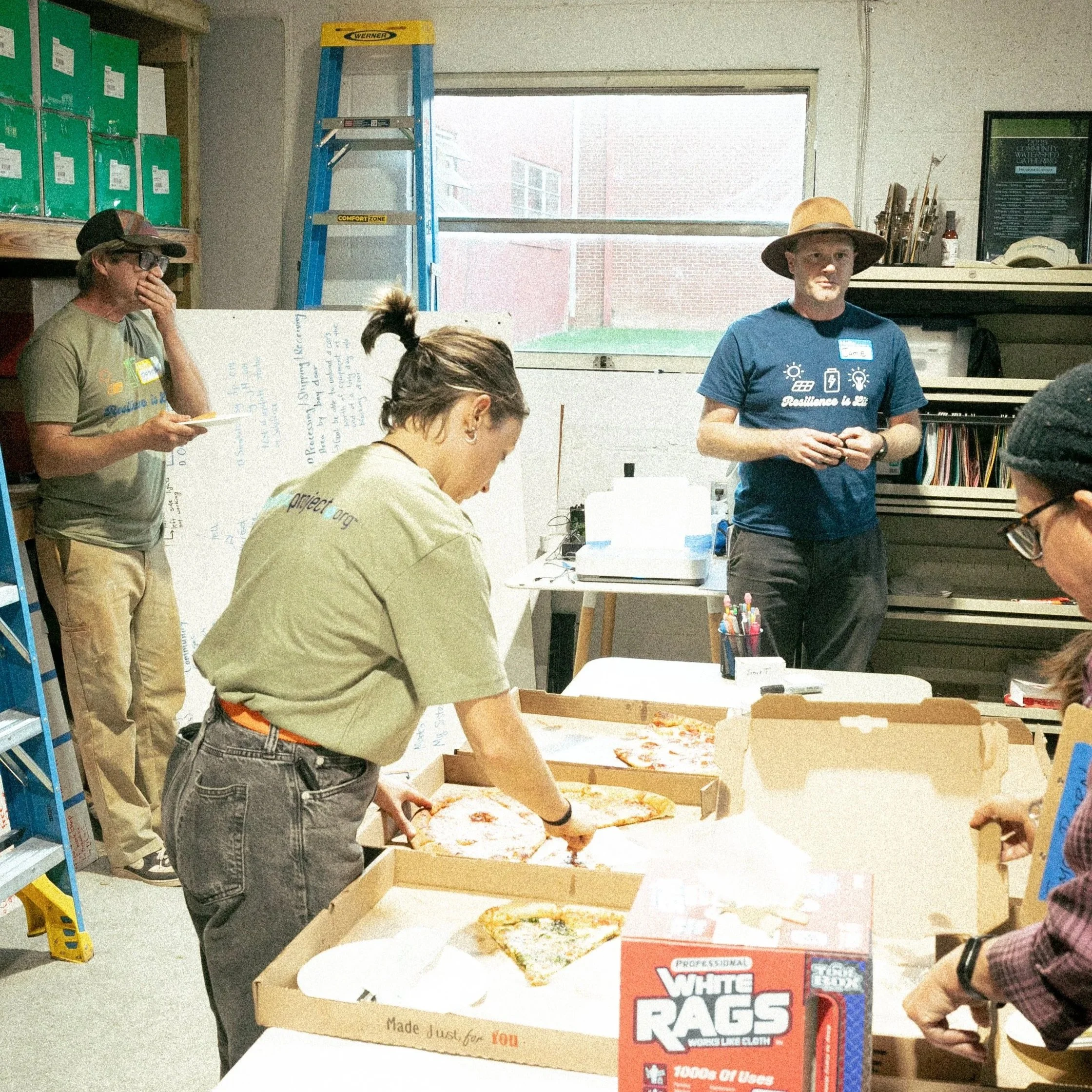
For those of you following our work in community resilience, you may have wondered what we’ve been up to. At Footprint Project, our work extends to many community projects outside of our Western North Carolina Solar Free Store. If you’ve been waiting for our WNC Solar Free Store to open again, we appreciate your patience! Here is just a small fraction of what our tight-knit team has been working on.
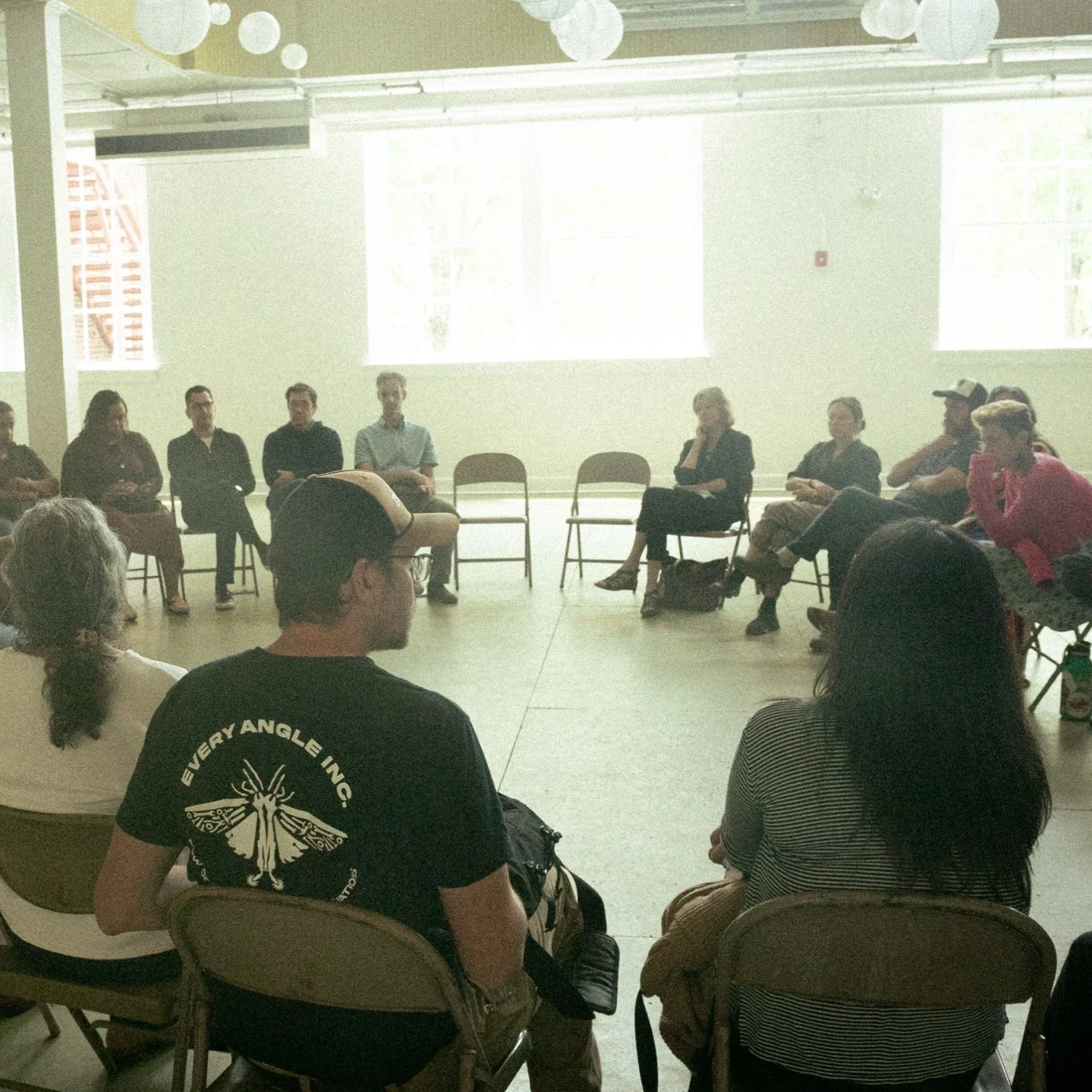
As we continue to grapple with the long-term impact of Hurricane Helene in Western North Carolina, we take time to reflect on what community resilience looks like and how we can best serve them.
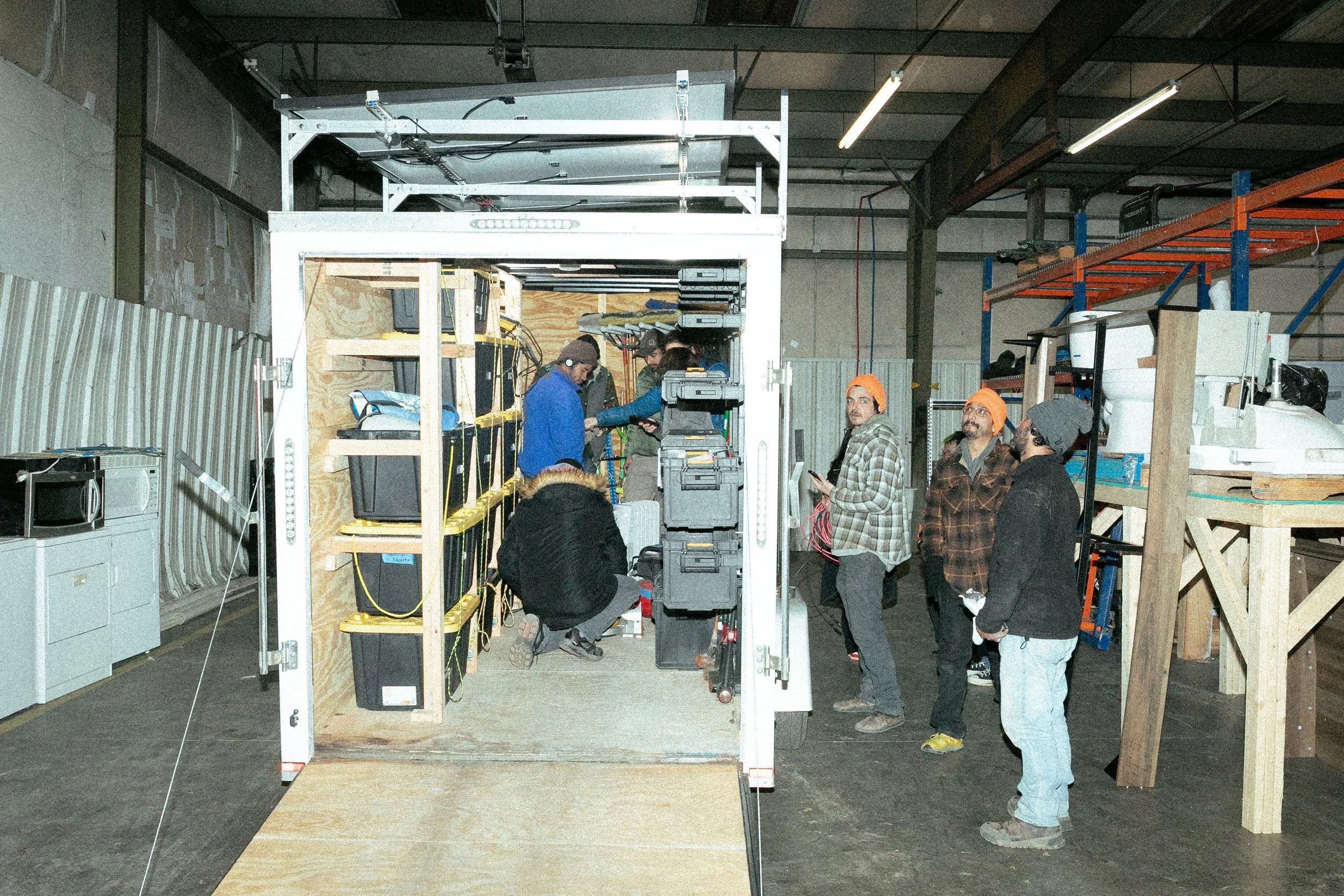
After months of designing and building, we recently met up with worker-owned cooperative Chispas at their headquarters in Asheville, NC to deliver a new solar trailer. While sharing some amazing food, our team trained Chispas members to use the trailer to power essentials under blue or grey skies.
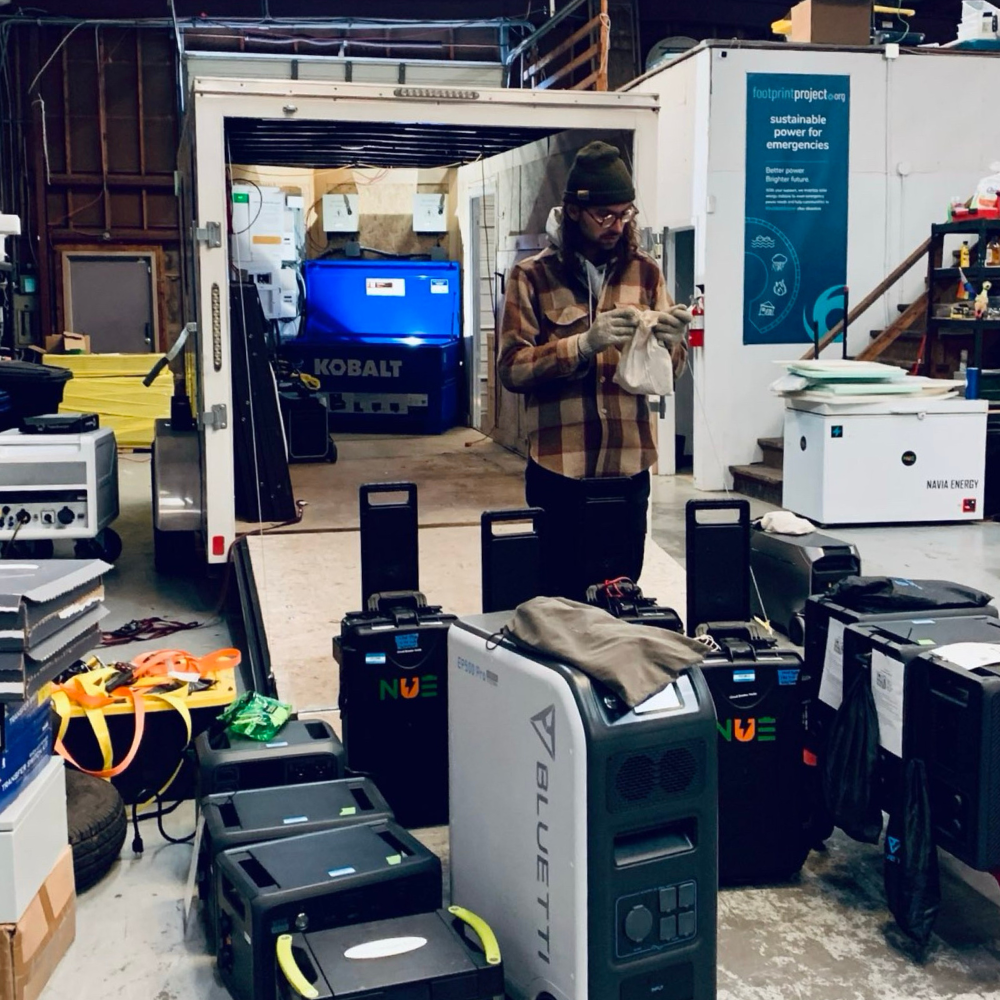
As the first major storm of 2026, Winter Storm Fern has kept us busy here at Footprint Project! We hope that everyone who has been impacted by the ice, snow and cold temperatures stays safe and has received help as soon as possible.
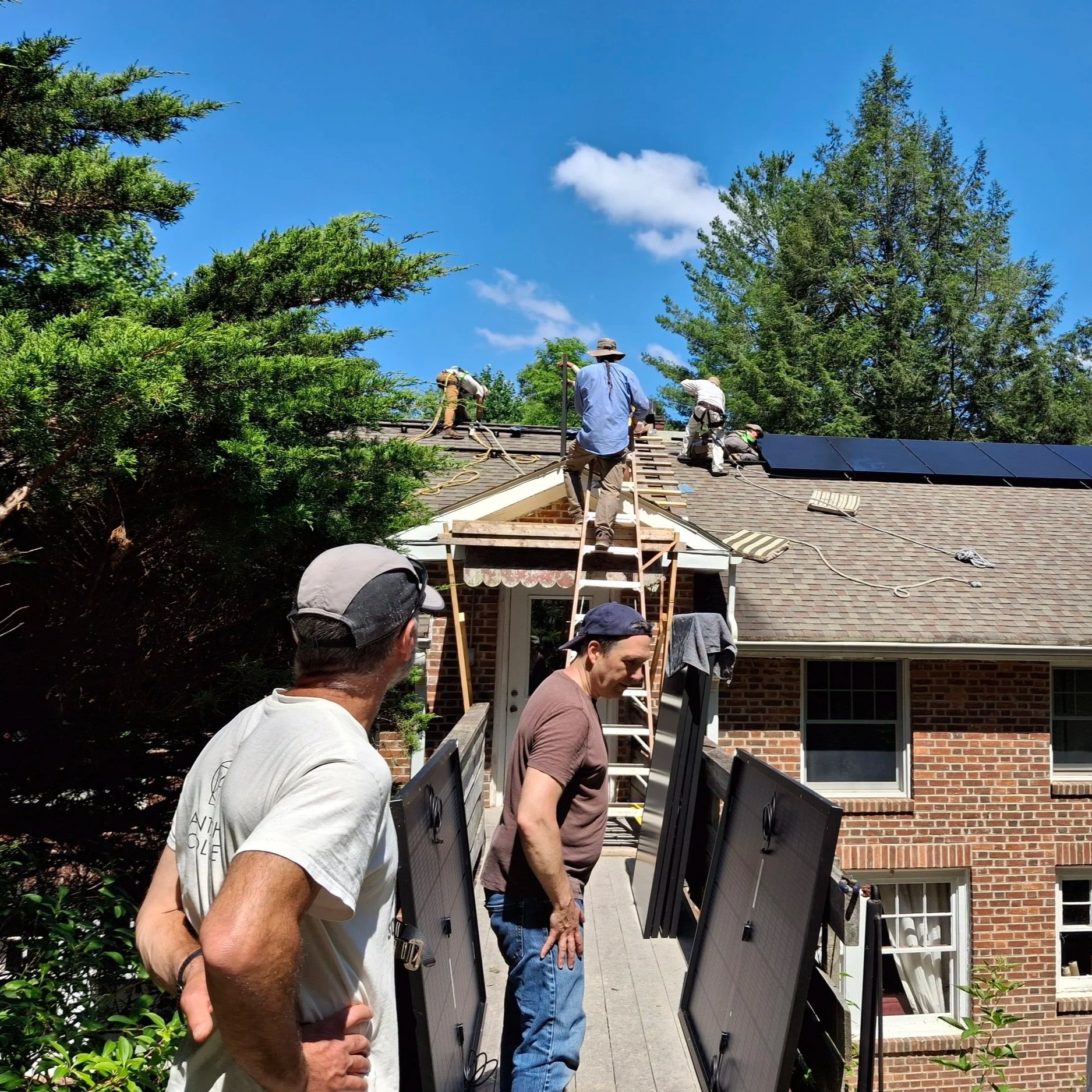
On September 22, 2024, Hurricane Helene emerged in the Caribbean Sea, rapidly intensifying into a devastating Category 4 storm aimed at Florida and later impacting six states, particularly wreaking havoc in North Carolina. Our team mobilized quickly, deploying renewable energy solutions and establishing essential support hubs to aid communities in desperate need.

On September 22, 2024, Hurricane Helene emerged in the Caribbean Sea, rapidly intensifying into a devastating Category 4 storm aimed at Florida and later impacting six states, particularly wreaking havoc in North Carolina. Our team mobilized quickly, deploying renewable energy solutions and establishing essential support hubs to aid communities in desperate need.

When was the last time your power went out? I don’t mean those split second events, almost imperceptible but for your blinking microwave clock. I’m talking about a day or a week or a month or more without electricity. Whatever’s in your refrigerator is going bad.

Disasters exacerbate disparities. From Hurricane Katrina to the pandemic to Hurricane Ida, food insecurity is perpetuated by New Orleans’ high rates of poverty and vulnerability to extreme weather events.
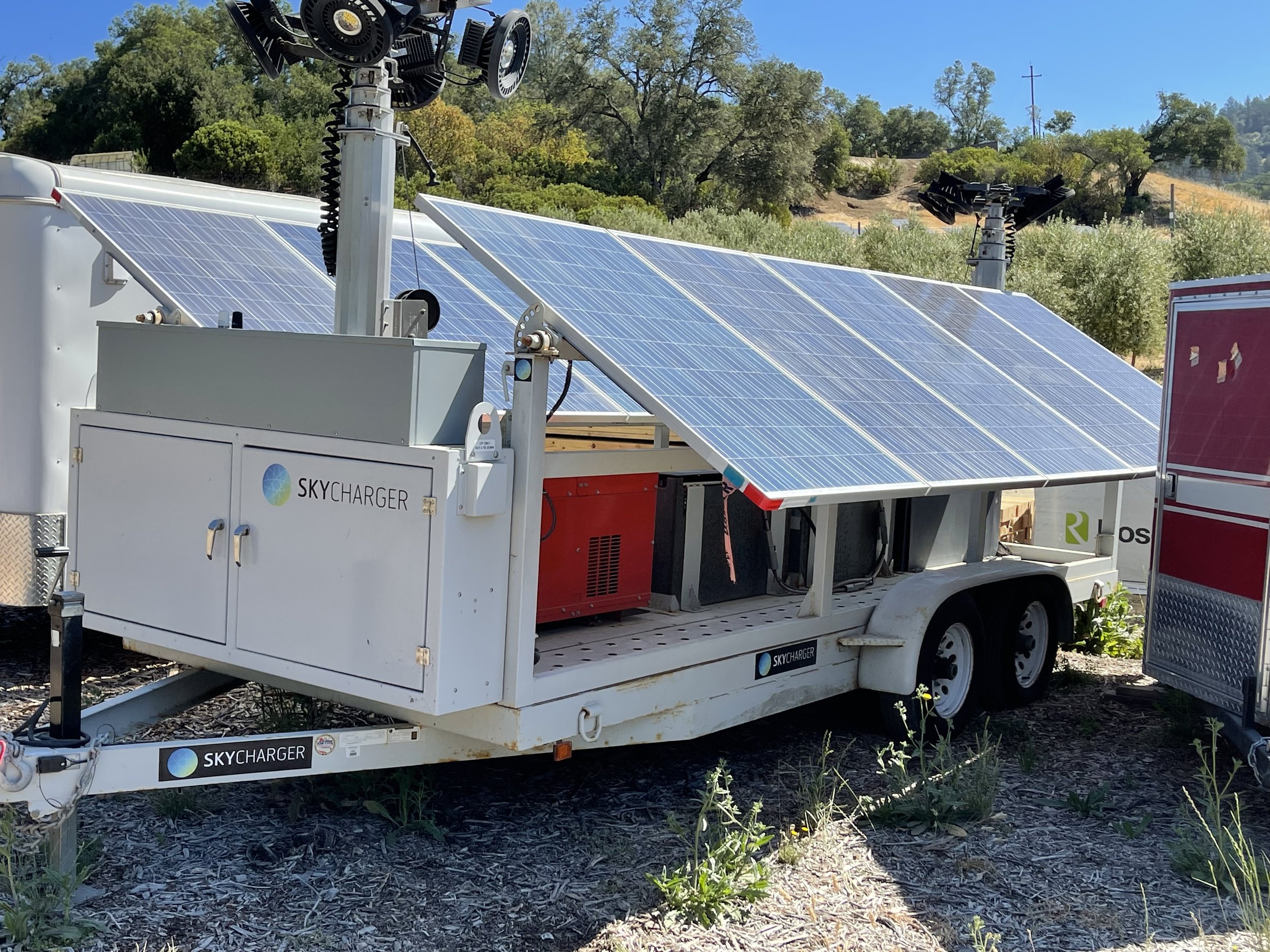
Tucked away in the hills of the Russian River Valley near Cloverdale, CA, the Northern Sonoma County Community Emergency Response Team (CERT) is a shining example of effective use of cleaner energy in disaster response. The team of industrious firefighters stores, maintains, and frequently deploys one of Footprint Project’s solar trailers to emergency sites and shelters.
A few months ago, long before a tropical depression that would become Hurricane Ian formed in the Caribbean, the United Methodist Committee on Relief decided to invest in resilient power solutions for their disaster response teams.
All Blog Posts
Two years ago, Hurricane Helene cut Western North Carolina off from power, water, and one another. Fire stations we kept running on temporary solar now have permanent microgrids. Donated equipment has reached more than 120 individuals and families, and many of the people we met in those first days are now our partners. Here's a look back at two years of renewable response and recovery, from the first solar generators in shelters to the resilience hubs powering communities today.
Late summer is the start of our busiest season. By the last week of August 2026, we received disaster support requests from communities reeling from fires in Washington and Nevada, floods in West Virginia, storms in Tennessee, and Hurricane Lala in Hawai’i. Read more about our work in response and resilience with clean energy.
Footprint Project's Rae Goldman, Associate Director of Operations, and Gabriel Pacheco, Caribbean Program Manager, arrived in Venezuela in early July to lead the response on the ground, focused on getting reliable power to families and institutions — including the churches and community foundations described below — that the broader response hasn't yet reached. Since activating on June 25, our Footprint Project staff, and a growing group of local volunteers, have logged more than 919 combined hours assessing sites, delivering equipment, and building the community partnerships needed to get reliable power where it's needed most.
As multiple wildfires burned across Los Angeles County in early 2025, We partnered with the local film industry and the National Forest Service to replace 4 large diesel generators with solar and battery energy storage systems.
A team led by Footprint Project and Overdrive Energy Solutions worked with the U.S. Forest Service to replace diesel generators with Battery Energy Storage Systems (BESSs) at the Eaton Fire Incident Command (IC) Post at the Rose Bowl Stadium. The Rose Bowl Stadium and surrounding parking lots had been turned into a massive incident command post. Agencies involved included LA Fire, LA County Fire, CAL Fire, LAPD, and the U.S. Forest Service. Because the Eaton Fire was burning on federal forest service land, the U.S. Forest Service was leading the operation. During this crisis, the stadium turned into a staging ground for over 4,000 firefighters, national guard troops, and first responders from city, state, county, and federal agencies.
On July 30-31, 2025, we gathered 200 folks from 120 organizations within our community of responders in Black Mountain, NC, for the inaugural Resilience Fest. Not quite a conference and more than just a festival, this event brought together individuals and organizations with firsthand experience in sustainable, community-based disaster response and recovery. We met, laughed, cried, learned, danced, trained, shared, and prepared.
Hurricane Melissa closed out 2025 as a late-season hurricane -- the strongest storm to ever strike the island nation of Jamaica. This was our first in-person international response where we sent staff, volunteers, and renewable response technologies to respond to the devastating Category 5 storm. We worked with several local community partners and international humanitarian relief organizations to provide lifesaving communication hubs and mobile solar microgrid power for health clinics.
Before, powering Broad River Fire Department's Shumont Substation during outages meant relying on loud, polluting gas generators that needed constant refueling. Now, a solar microgrid powers the station and has created a resilience hub that's no longer reliant on the main electrical grid or gas generators. Community members can rest assured that they have a reliable place to go for clean water, emergency communications, and refuge when facing a natural disaster. Solar power serves as an integral tool to keep the fire department up and running.
Headquartered in Metairie, Louisiana, Footprint Project deeply engages with the vibrant communities of the Greater New Orleans area. From this base, we also serve the entire Gulf Coast region and support our team and partners throughout the U.S. and Caribbean. In 2025, we strengthened and expanded our partnerships, focusing on:
Beehive Microgrids™ and Transfer Switches
STEM Education + Community Engagement
Serving as Footprint Project’s headquarters to support all of our other regions and programs
After Hurricane Helene in 2024, our rapid response program (and the partnerships we built within it) inspired the state of North Carolina to deeply invest in our unique model of resilience. In early 2025, we hired 5, new full-time staff and moved into our brand-new Appalachia Regional Hub in Mars Hill, NC. Now, our local team is simultaneously doing the very hard work of long-term recovery with individuals still struggling from Helene and driving forward innovation through the development of Beehive Microgrids. We have been transitioning sites from temporary, emergency power in the immediate Helene aftermath to permanent systems they’ll have ahead of the next storm. This full-circle climate resilience is something we’ve been working towards since the beginning.
For those of you following our work in community resilience, you may have wondered what we’ve been up to. At Footprint Project, our work extends to many community projects outside of our Western North Carolina Solar Free Store. If you’ve been waiting for our WNC Solar Free Store to open again, we appreciate your patience! Here is just a small fraction of what our tight-knit team has been working on.
As we continue to grapple with the long-term impact of Hurricane Helene in Western North Carolina, we take time to reflect on what community resilience looks like and how we can best serve them.
After months of designing and building, we recently met up with worker-owned cooperative Chispas at their headquarters in Asheville, NC to deliver a new solar trailer. While sharing some amazing food, our team trained Chispas members to use the trailer to power essentials under blue or grey skies.
Ahead of Winter Storm Fern, our Appalachia team opened a battery library at our warehouse in Mars Hill, North Carolina, and preemptively supported the Buncombe County Emergency Operations Center, Black Mountain Fire Department, Swannanoa Resilience Hub, and Swannanoa Grassroots Alliance with power for communications at warming centers.
In Lake Providence, Louisiana, a small town in the Mississippi Delta where ice toppled trees and transmission lines, we partnered with Together Louisiana to power a warming shelter, heated blankets, and home health devices like feeding tubes, medical beds, and oxygen machines.
Power can protect communities. It can also terrorize them.
As the first major storm of 2026, Winter Storm Fern has kept us busy here at Footprint Project! We hope that everyone who has been impacted by the ice, snow and cold temperatures stays safe and has received help as soon as possible.
On September 22, 2024, Hurricane Helene emerged in the Caribbean Sea, rapidly intensifying into a devastating Category 4 storm aimed at Florida and later impacting six states, particularly wreaking havoc in North Carolina. Our team mobilized quickly, deploying renewable energy solutions and establishing essential support hubs to aid communities in desperate need.
On September 22, 2024, Hurricane Helene emerged in the Caribbean Sea, rapidly intensifying into a devastating Category 4 storm aimed at Florida and later impacting six states, particularly wreaking havoc in North Carolina. Our team mobilized quickly, deploying renewable energy solutions and establishing essential support hubs to aid communities in desperate need.

Footprint Project is pleased to announce our Request For Proposals (RFP) for Solar and Atmospheric Water Generators!
When was the last time your power went out? I don’t mean those split second events, almost imperceptible but for your blinking microwave clock. I’m talking about a day or a week or a month or more without electricity. Whatever’s in your refrigerator is going bad.
Disasters exacerbate disparities. From Hurricane Katrina to the pandemic to Hurricane Ida, food insecurity is perpetuated by New Orleans’ high rates of poverty and vulnerability to extreme weather events.
We sat down with PV Magazine to discuss the Maui wildfires, decarbonizing disaster response, and duck curve financing.
Early this spring, a series of tornadoes devastated several communities in rural Mississippi. We joined forces with local partners requesting emergency power: Delta Health Center in Rolling Fork, the Fannie Lou Hamer Center for Change in Eupora, and the Zion Baptist Association in Winona. These hubs would go on to serve as foundations of recovery and resilience in their communities.
Tucked away in the hills of the Russian River Valley near Cloverdale, CA, the Northern Sonoma County Community Emergency Response Team (CERT) is a shining example of effective use of cleaner energy in disaster response. The team of industrious firefighters stores, maintains, and frequently deploys one of Footprint Project’s solar trailers to emergency sites and shelters.
A few months ago, long before a tropical depression that would become Hurricane Ian formed in the Caribbean, the United Methodist Committee on Relief decided to invest in resilient power solutions for their disaster response teams.
At Footprint Project, we focus on deploying solar generators to disasters in the domestic U.S. and Puerto Rico. Logistics, program sustainability, cultural competency, and overall need have always pointed us in the direction of our own backyard when it comes to building back greener - until Russia invaded Ukraine in February.
Less than 24 hours after a rare, EF3 tornado hit New Orleans, Footprint Project was on the ground to provide emergency clean power for neighbors in the hardest hit area of Arabi.
While many families were preparing to wind down for the holidays (including the Footprint Project team), tornado sirens rang out in states across the southeastern United States. With at least 88 fatalities, the “Quad-State Super Cell” became the deadliest December tornado event on record in the United States.
Footprint Project has been on the ground in Louisiana since September 3 deploying solar + batteries to communities affected by Hurricane Ida.
In February of 2021, the state of Texas began facing an ongoing crisis of water shortages, power outages, and extreme freezing weather conditions. Two storms- Uri and Shirley, caused record low temperatures reaching -2 degrees F, the coldest Northern Texas has been in 72 years. In response to requests from local responders, Footprint Project activated our Solar Energy Rapid Response Team (SERRT) to support Texas’s recovery. Beginning on February 21st, Footprint Project deployed solar equipment to power mobile communication and remote charging needs for the Information Technology Disaster Resource Center (ITDRC) and Fayette County Emergency Management (FCEM).
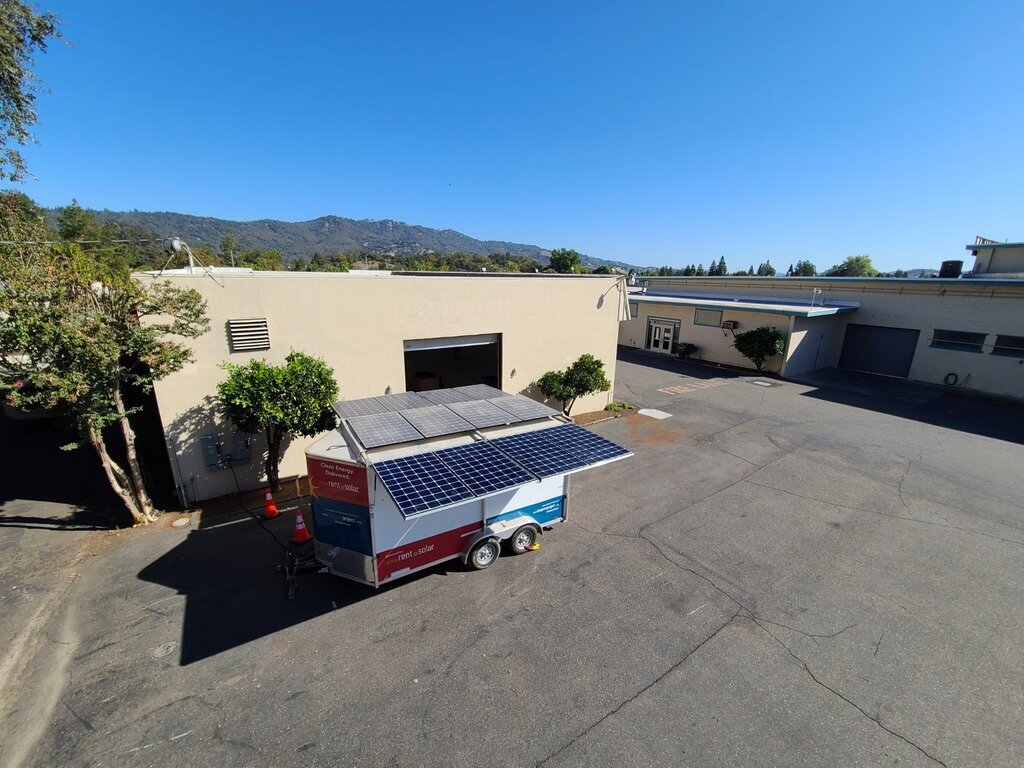
Currently, our Solar Emergency Response Team (SERT) is in California to provide support by deploying clean energy to communities in need. So far, we have focused our limited clean energy resources on multiple partnerships that focus on different aspects of the preparedness and recovery of disaster relief.
As summer comes to a close, a new door opens. The largest mobile solar generator microgrid Footprint Project has ever built is bringing mobile, sustainable power to communities in Puerto Rico.
The completion of this microgrid is crucial for the island’s disaster relief recovery. As back-up diesel generators continue to fail when communities deprived of power need it most, a solar generator microgrid will provide reliable, sustainable energy to people who no longer have to depend on a failing central power source.
In the Press
-
Microgrids can provide vital power during hurricanes
-
‘I’m excited’: Sci High students empowered through learning to build solar generators
-
Solar Generators Provide Relief for Communities Still Without Power
-
Volunteers Bring Solar Power to Hurricane Helene's Disaster Zone
-
Pop-Up Microgrids Powered Medical Clinics and Other Critical Resources
-
Solar Energy Helped Keep the Lights On After Helene, But Not How You Might Think
-
A Solar-Powered Microgrid "Lending Library" Could Make Disaster Recovery Greener
-
Gentilly Beehive Microgrid provides resilient backup power
-
Footprint Project Wins Verizon Disaster Resilience Prize
-
How to Help Those Impacted by Hurricane Melissa
-
Energy Access In Rural North Carolina Grows Through Solar
-
After Hurricane Helene outage, NC bookstore installs microgrid for Asheville community
-
Helene aftermath highlights need for resilient power systems, energy leaders say
-
Food bank to deploy solar-powered trailers for disaster relief
-
DEQ and partners demonstrate mobile microgrid initiative in Western NC
-
Amazon expands Venezuela earthquake relief
-
DEQ and partners demonstrate mobile microgrid initiative in Western NC
-
A swarm of solar ‘bees’ are coming to western North Carolina community hubs
-
Post–Hurricane Helene, this community is getting creative with solar
-
After Disaster Strikes, Footprint Project in New Orleans Brings Clean Power – and Stays to Build Community Resilience
STAY CURRENT
Get field reports, press releases, and tech insights in your inbox.
We respect your right to receive less emails - unsubscribe anytime.