
Footprint Project’s Appalachia Regional Hub 2025
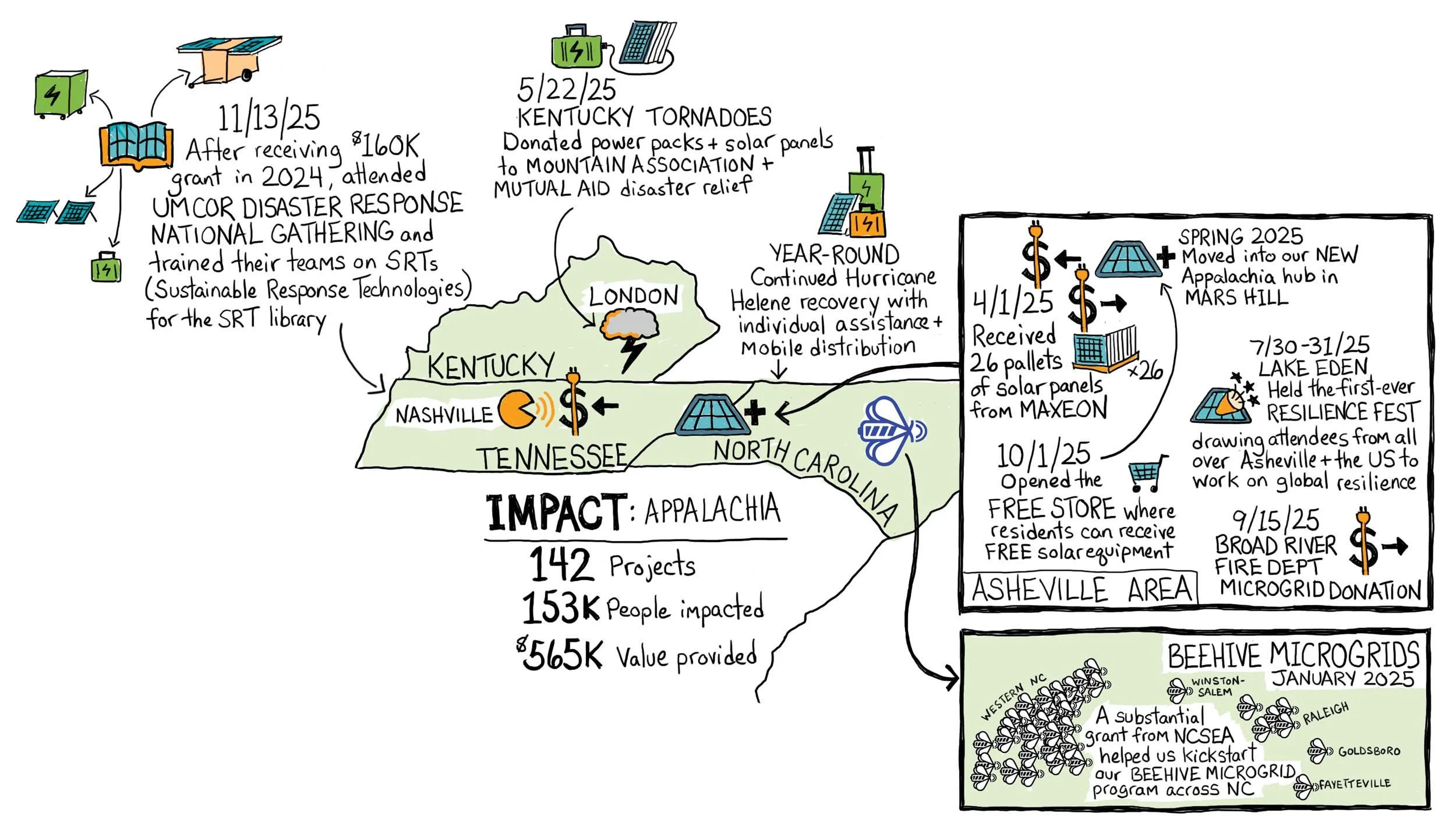
2025 Impact Map by SteadyHandMaps
After Hurricane Helene in 2024, our rapid response program (and the partnerships we built within it) inspired the state of North Carolina to deeply invest in our unique model of resilience. In early 2025, we hired 5 new full-time staff and moved into our brand-new Appalachia Regional Hub in Mars Hill, NC. Now, our local team is simultaneously doing the very hard work of long-term recovery with individuals still struggling from Helene and driving forward innovation through the development of Beehive Microgrids. We have been transitioning sites from temporary, emergency power in the immediate Helene aftermath to permanent systems they’ll have ahead of the next storm. This full-circle climate resilience is something we’ve been working towards since the beginning.
Our Appalachia Hub expansion grew out of our continued drive towards climate resilience. This hub focuses on:
Continued individual assistance for people recovering from Hurricane Helene
Hosting free stores to donate renewable energy tech to individuals and community-based projects
Developing Beehive Microgrids with Land of Sky Regional Council, North Carolina Sustainable Energy Association, and NC Department of Environmental Quality
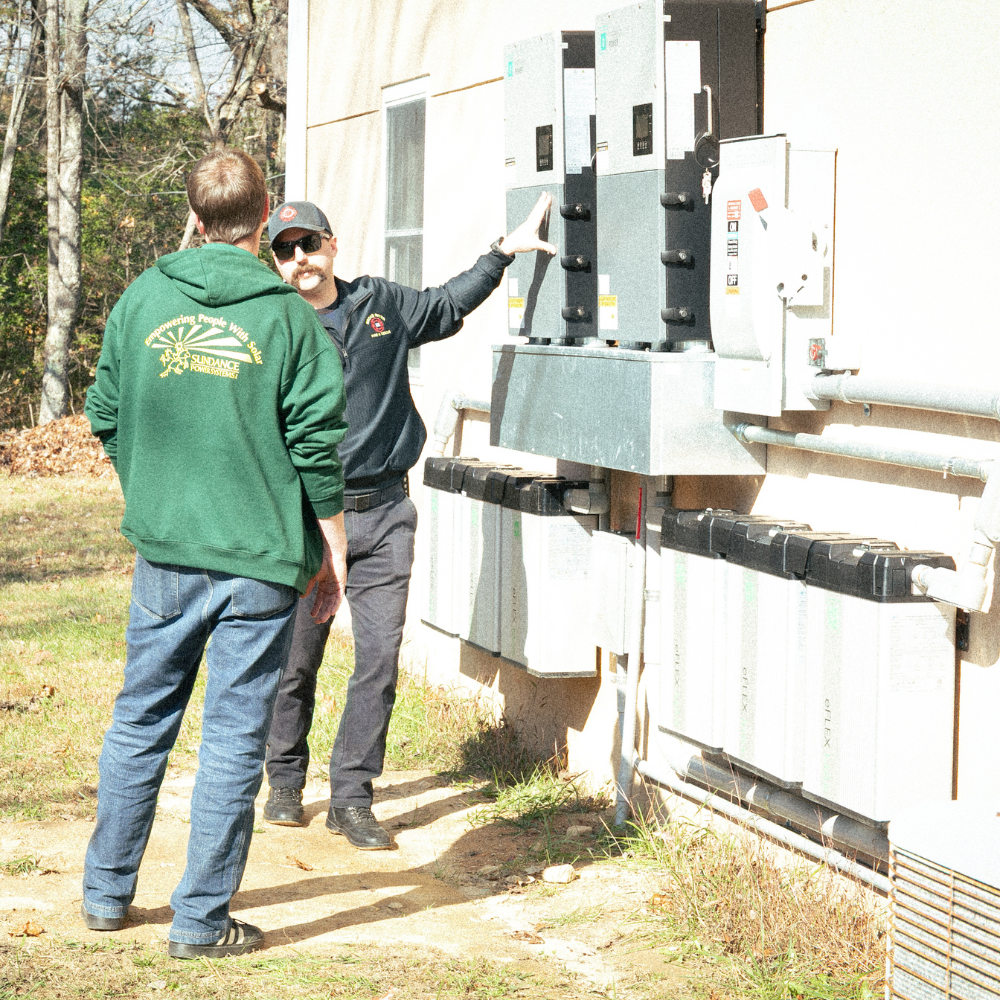
“Footprint Project played a critical role in supporting the Double Island Fire Department and the surrounding community during Hurricane-related emergencies by providing essential resources designed to restore power, communication and safety during widespread outages” - Valerie Stiles, President/First Captain, Double Island Fire Department
Solar Free Store - Appalachia
We began the Solar Free Store at the start of 2025 to distribute free solar microgrid equipment to individuals and community groups. Our aim is to increase the density of sustainable, resilient energy systems in Western North Carolina. Originally, we ran the store by working remotely with applicants to fulfill their requests. By switching to an in-person model we can help more people more effectively, build community, and leverage volunteer and installer knowledge. Since opening, we out-grew our initial Appalachia hub warehouse and moved to a larger one.
Beehive Microgrid™
In late 2025, we were able to establish the real-world beginnings of our Beehive Microgrid™ program. With the generous support of Land of Sky Regional Council, North Carolina Sustainable Energy Association, and NC Department of Environmental Quality, this program is now being implemented throughout North Carolina. 2026 will see major expansion of this work that we look forward to reporting on!
How Does a Beehive Microgrid™ Support Climate Resilience?
A Beehive Microgrid™ is a dynamic system of rapidly-deployable mobile energy assets that address both disaster response and long-term climate resilience for vulnerable communities. It is a flexible, customizable network consisting of a centralized semi-permanent “Hive” and numerous energy “Bees.” Altogether, these components can provide renewable energy, clean water, refrigeration and shelter—serving as a community hub during disasters and a reliable charging station and office space before disasters strike. A Beehive Microgrid helps to improve a community’s air quality, resilience and access to clean technologies following a disaster.
Other 2025 Highlights in Appalachia
FEBRUARY: Received $172,000 worth of solar panels to support Hurricane Helene recovery in Western North Carolina
MAY: Donated power packs and solar panels to Mountain Association and Mutual aid disaster relief to assist with the Kentucky Tornadoes recovery
JULY: Held the first-ever Resilience Fest, drawing attendees from all over Asheville and the US to work on global resilience. (more about that in another post)
NOVEMBER: After having received a $160K grant in 2024, attended UMCOR Disaster Response National Gathering and trained their teams on Sustainable Response Technologies (SRTs) for the SRT library
Footprint Project’s Impact in Appalachia
Our 2025 Impact in Appalachia, by the numbers:
142 Projects
Rentals: 39
Free store + microgrid development: 103
153k People impacted
Outgoing donations: 13k direct, 137k indirect
Rentals: 400 direct, 2500 indirect
$565k value provided
Outgoing in-kind donations value: $368k donated
Regional personnel (staff + contractors): $115k
Regional fleet asset value acquired in 2025 (receipts + in-kind): $82k