
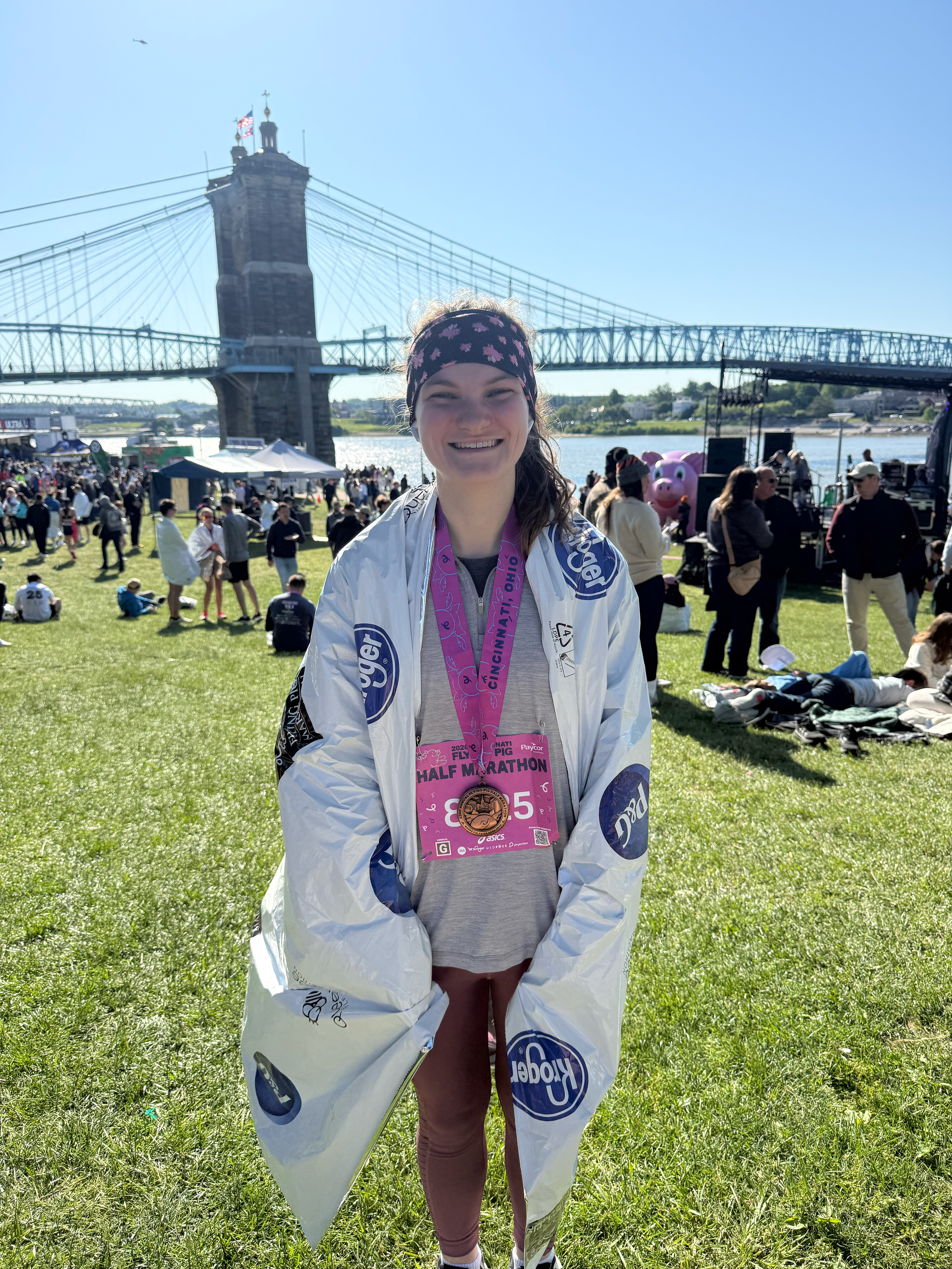
Sylvia Kolda has spent the last three years on Schneider Electric's Microgrid team, designing and commissioning the control systems that keep a site powered when the grid goes down. In 2024, she volunteered with Footprint Project in Houston, installing solar panels for a community center microgrid and helping build mobile solar trailers outside Schneider's Houston office. Now based in Cincinnati, Sylvia is training for her first full marathon. She will run the 2027 Boston Marathon as one of Schneider Electric's #SEGreenRunners, with a goal of raising $5,000 for us. She has been a Footprint Project donor for years. We sat down with her to talk about a range of topics: her senior design microgrid from college, a fourth-grade recycling route, and why Footprint Project is the reason she's running.
Support Sylvia's run: https://www.givengain.com/project/sylvia-raising-funds-for-footprint-project-132468
INTERVIEWER
You wrote that you were "immediately hooked" when you first heard about microgrids in college. Do you remember where you were or what clicked?
SYLVIA
I remember my first power classes and how I loved the power classes. I [liked the idea of] being able to power people's lives. So I knew that I definitely wanted to be in the power industry. Then I think it was my junior year, going into senior year, when I was trying to decide what to do for my senior design project [in college]. I had a couple of other people who were also interested in the power industry and also interested in renewables, and they came up with this idea of doing a microgrid. I was like, "That's really cool. I'm not just going to be checking a box to finish this project. It'll be something that I'm actually learning about and something that I think is really cool." So I think it was my classmates who came up with that idea and introduced it to me. Then I learned a lot about it my senior year as I went through that project.
INTERVIEWER
What does a day as a Microgrid Engineer actually look like? How would you explain your job to a 10-year-old?
SYLVIA
With a normal grid, you would get your power from the utility company. We have Duke in Cincinnati, so Duke would supply that power. With a microgrid, you can still get your power from the utility company, but you can also get it from renewables, such as solar panels, or from batteries and generators.
The renewables would be a sustainable addition to the system, but you also have more of a reliability factor. If something were to happen to the utility power, usually you just lose the lights in your house. But with a microgrid, there's a control system, which is what I do. You have circuit breakers in your house. If something happens and the lights go out, you can go to that circuit breaker box and flip them on. That's what the microgrid controller does. It will open and close those bigger breakers and tell the battery what it needs to do so that the site can remain powered even when the utility power isn't there.
Like I said, the microgrid controller is what Schneider works on. Microgrid systems are kind of like a system of systems. You've got someone who provides a battery, you've got someone else who provides the solar panels, and you've got the utility providing their power. The microgrid controller is kind of like the conductor of all of it. It tells them what they need to do and when in order to power the loads.
INTERVIEWER
Walk me through the microgrid install you helped with. Where was it, who was it for, and what was the situation on the ground?
SYLVIA
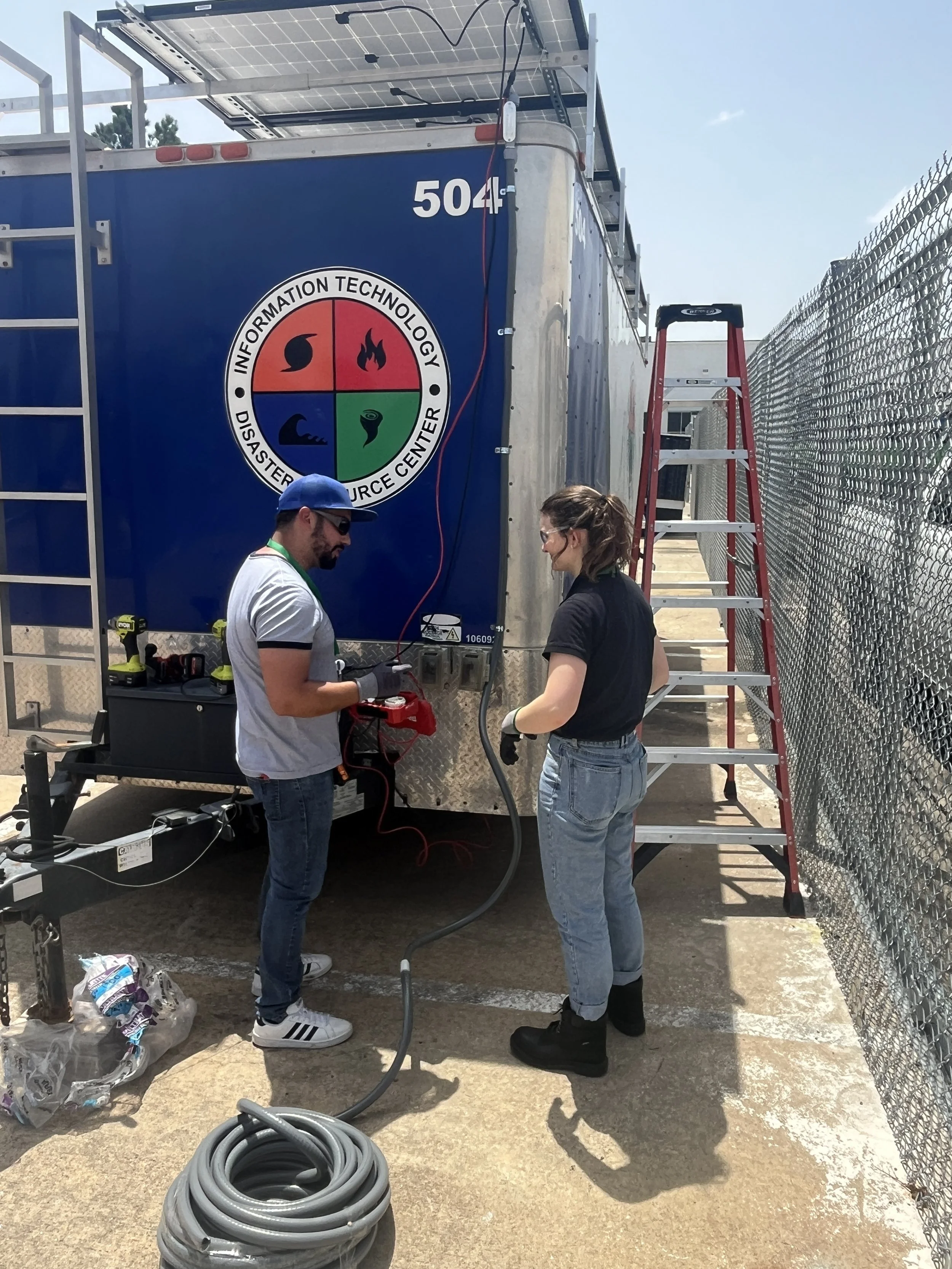
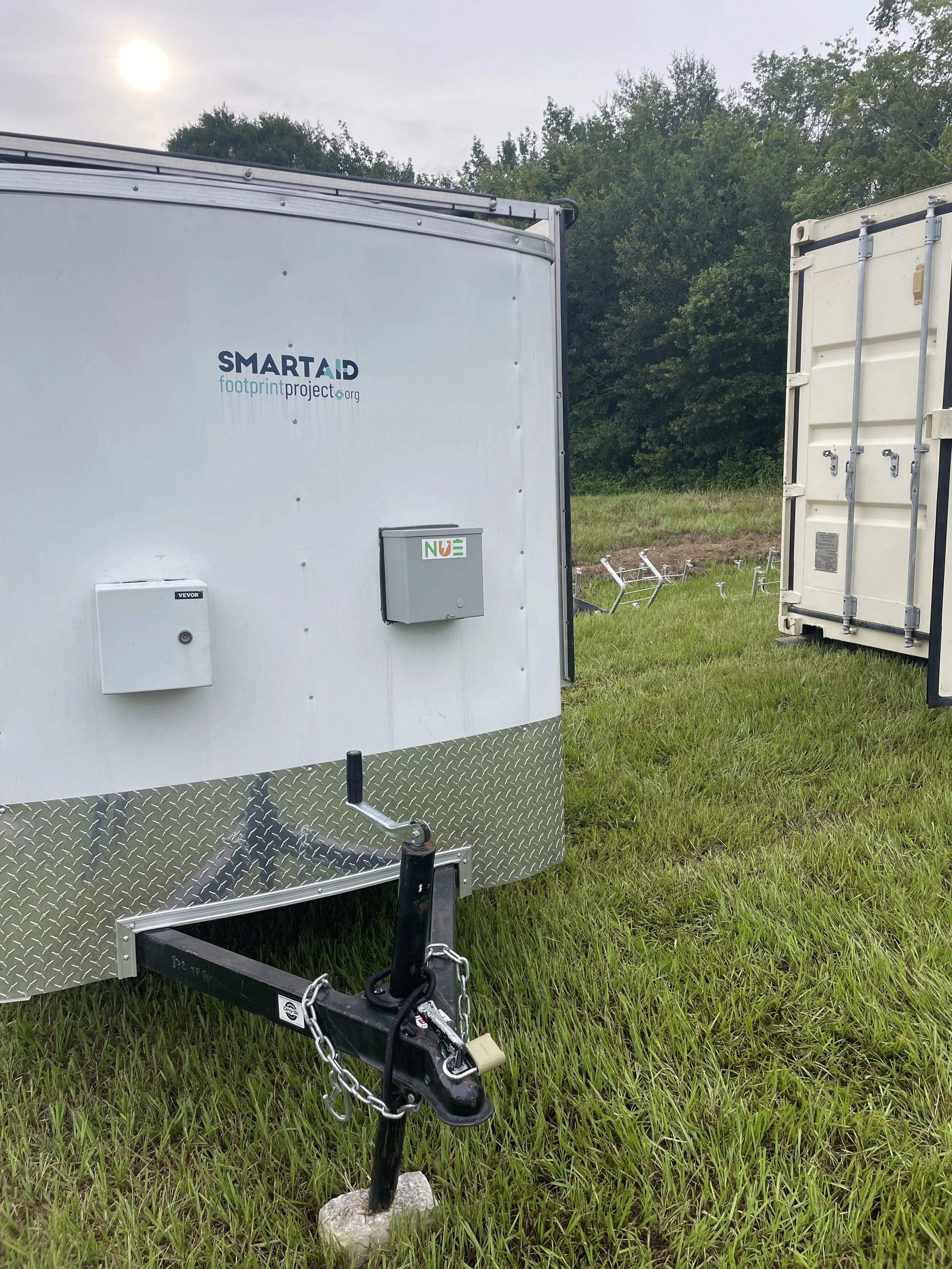
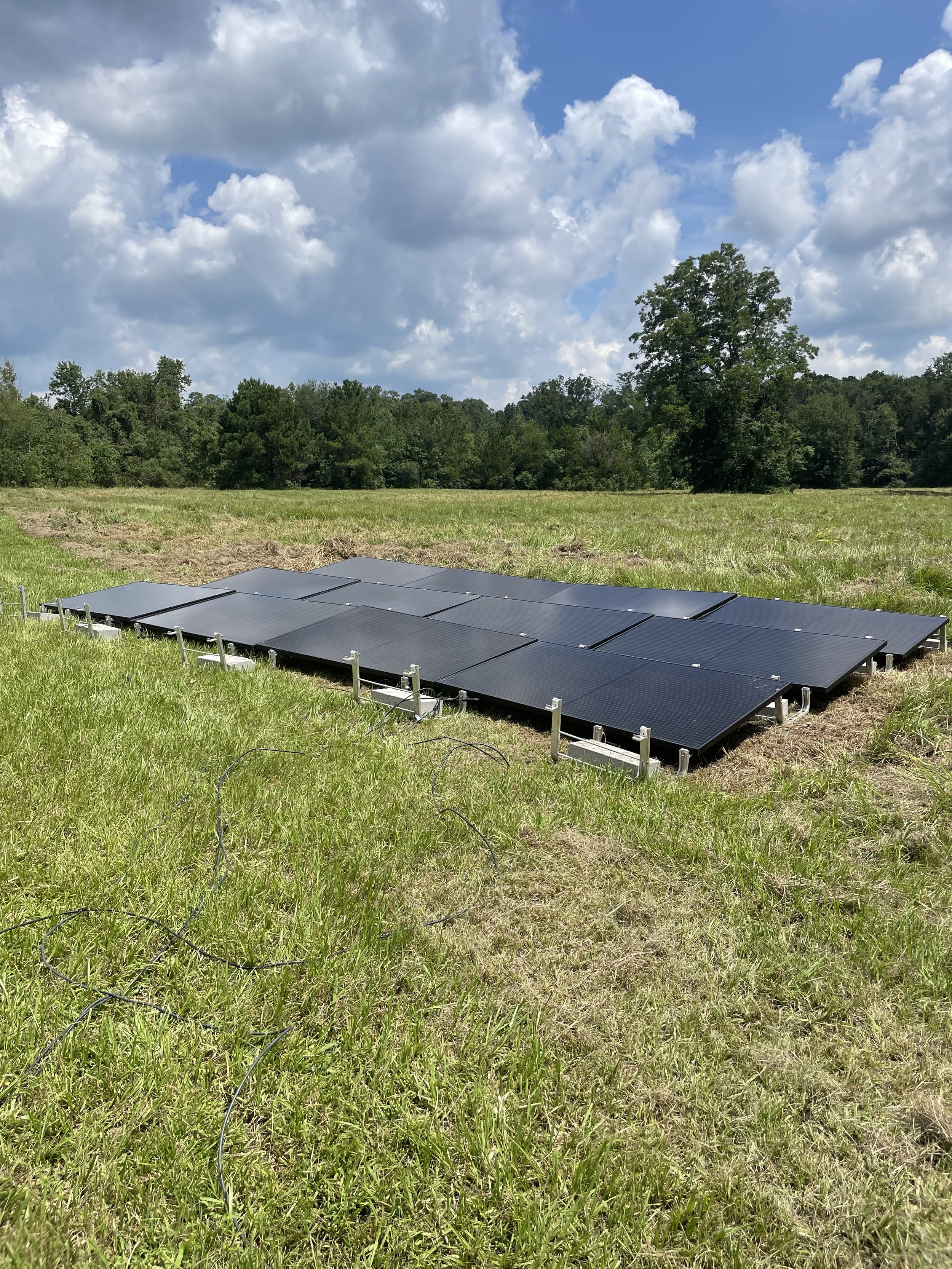
Let's see how many details I remember. It's been a couple of years. It was up north in Houston somewhere. It was one of the installations that was going to be staying there long term. I believe it was a community center that would be a hub whenever disasters do occur. We installed a bunch of solar panels outside in a field. We had to do some weed whacking, then place them and make sure that they were wired up correctly to produce the right amount of power, and then brought that into a trailer. I say trailer, but it was like a shipping container that was permanently there. I believe it had some batteries in it, probably a fridge as well. I don't remember what sort of electronics, but I think there were electronics in there too.
INTERVIEWER
What was it like assembling the mobile solar trailers? Anything surprising about how they're built?
SYLVIA
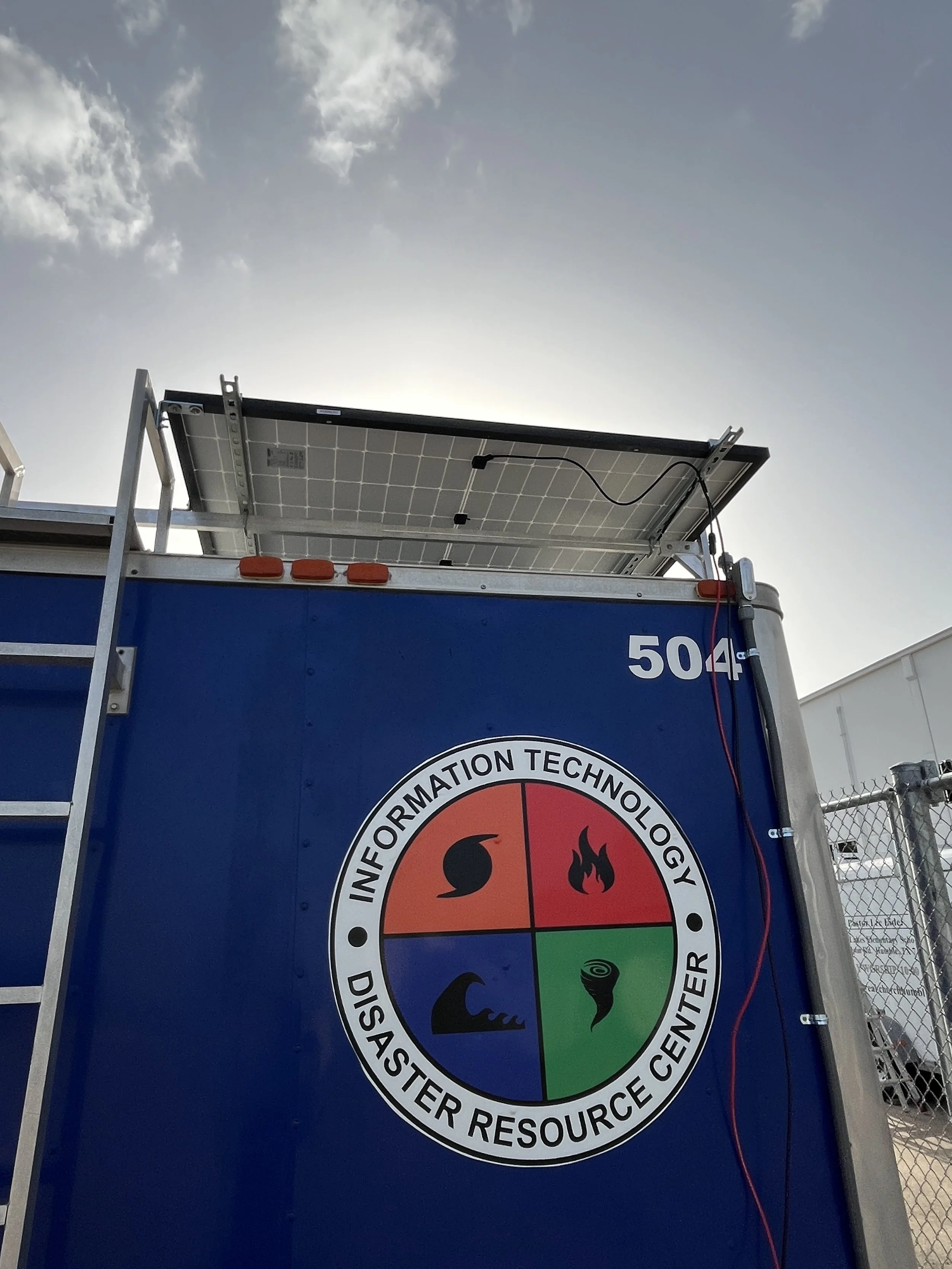
I did that one Saturday at that site, but I also worked on the mobile trailers at Schneider. They had a ton of trailers just outside of Schneider's office, and they were asking for anyone who wanted to volunteer some afternoons for that, so I worked on it a few times. I think it was probably summer 2024, shortly after [Hurricane] Beryl came through Houston. I'm assuming it's what you all call the [Beehive Microgridᵀᴹ] now, but it was an unbranded Beehive at the time.
I worked on installing the solar panels on the top of that. I think that was the main task there, and then getting the wires where they needed to be and making sure all the equipment was secured inside the trailer. I think it was one of the technology trailers, because I know that one had a TV and also probably fridges. That was cool. It was very hot. I remember that stood out to me. I learned a lot about Footprint Project and learned some mechanical skills through all of that. I think I might have used a circular saw for the first time. That's probably another one that stood out to me: being terrified of the circular saw.
INTERVIEWER
You started a recycling program in your neighborhood in 4th grade. How did that happen, and did it work?
SYLVIA
Yeah, it did work. I probably was watching some program about recycling and was like, "I want to start doing this." I feel like recycling and protecting the Earth was a big thing when I was growing up, and so that got into my head somehow. I really wanted to recycle, but I lived outside the city limits [in southeast Missouri], so we didn't have a recycling service. So with my parents' help, I created this recycling service for a lot of my neighbors. I typed up a whole letter, put it in their mailboxes, and was like, "If you want to participate, let me know."
I think it was once a week or once every other week that it would be recycling day, and they would put [their recycling] on their curb. My dad would drive me around, I'd grab all of their recycling, and then we'd drive down to the recycling center and put it all there.
INTERVIEWER
Your application mentions half marathon training. Will Boston be your first full marathon?
SYLVIA
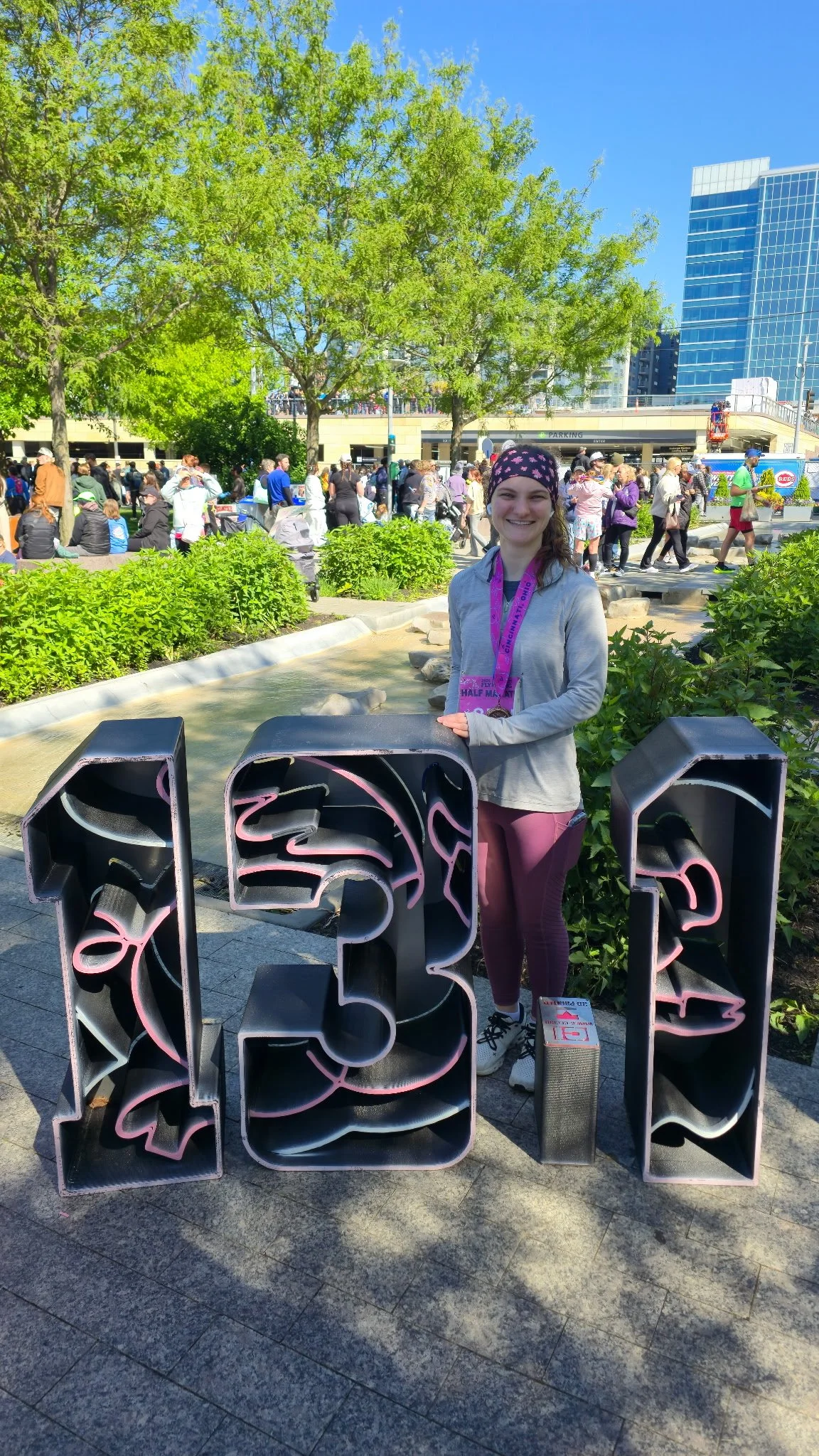
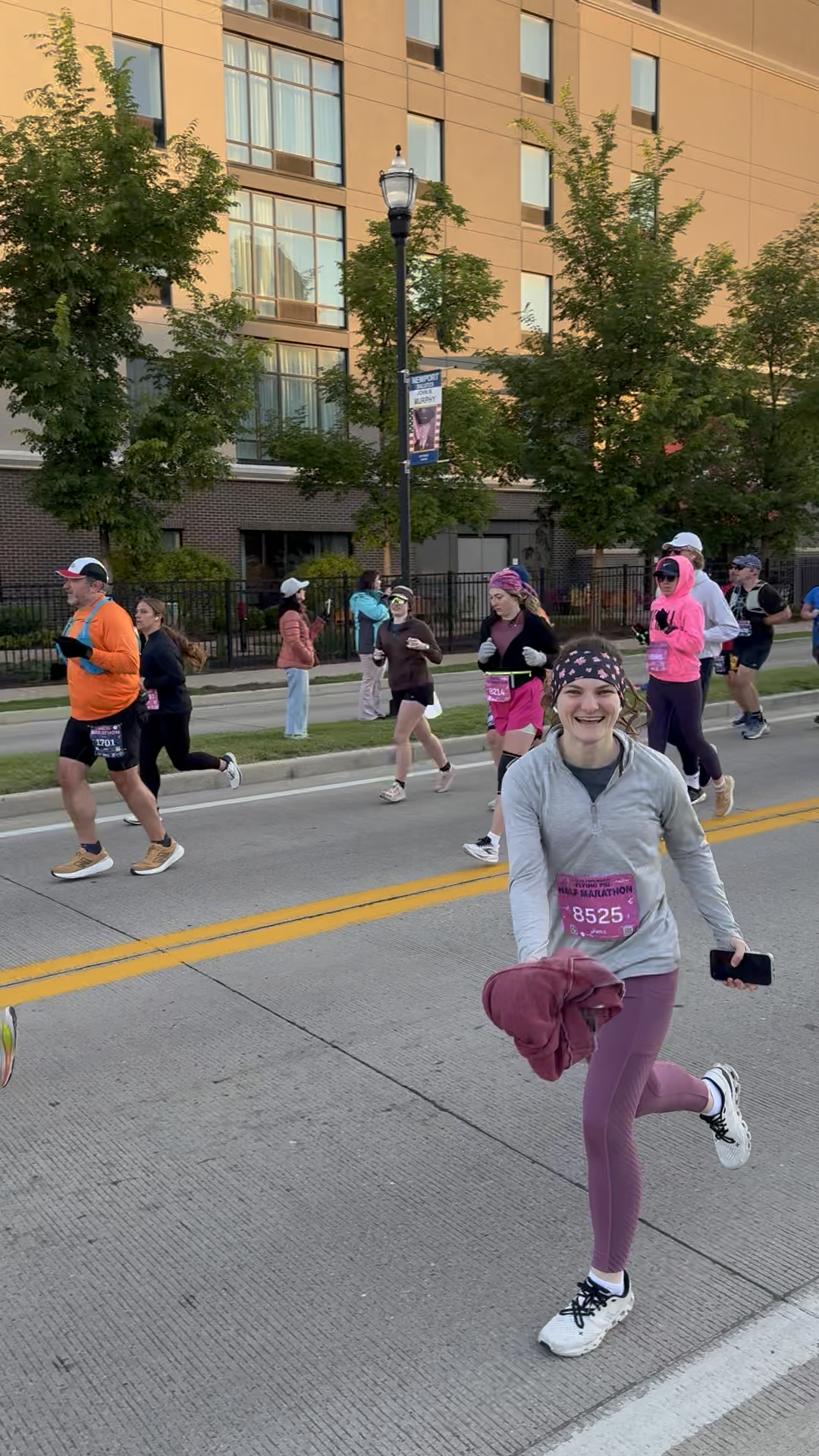
I will be honest with you. This is my first full marathon. I am kind of nervous about it. Very excited, though. I really started getting into running earlier this year. I had a friend convince me to run a half marathon for the first time, so I was training from January to the beginning of May for that. My training schedule was either going in the morning before work or going after work before it got dark. I'd try to just run around downtown Cincinnati. There's a really nice riverfront trail that I would run quite a bit, or nice neighborhoods in the [downtown] area. I did that for several months and then got the half marathon under my belt. Then my body was kind of starting to tell me that running is not for me. My knees were starting to hurt a lot. I was like, "Okay, I need to cut back."
Then I saw Schneider talking about the Boston Marathon, saw that there was an opportunity to support Footprint Project, and decided to apply and take up running again. So I'm doing it right this time. I'm getting better shoes. I'm going to do a lot more strength training. I was doing more cardio last time and not as much strength training, so I think it's going to go better this time. I really enjoyed training for the half marathon and running the half marathon, and I have been missing it over the past several months, so I'm very excited to get back into it. My first day of training was yesterday [October 19]. I went for my first official training run, and it felt good. So I'm looking forward to the next six months.
INTERVIEWER
How are you approaching training going from a half to a full, especially through a Cincinnati winter?
SYLVIA
I do have experience with that. Luckily, I trained from January through April last time, so it's been nice going on runs in October and being like, "Oh, it's so warm right now." I'm just going to approach it the same as I did last time: break it down into little steps and focus on each of those steps. Try not to get too intimidated by the 26.2. And run outside as much as possible. If that doesn't work, I've got access to a treadmill. Last time I was training, I was traveling a lot, so lots of hotel treadmills or just random routes in the different cities I'm in. It's always cool to find different trails there and explore the city a little bit through running. But yeah, just consistent progress and little milestones.
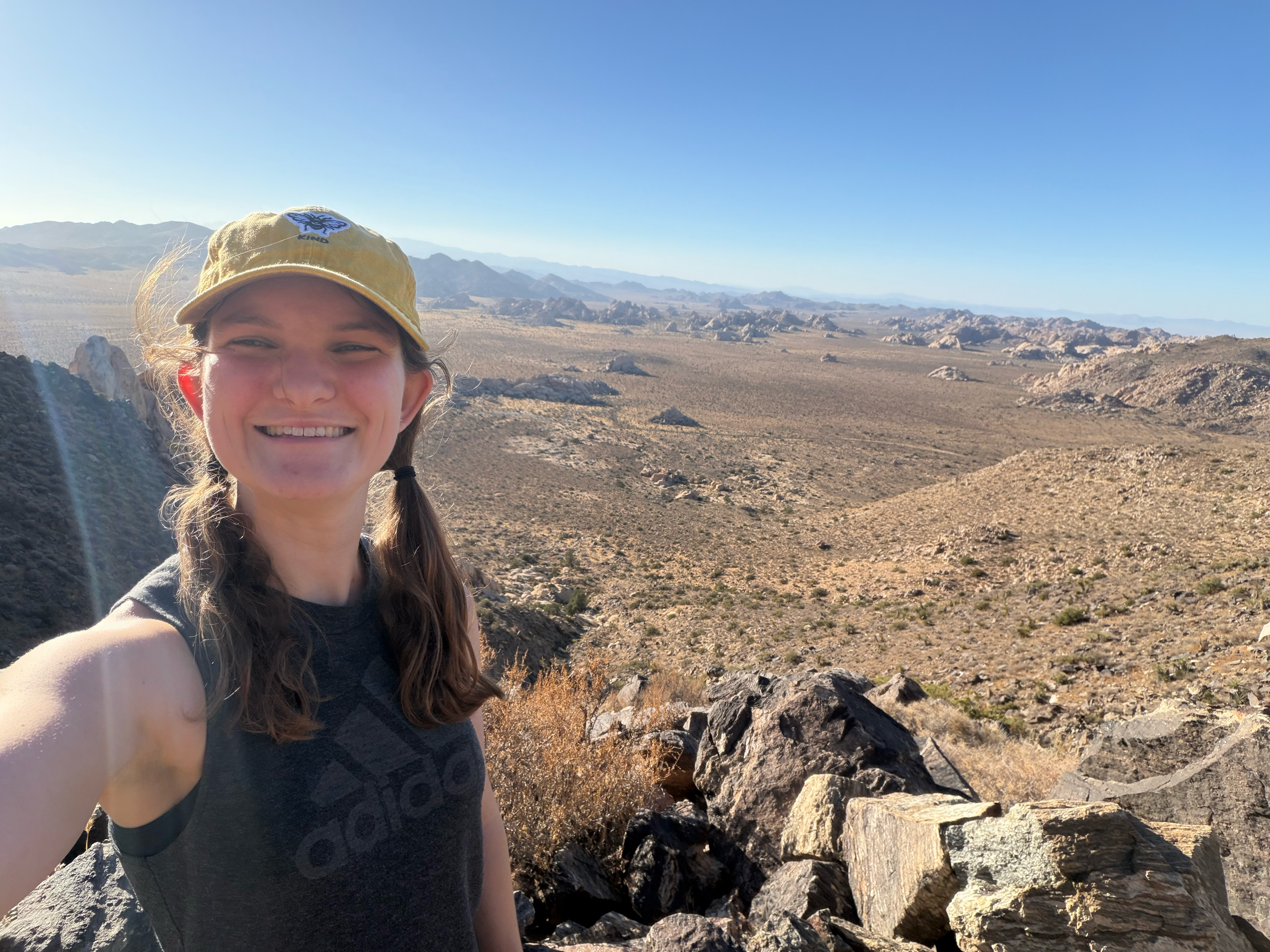
One of the things I really enjoyed about the training process earlier this year is that, starting out, a couple of miles was my go-to when I went for a run, and thinking about getting up to a half marathon seemed so intimidating at the beginning. But then you have this plan, and you make little incremental changes. It's so cool to see how you can take such a big, daunting task, break it down into smaller steps, and just consistently put in the work over time and make progress and achieve your goal. So I'm excited to do the same this time.
INTERVIEWER
Do you have a race-day ritual, a go-to playlist, or a mantra?
SYLVIA
Yes, I do. The first official race that I ran, besides ones growing up or in high school, was in St. Louis. My sister-in-law is a big runner. She's actually done Boston a couple of times, so she was giving me suggestions for what we could do. We got Trader Joe's pizza and made pizza the night before, and that worked really well. Then I did it for the half, so pizza has got to be one of my rituals now.
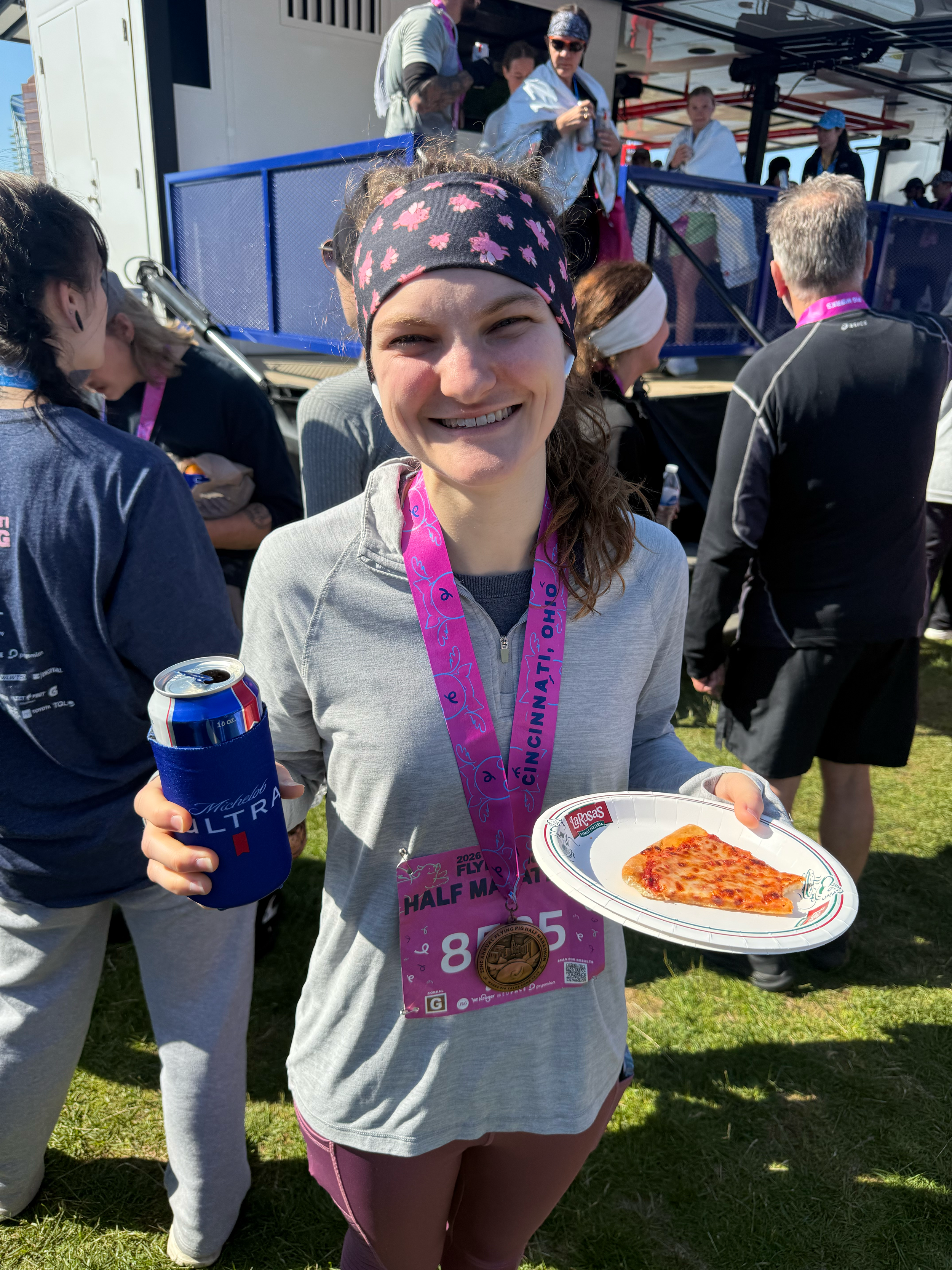
As far as playlists go, I've gotten into the Big Bootie Mixes. The DJ is Two Friends, and they basically take a bunch of different pop songs, mash them together, and add some random sound bites. I feel like it was a big thing in college, and it's a little more upbeat. My Saturday runs, my long runs, were always listening to Big Bootie. That was my treat for Saturday. I need upbeat to back me a little bit.
INTERVIEWER
What does "resilience" mean to you as an engineer versus as a runner?
SYLVIA
Oh, that's a good one. Wow. I guess resilience as an engineer, from a microgrid perspective, means being ready when something goes wrong. I guess they're kind of similar. Most of what I test is, "Okay, the power has gone out. We need to be resilient. We need to be able to power this site." And with running, being resilient means bouncing back if something isn't going as planned. I guess the difference is more in attitude. With microgrids, I'm more prepared for something to go wrong and expecting it, whereas with running, I'm hoping everything goes smoothly. But of course, that doesn't always happen. So it's just being able to bounce back if things aren't going to plan.
INTERVIEWER
Finish this sentence: "I'm running for Footprint Project because…"
SYLVIA
I feel like it's not as much why am I running for Footprint Project as it is that Footprint Project is why I'm running. Like I mentioned before, I was kind of ready to stop running, ready to maybe take up yoga or just go on some short runs. But when I saw that Footprint Project was one of the charities being supported with the marathon, I figured this would be a good way for me to use my talents to support. I was able to volunteer in person in Houston, but after moving to Cincinnati, I wasn't aware of any opportunities here. So just being able to get back involved with Footprint Project has been really great.
INTERVIEWER
Finish this sentence: "When I cross the finish line, I'll be thinking about…"
SYLVIA
I'm sure I'll be thinking about sitting down, ready to be done. I will be thinking about all the people that I will have helped along the way through Footprint Project, as well as all the people that will have helped me get to the finish line.
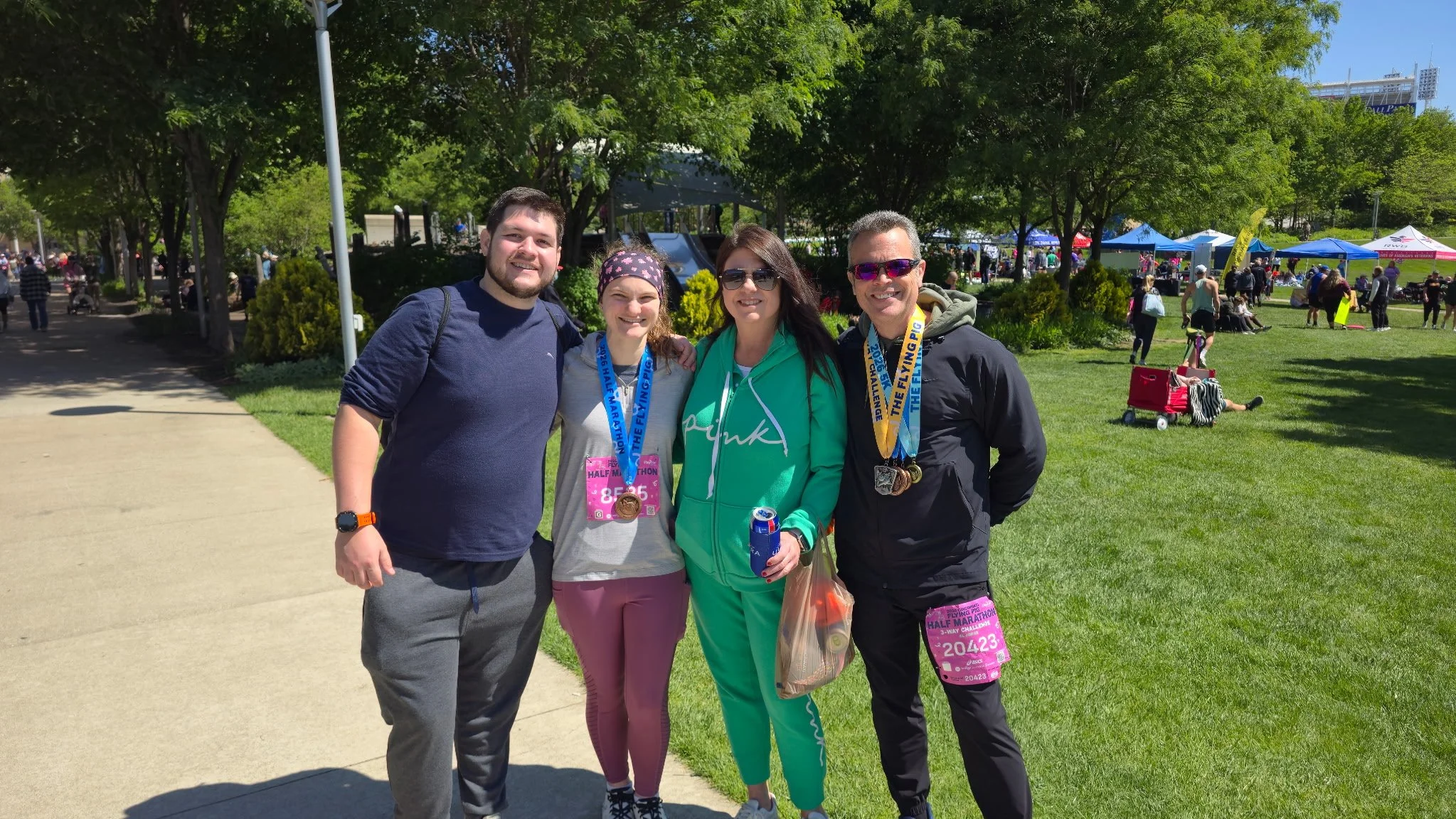
Sylvia went from a fourth-grade recycling route in Missouri to designing microgrids that keep the lights on when the grid goes down. In April 2027, she's taking on 26.2 miles the same way she trains: one small step at a time. We're grateful to her and to Schneider Electric for carrying Footprint Project's mission to the Boston Marathon. You can support Sylvia's run on her donation page.
