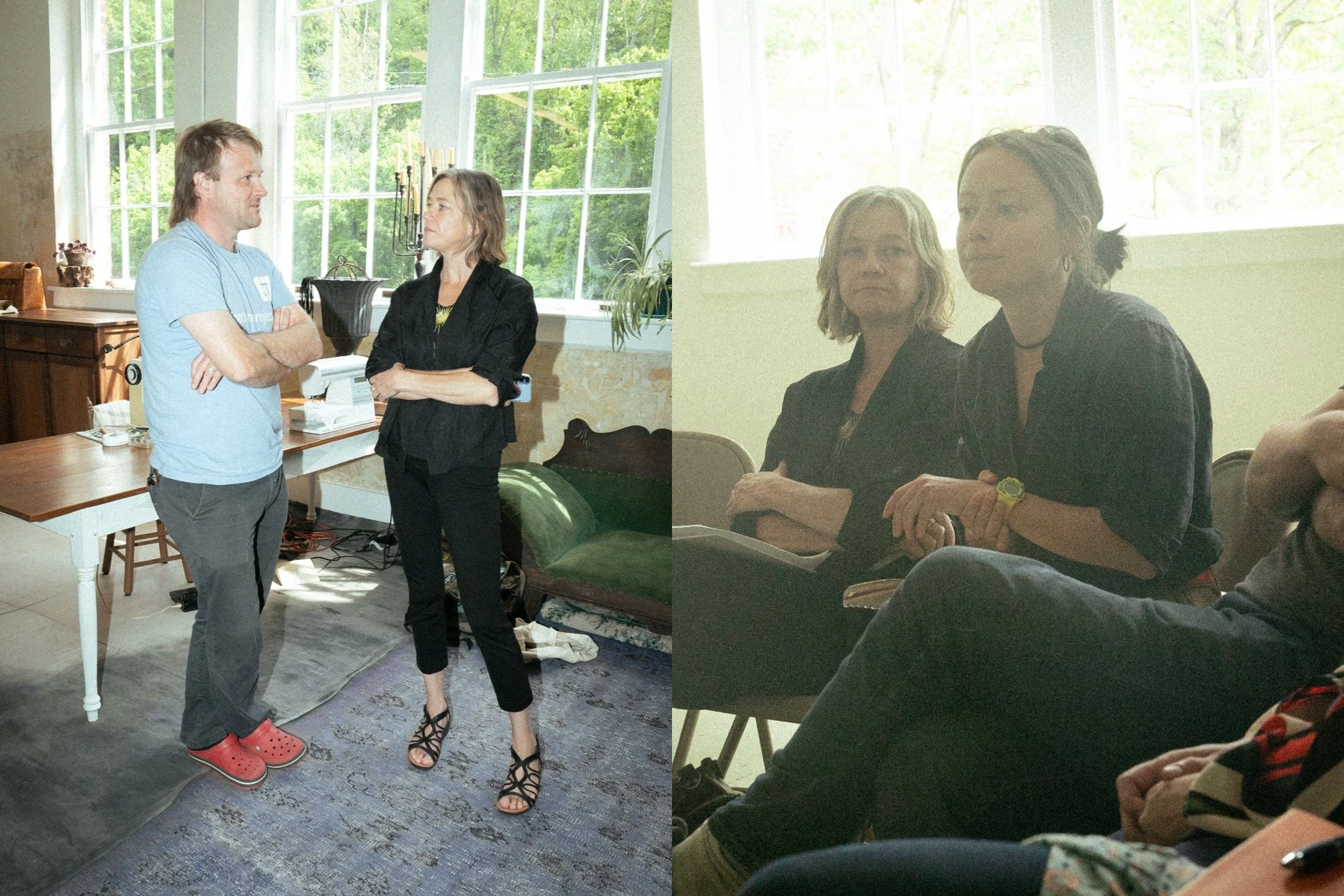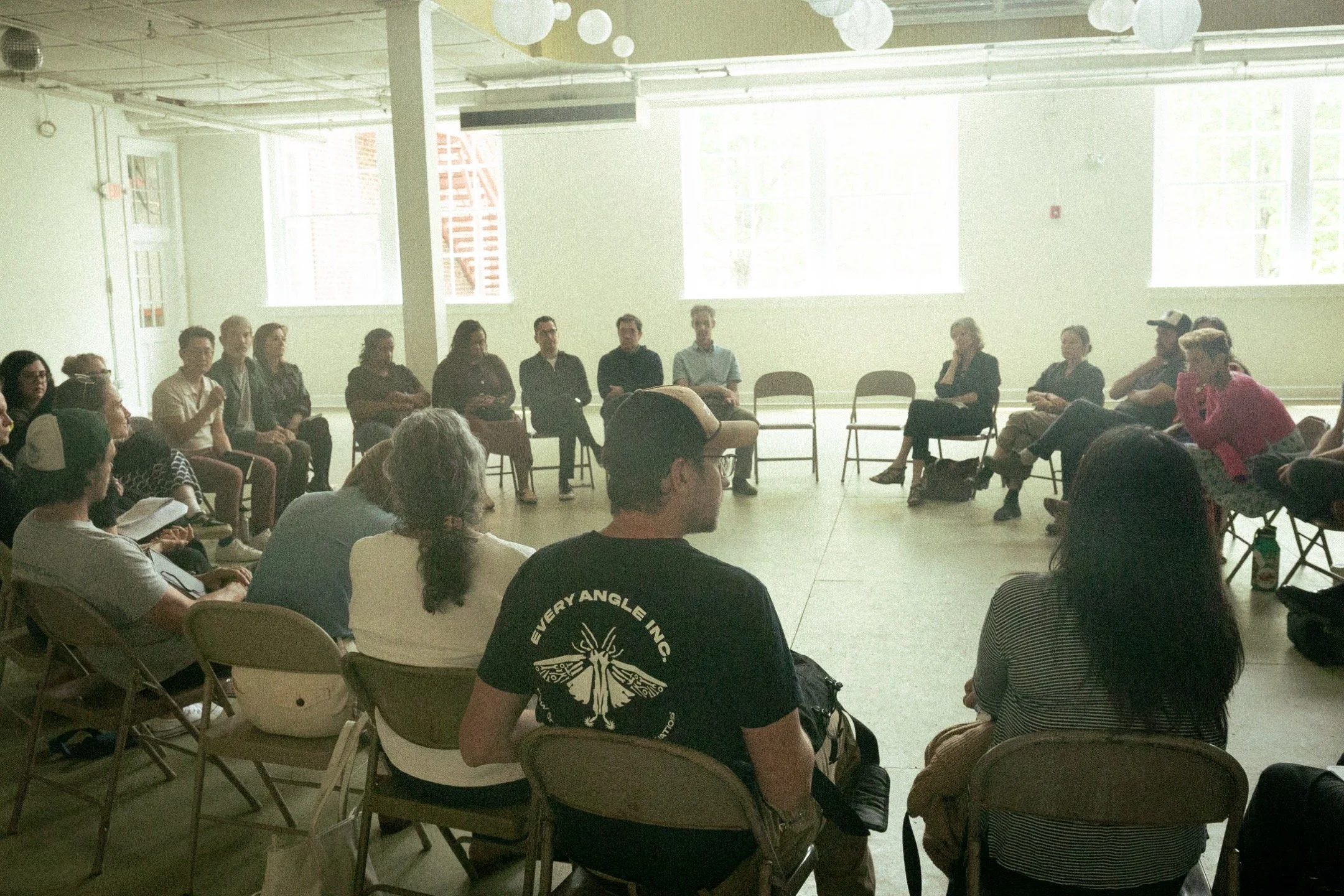
A group of participants gathers to discuss community resilience.
As we continue to grapple with the long-term impact of Hurricane Helene in Western North Carolina, we take time to reflect on what community resilience looks like and how we can best serve them.
We must constantly ask ourselves:
What does long-term resilience look like in the communities we serve?
What are the greatest daily challenges our communities face?
What role does art play in memorializing disaster and creating resilience?
In a society where advocating for immigrant communities’ needs can endanger them, how do we support them? Additionally, how do we raise awareness about the amazing work they are doing to rebuild after Hurricane Helene?
Where can we build bridges between organizations throughout the country that are working day and night to lift the communities most impacted by our shifting economy and increasingly severe natural disasters?
What gives us hope in our post-Helene rebuilding efforts?
These are some of the questions we discussed May 4-8 during an event hosted by the Local Initiatives Support Corporation (LISC) and facilitated by Appalacian Voices.
A little background on the attendees:
LISC’s Local Resilience Action Network LRAN) project established a cohort of five US-based nonprofits. Their mission is to co-create a community resilience framework, participate in peer learning, and strengthen local disaster preparedness and response. Appalachian Voices is one of the five nonprofits in the LRAN, representing Western North Carolina (WNC).
Fifteen organizations attended the event at Marshall High Studios from locations including Phoenix, Detroit, Las Cruces, New Mexico, Los Angeles, New York City, and WNC.
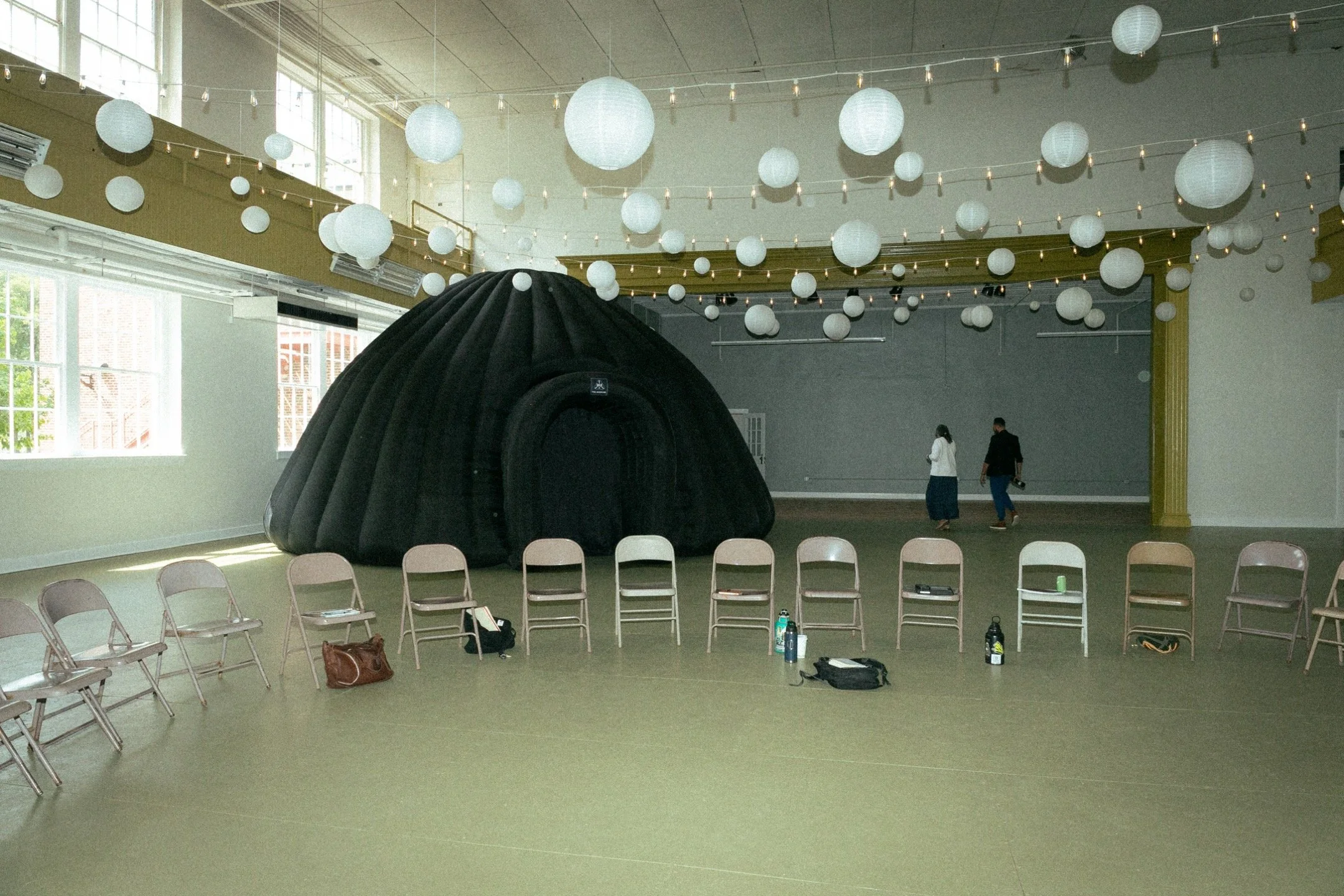
In addition to our discussions, we participated in a NOAA and Elumenati curated Geodome experience of Hurricane Helene, and displayed our newly wrapped ROAR solar trailer.
We would like to thank everyone who made this event a reality! Some of the most important lessons gleaned from our discussions are that we need more discussions like these and even more unified action. And, as we contend with our tense political and physical climate, we need to continue to care for underserved communities.