
Situation Report: Venezuela Earthquakes Response [07/27/2026]
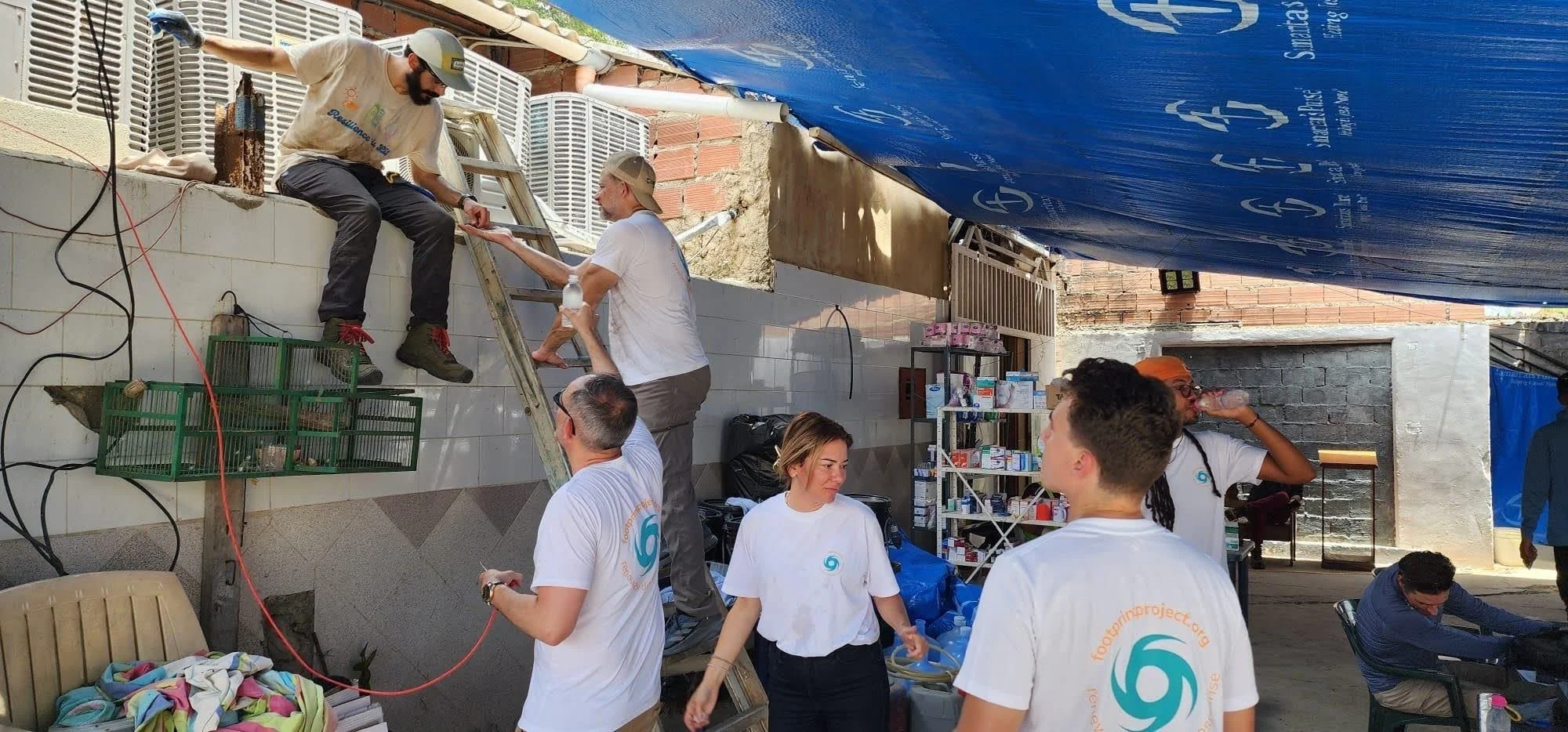
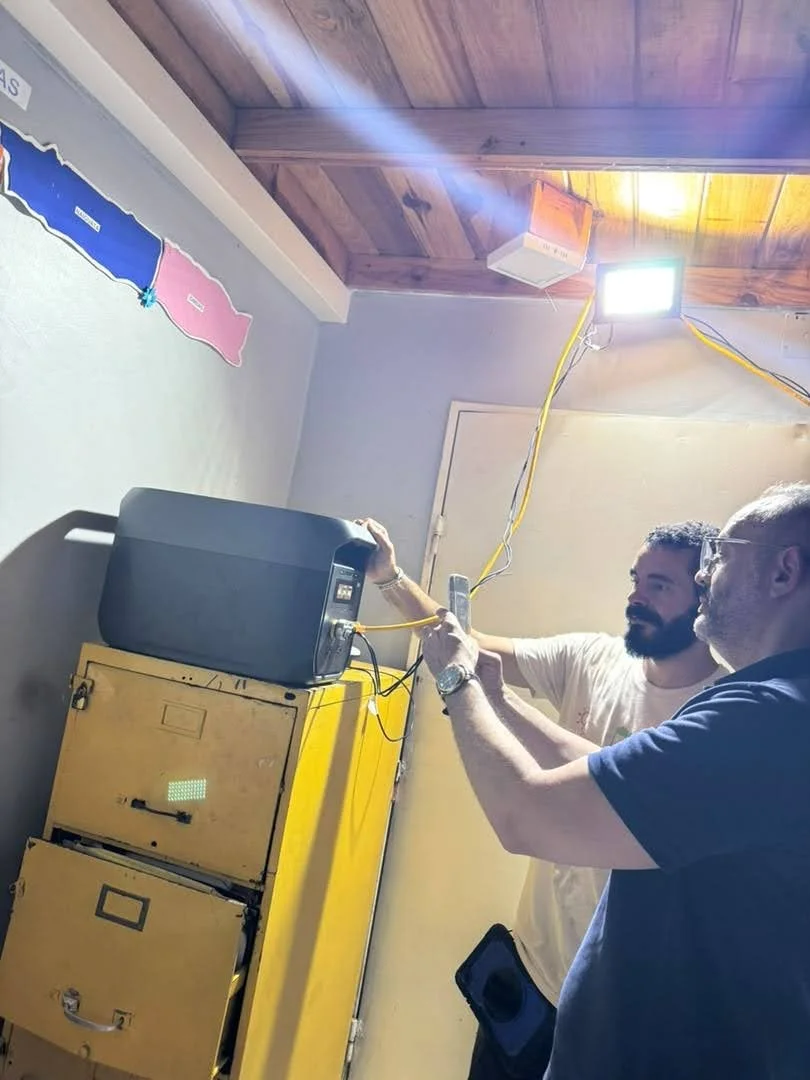
Footprint Project volunteers assist Gabriel Pacheco, Caribbean Program Manager, as he connects solar panels to AC units. (July 2026)
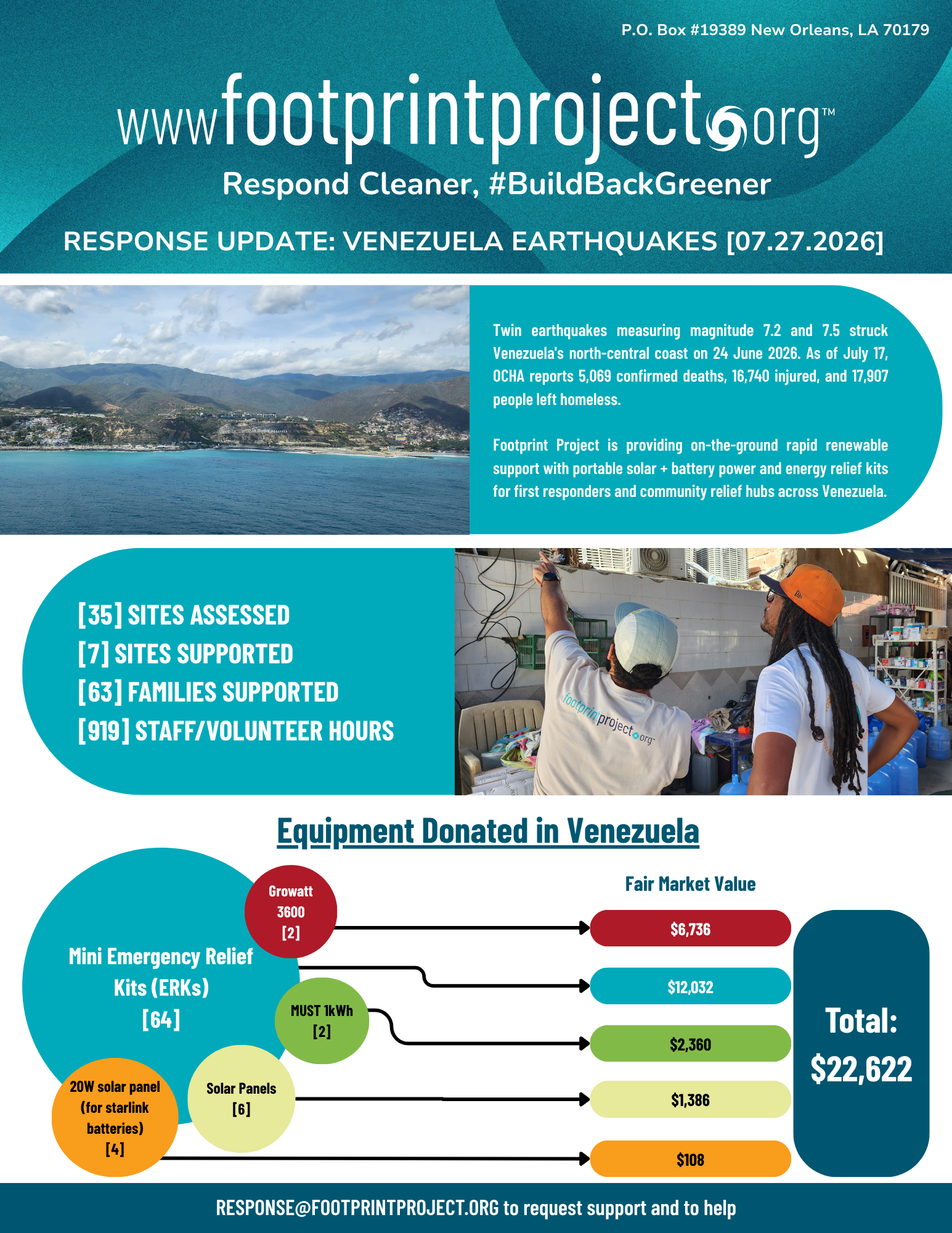
Twin earthquakes measuring magnitude 7.2 and 7.5 struck Venezuela's north-central region on June 24, 2026. As of July 23, OCHA reported more than 5,300 deaths, 16,740 injuries, and almost 18,000 who have lost their homes. Coastal La Guaira and the towns north of Caracas — Naiguatá, Caraballeda, and the surrounding barrios — have borne the heaviest humanitarian impact and remain the focus of the response, part of a broader effort now sheltering more than 21,000 displaced people across 107 government-run camps and drawing a $299 million UN appeal addendum.
Footprint Project's Rae Goldman, Associate Director of Operations, and Gabriel Pacheco, Caribbean Program Manager, arrived in Venezuela in early July to lead the response on the ground, focused on getting reliable power to families and institutions — including the churches and community foundations described below — that the broader response hasn't yet reached. Since activating on June 25, our Footprint Project staff, and a growing group of local volunteers, have logged more than 919 combined hours assessing sites, delivering equipment, and building the community partnerships needed to get reliable power where it's needed most.
35 Sites Assessed
•
7 Sites Supported
•
63 Families Supported
•
$22,622 Equipment Donated
•
35 Sites Assessed • 7 Sites Supported • 63 Families Supported • $22,622 Equipment Donated •
CHURCHES ON THE FRONTLINE
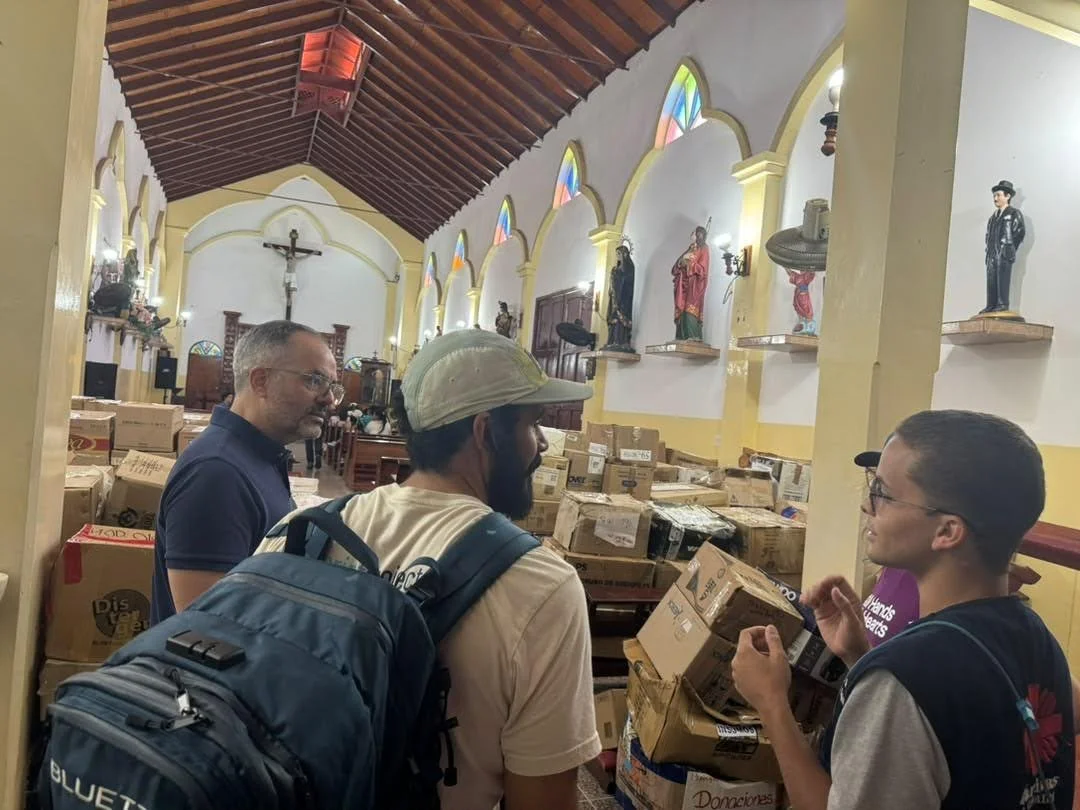
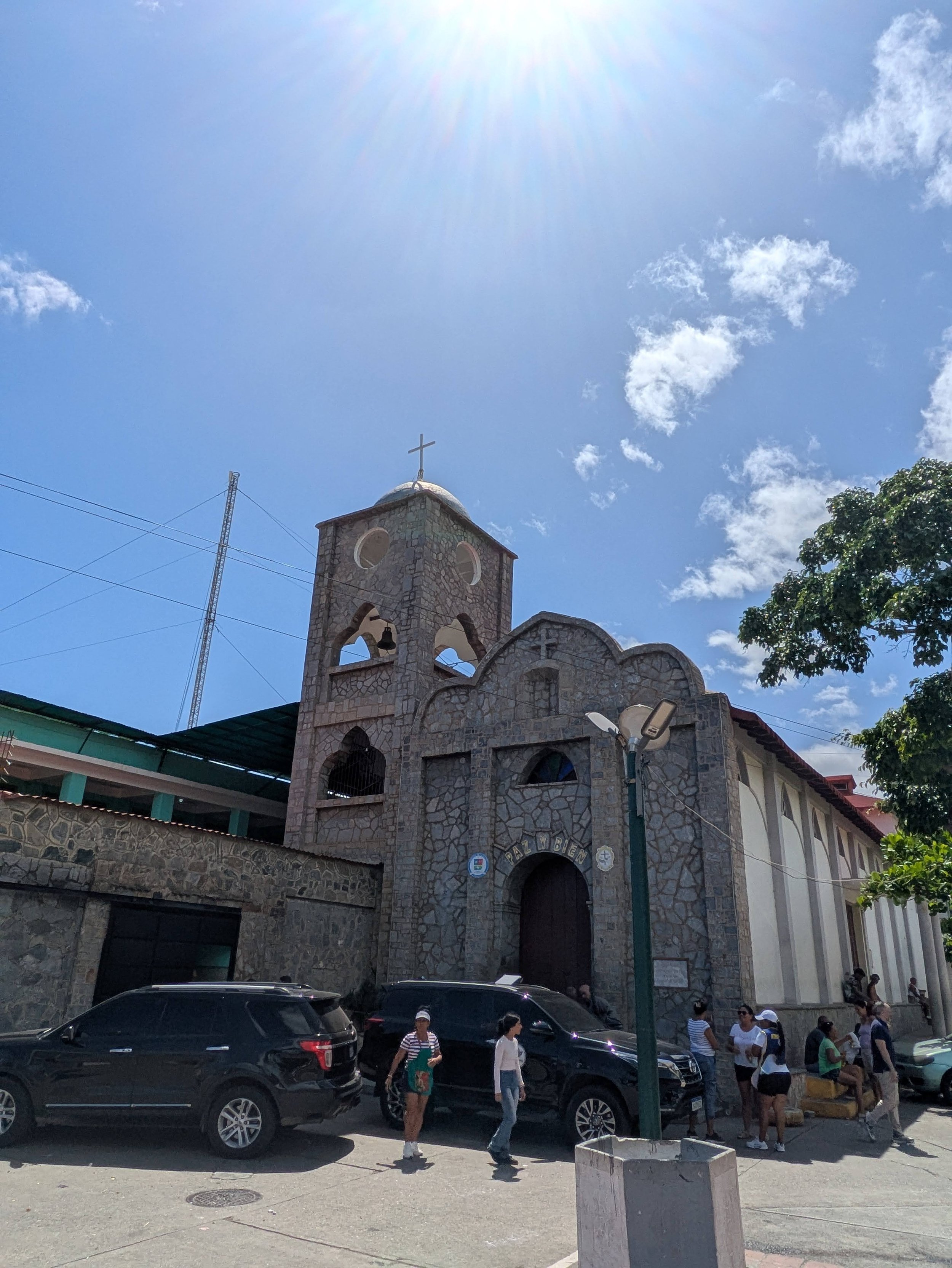
On 16 July, the team traveled along the northern coastline to Naiguatá, Caraballeda, and La Guaira — three towns sitting at or near ground zero of the June earthquakes — to visit churches that have quietly become some of the most important relief infrastructure in the region.
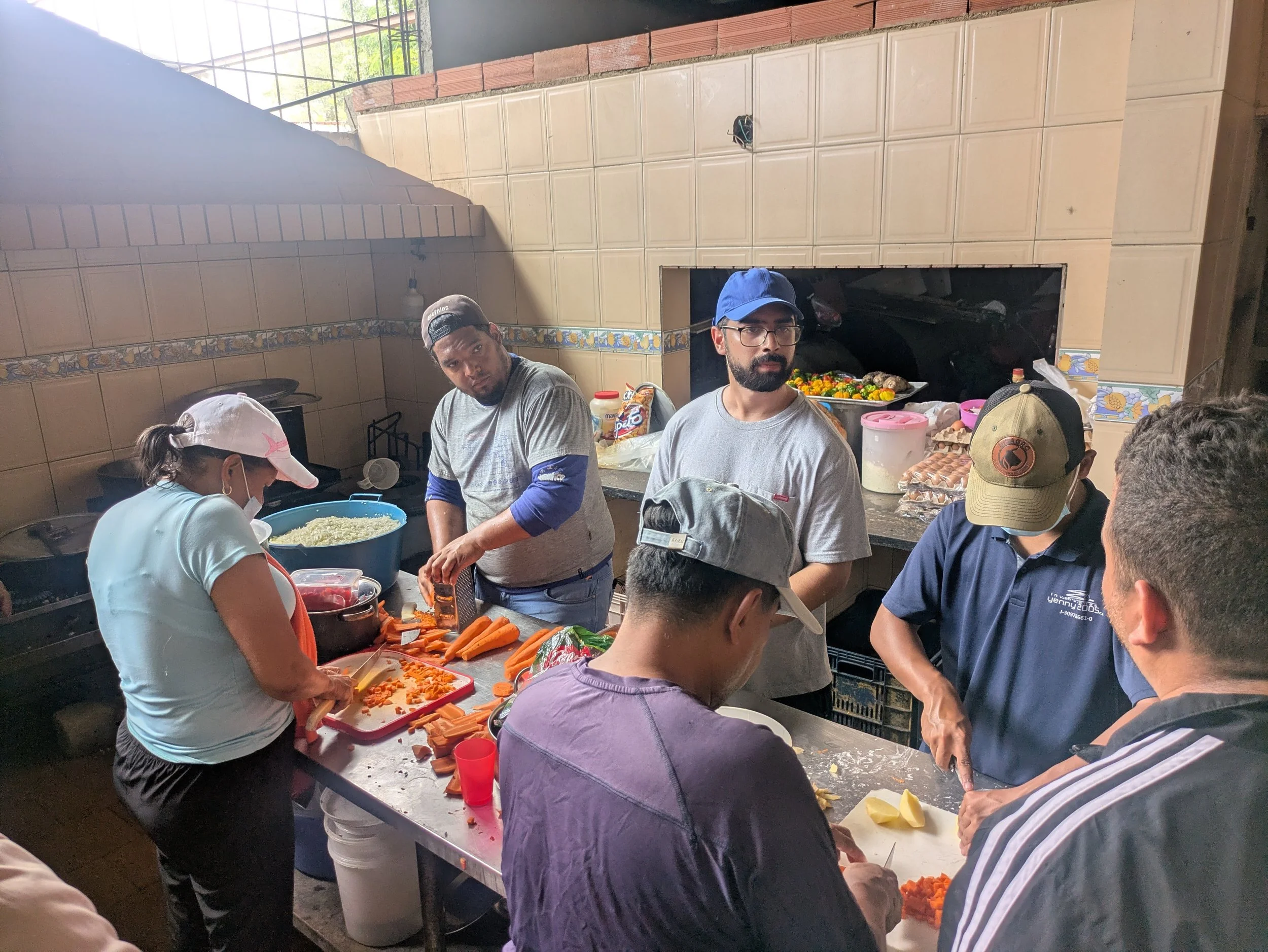
Each of the three churches the team visited is still operating as a place of worship. But in the weeks since the earthquakes, they've taken on far more than that — becoming, all at once, the kind of community infrastructure shown below, run with very limited, and in some cases no, access to reliable power.
“The churches are operating as places of worship, schools, shelters, soup kitchens, physical and mental health clinics, potable water dispensaries, pharmacies, and connectivity and charging hubs as much as they can, with very limited or no access to reliable power. Nevertheless, each has been able to support hundreds of people, some even whole towns.”
A NEW PARTNERSHIP: FCAUP
Earlier this month, not long after Rae and Gabriel arrived in Venezuela, they met with La Fundación Casa Arturo Uslar Pietri (FCAUP) to explore possible sites for Footprint Project's solar microgrids. The sites under discussion would serve as outposts where communities can access reliable power for communications, medical needs, search and rescue, and debris removal — the kind of round-the-clock infrastructure that's hardest to keep running in the current conditions and most needed as recovery work continues.
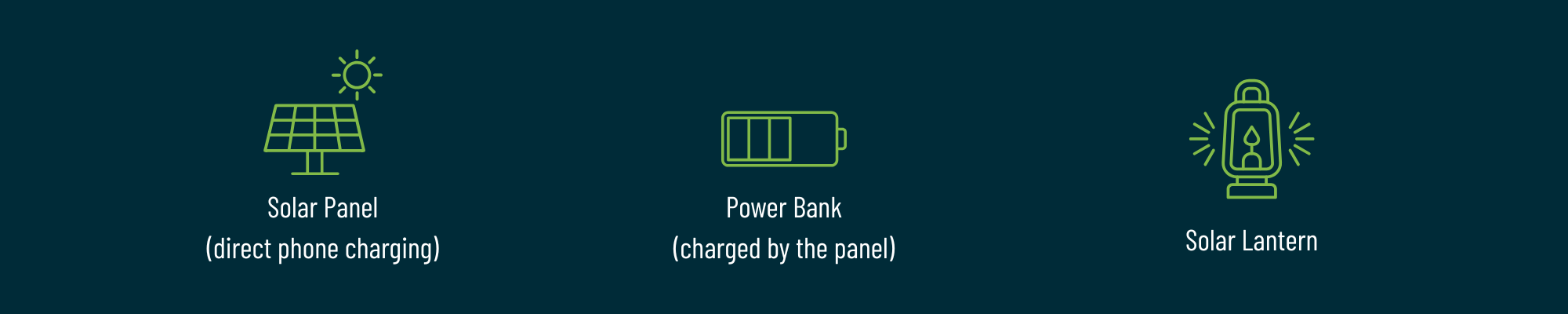
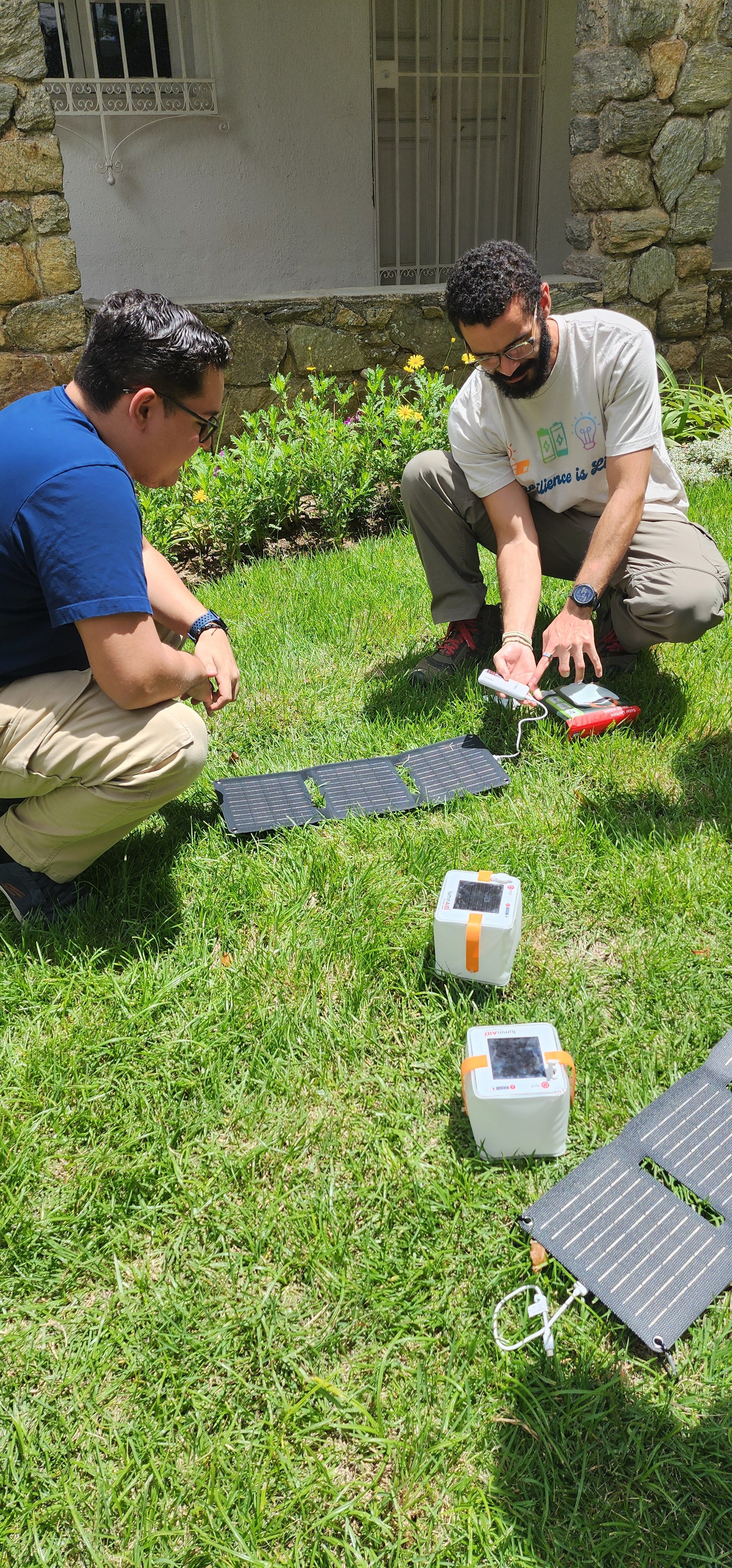
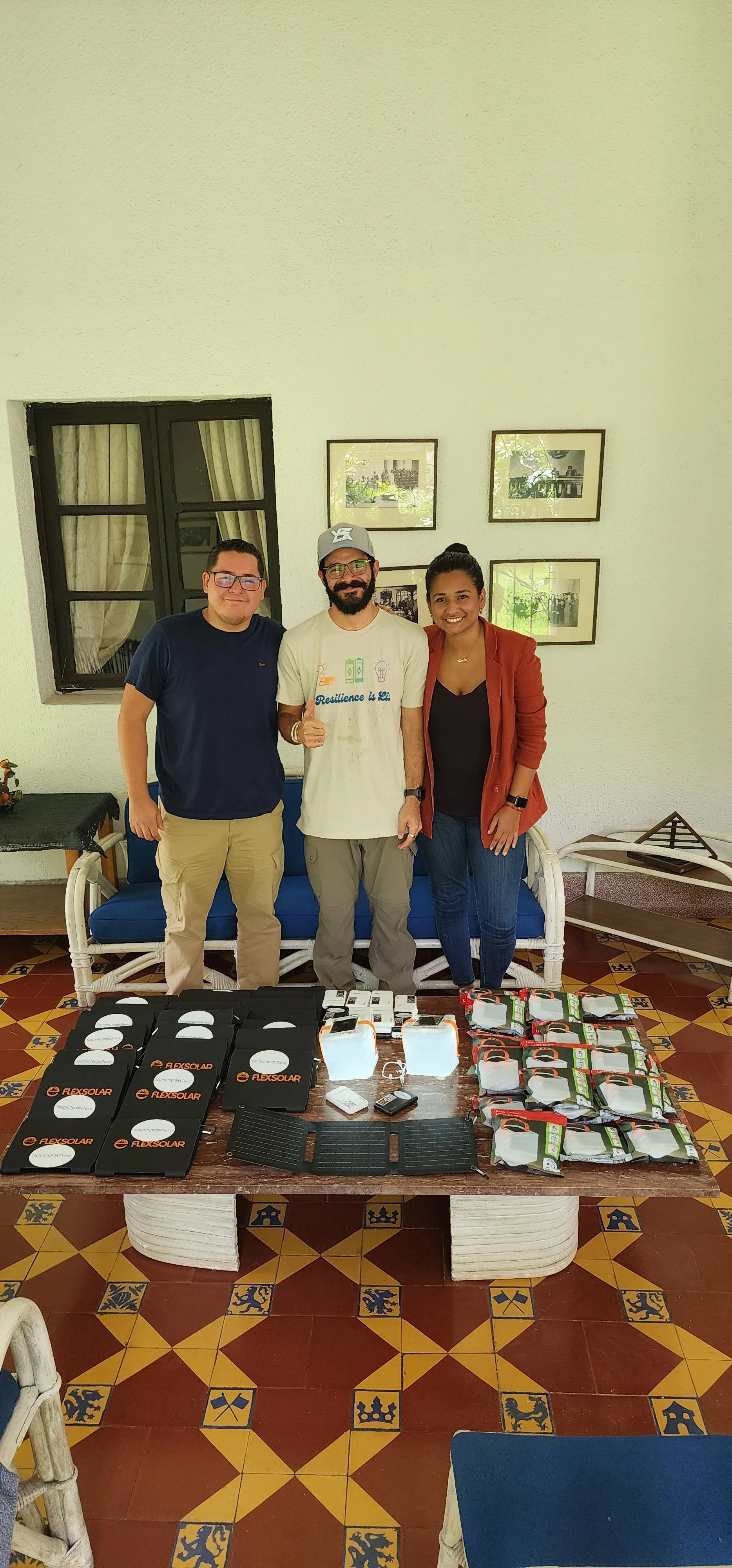
Since meeting FCAUP, we have donated over twenty-five mini Energy Relief Kits (ERKs) for them to distribute to community members in the affected areas. Footprint Project plans to provide additional kits as soon as the next shipment arrives in-country. Each kit is designed to be simple and self-contained — enough to keep a family connected and lit through the night without needing the grid at all:
This is the kind of partnership Footprint Project is looking to grow in the weeks ahead: trusted local institutions, already serving their communities, equipped with the tools to keep doing that work independent of an unreliable grid. As the team continues site visits along the coast, FCAUP is expected to be among the first hosts for a permanent solar microgrid installation.
INSIDE PROYECTO OCHO ESTRELLAS
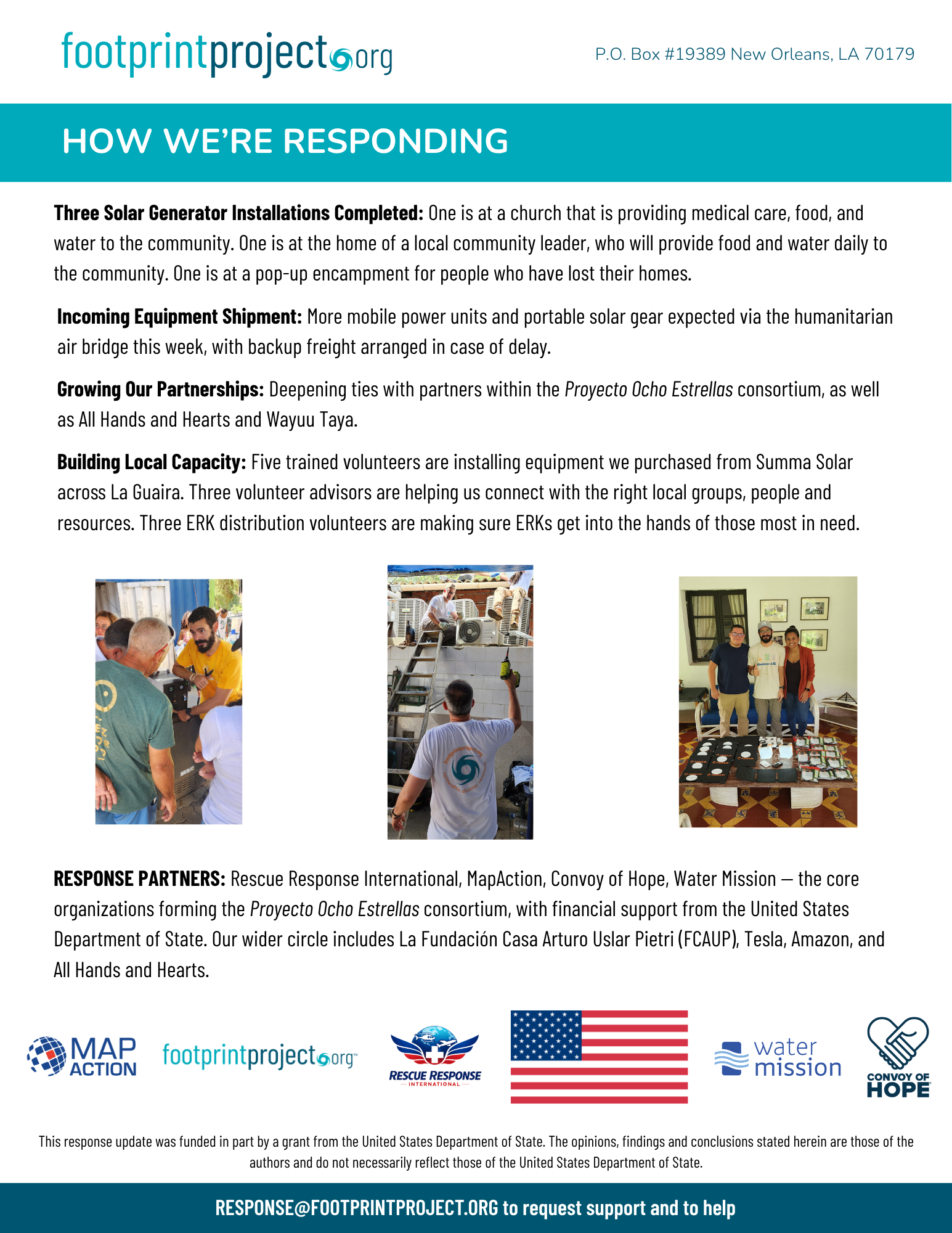
None of this happens alone. Footprint Project's work in Venezuela runs through a consortium called Proyecto Ocho Estrellas, led by Rescue Response International (RRI) alongside Convoy of Hope, MapAction, and Water Mission — with a wider circle that includes La Fundación Casa Arturo Uslar Pietri (FCAUP), Tesla, Amazon, and All Hands and Hearts.
A couple of weeks ago, RRI secured a 12,900-square-foot project warehouse in La Guaira, close to both the port and the airport, and immediately opened it up to every partner in our consortium, as well as a few other supporting partners. It's an essential piece of our infrastructure — a place to receive, store, and stage equipment — that quietly determines how fast we can provide aid to those in need.
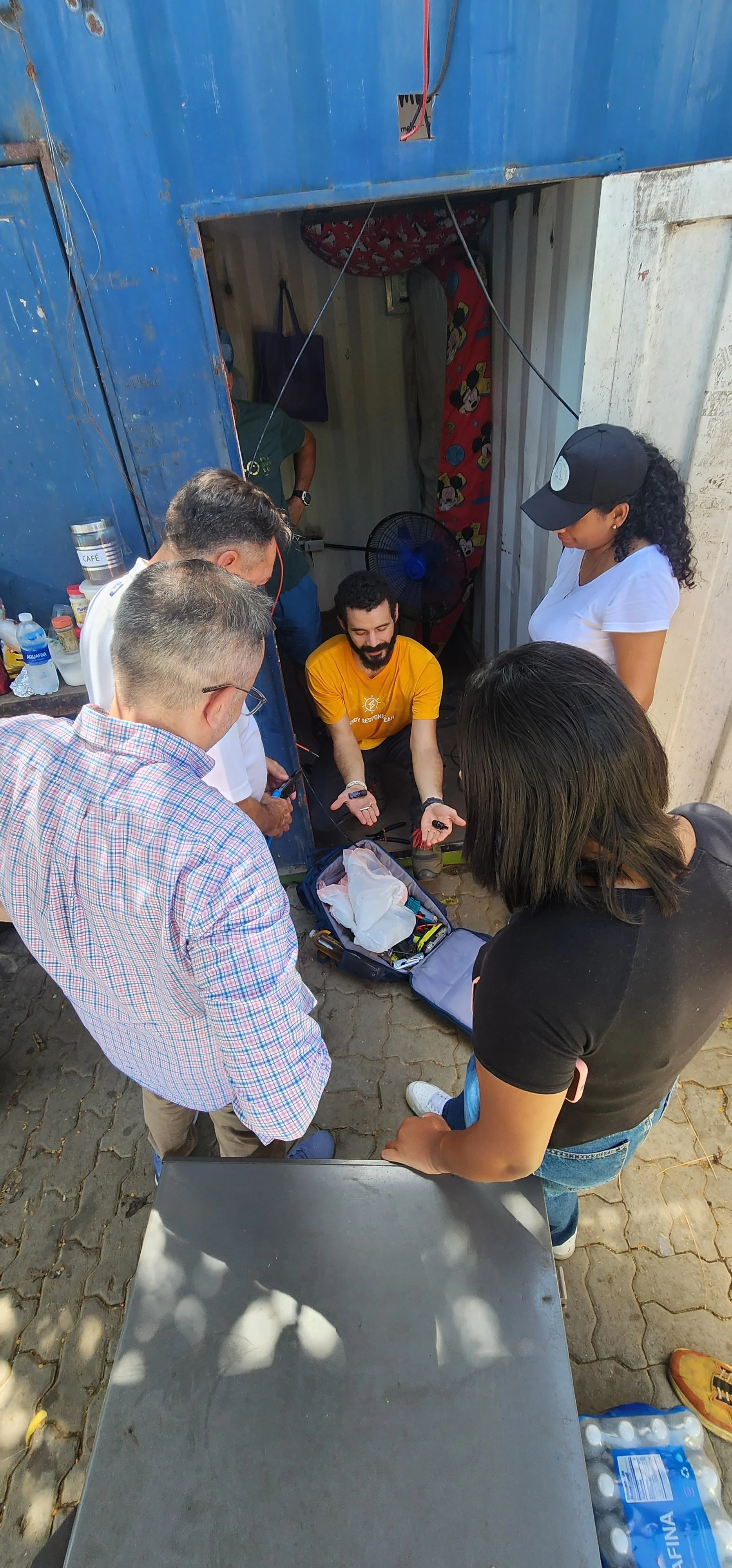
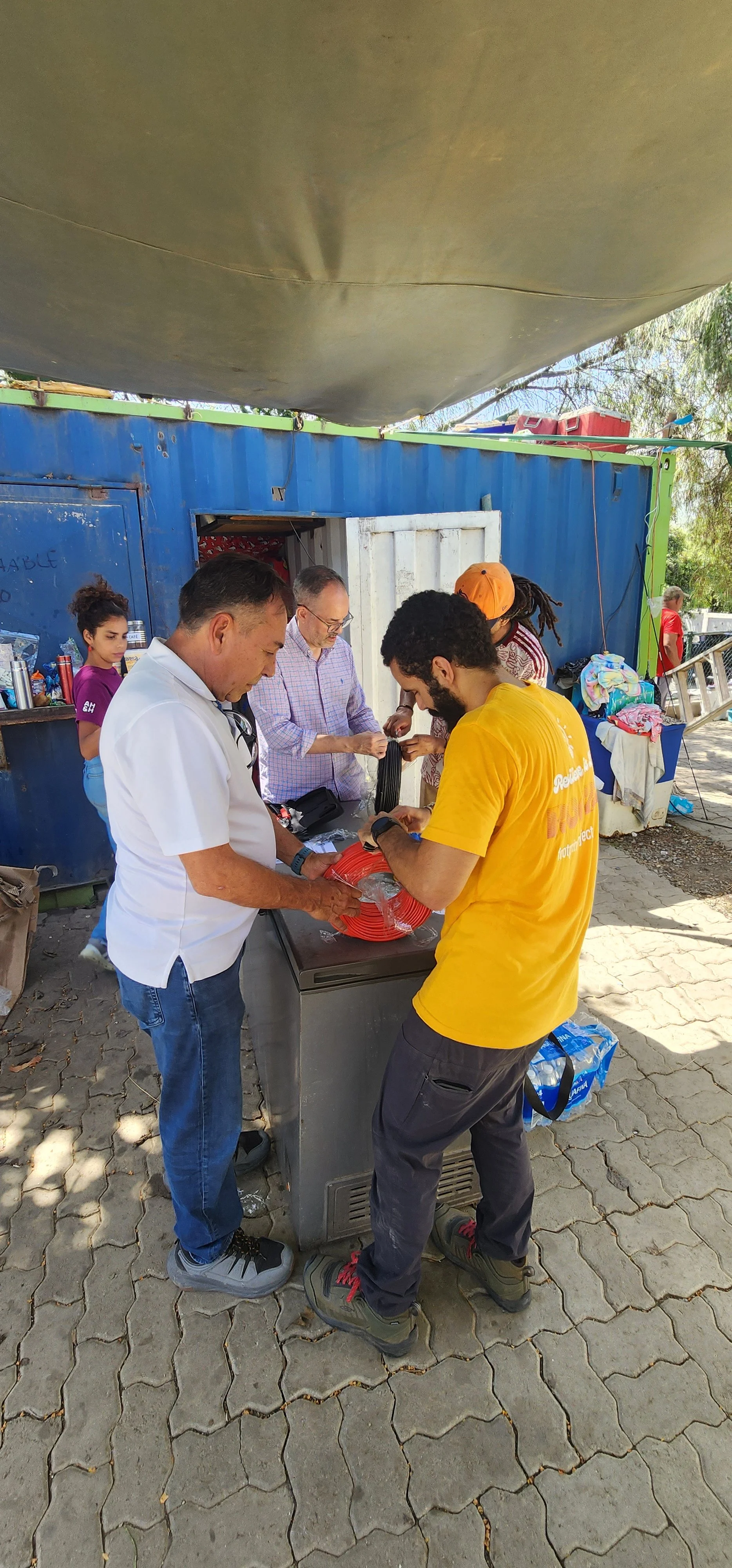
Footprint Project's own contribution reached a new milestone this week: three solar generator installations are now complete. One powers a church providing medical care, food, and water to its community. One sits at the home of a local community leader who will provide food and water daily. One serves a pop-up encampment housing people who lost their homes.
Alongside those installations, the team is building local capacity — five trained volunteers are installing equipment we purchased from Summa Solar across La Guaira, three volunteer advisors are helping connect the team to the right local groups, and three more volunteers are handling ERK distribution. More mobile power units and portable solar gear are expected next week via the humanitarian air bridge, with backup freight arranged in case of delay.
As a consortium of partners that offers many different types of aid, coordination is essential for our operations. For example, Water Mission's water treatment work is based in Caraballeda, one of the three towns our team visited on July 16.
Coordination is also essential for the logistics of our response. RRI meets regularly with the INGO Forum, Project HOPE, World Vision Venezuela, OCHA, and WFP, and the consortium stays engaged through the cluster system — the Logistics Working Group, the WASH Cluster, and shelter coordination meetings.
THE RESPONSE, IN BRIEF
Since the response began on July 10, the pace of work has shifted with the needs on the ground. The first week was dominated by rapid site assessments — 29 of the response's 31 total site visits happened in that opening stretch, as the team raced to map out where help was needed most. As assessments gave way to action in the second week, the focus shifted toward direct support: four new sites were brought fully online with equipment and services, and the number of families supported nearly doubled, from 12 to 33, even as new assessments slowed to a trickle. In the third week, assessments continued at that slower pace — four more sites brought the total to 35 — while direct support kept accelerating: families supported nearly doubled again to 63, and total staff and volunteer hours climbed to 919.
No equipment has been rented out for this response to date — every unit deployed so far has been donated outright. The tally now includes 64 Mini Emergency Relief Kits, two Growatt 3600 solar generators, two MUST 1kWh power stations, six solar panels, and four 20W solar panels for Starlink batteries, with Tesla and Amazon among the equipment donors. Combined, the equipment donated so far represents roughly $22,622 in fair market value, a figure the team expects to grow quickly as more shipments arrive and more community partnerships, like the one with FCAUP, take shape.
HOW YOU CAN HELP
Footprint Project is appealing to regional solar industry partners for donations of unused, turnkey solar generators, communication hubs, and battery storage products — the same kind of equipment that's already turning church basements and community halls into places where families can charge a phone, refrigerate medicine, or simply have a light on at night.
GRATITUDE
Footprint Project is grateful to Tesla and Amazon for equipment donations supporting this response, and to Summa Solar for equipment purchased to expand local capacity in La Guaira. Additional corporate and in-kind donations are still being logged.
