OUR STORY
What is Footprint Project?
Footprint Project is a 501(c)(3) non-profit disaster management organization that develops and deploys sustainable infrastructure networks to empower community resilience.
OUR MISSION
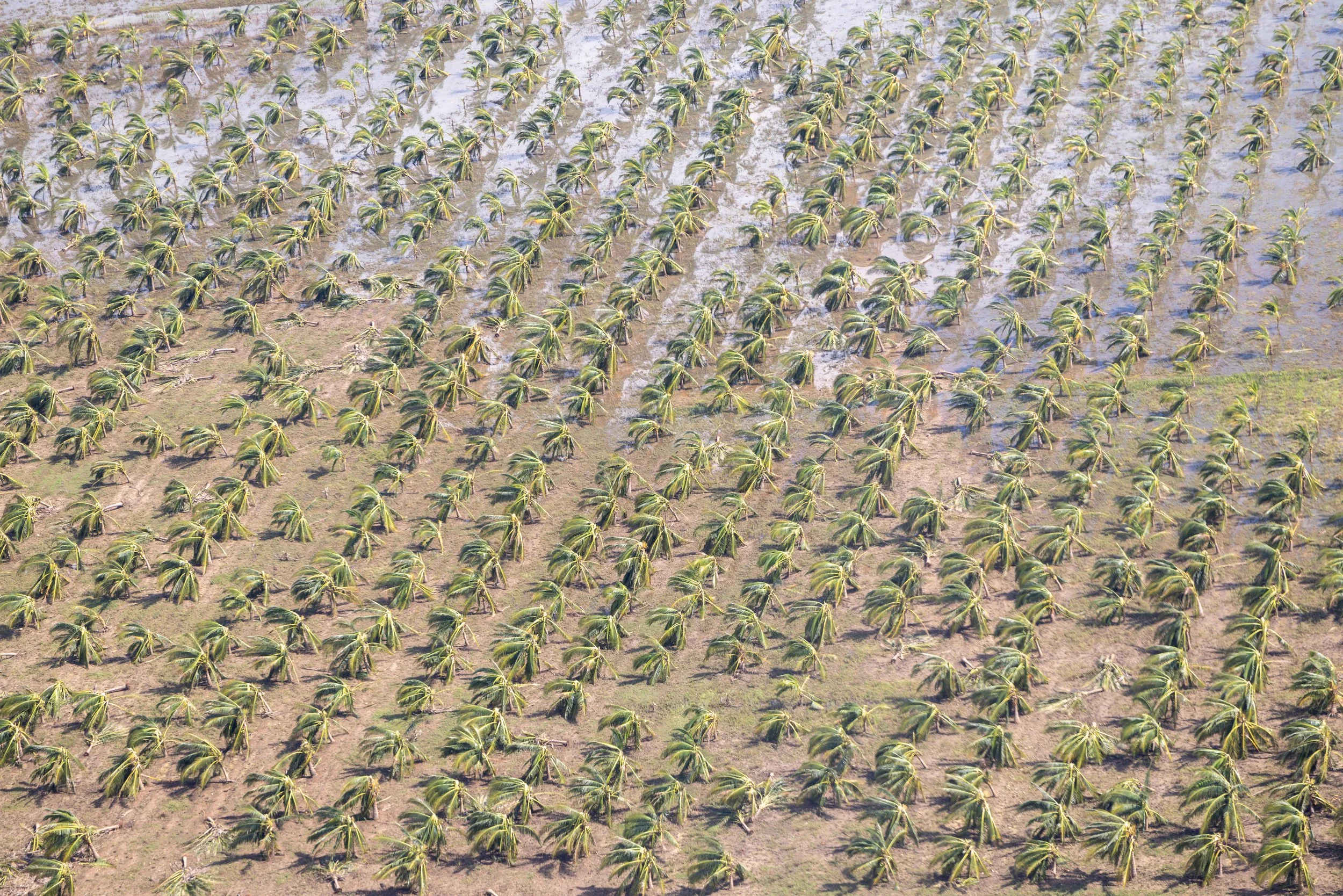
Our mission is to help build back greener after climate disasters by mobilizing cleaner energy for communities in crisis. Our vision is to decarbonize disaster response and empower community resilience in the face of increasing extreme weather events. We work across the disaster management cycle to expand frontline access to climate technologies and reduce fossil fuel use in the field. We do this through our four main programs: Rapid Disaster Response, Long-Term Resilience, Community Builds and Upcycled Energy.
OUR ORIGIN
Footprint Project’s journey started back in 2016. While managing Ebola recovery programs in Guinea, West Africa, our co-founder Will Heegaard led a grant re-adjustment to fund solar refrigerators instead of gas generators to safely store blood samples. Wondering why renewable infrastructure investments in response and recovery programs weren’t standard practice, he published an article on Climate Neutral Disaster Response. At a hackathon later that year, he joined a team of three other like-minded individuals. Leveraging their combined expertise in disaster first response, data science, and UX/UI, they pitched their idea for a carbon calculator for humanitarian aid… and won!
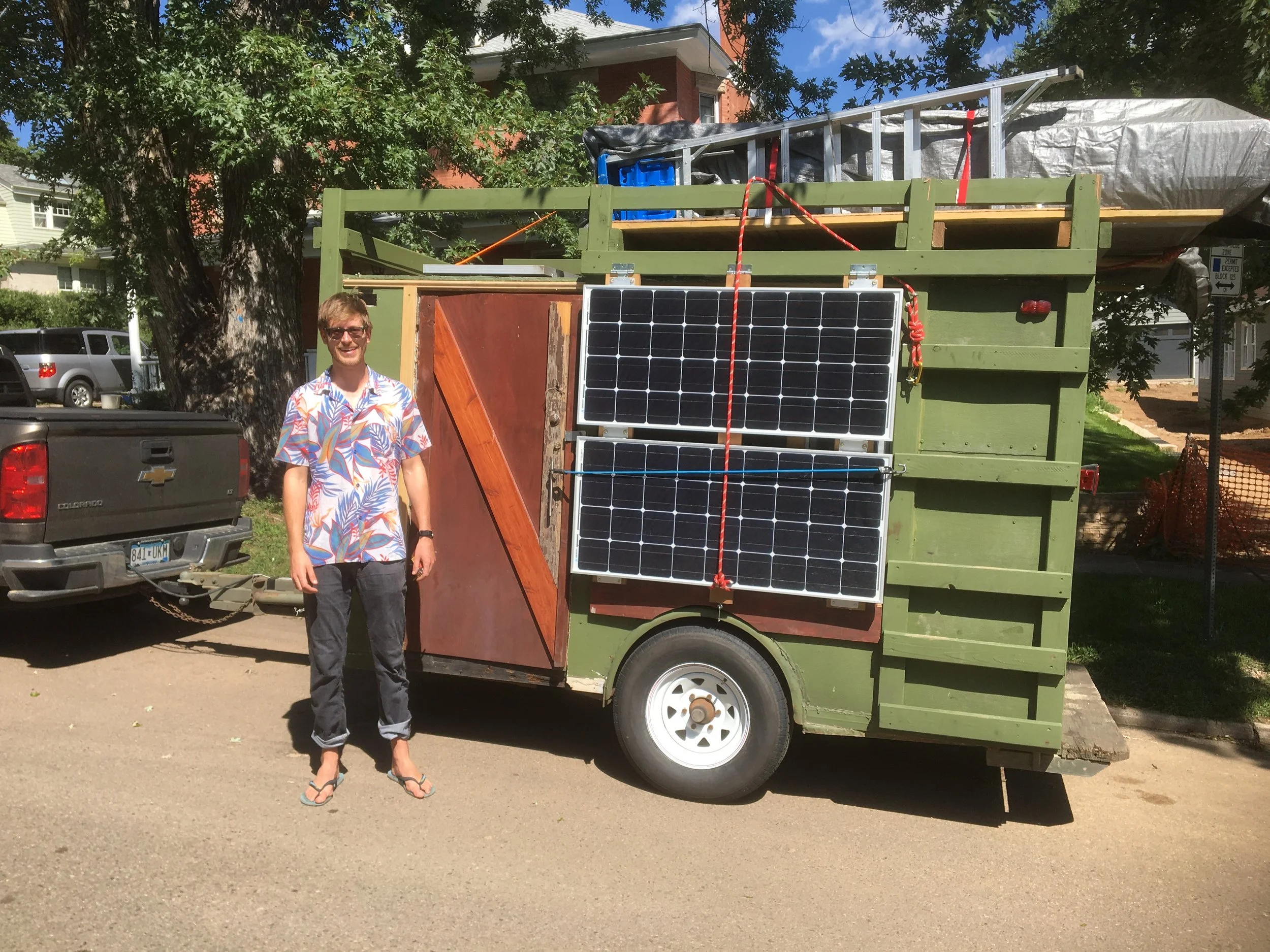
That fall, while the coders coded, the energy nerds got to work wiring up their first prototype solar generator using a used Craigslist trailer, a solar panel and a lead-acid battery. The unit saw its first use alongside veterans at Standing Rock.
Footprint Project had begun.
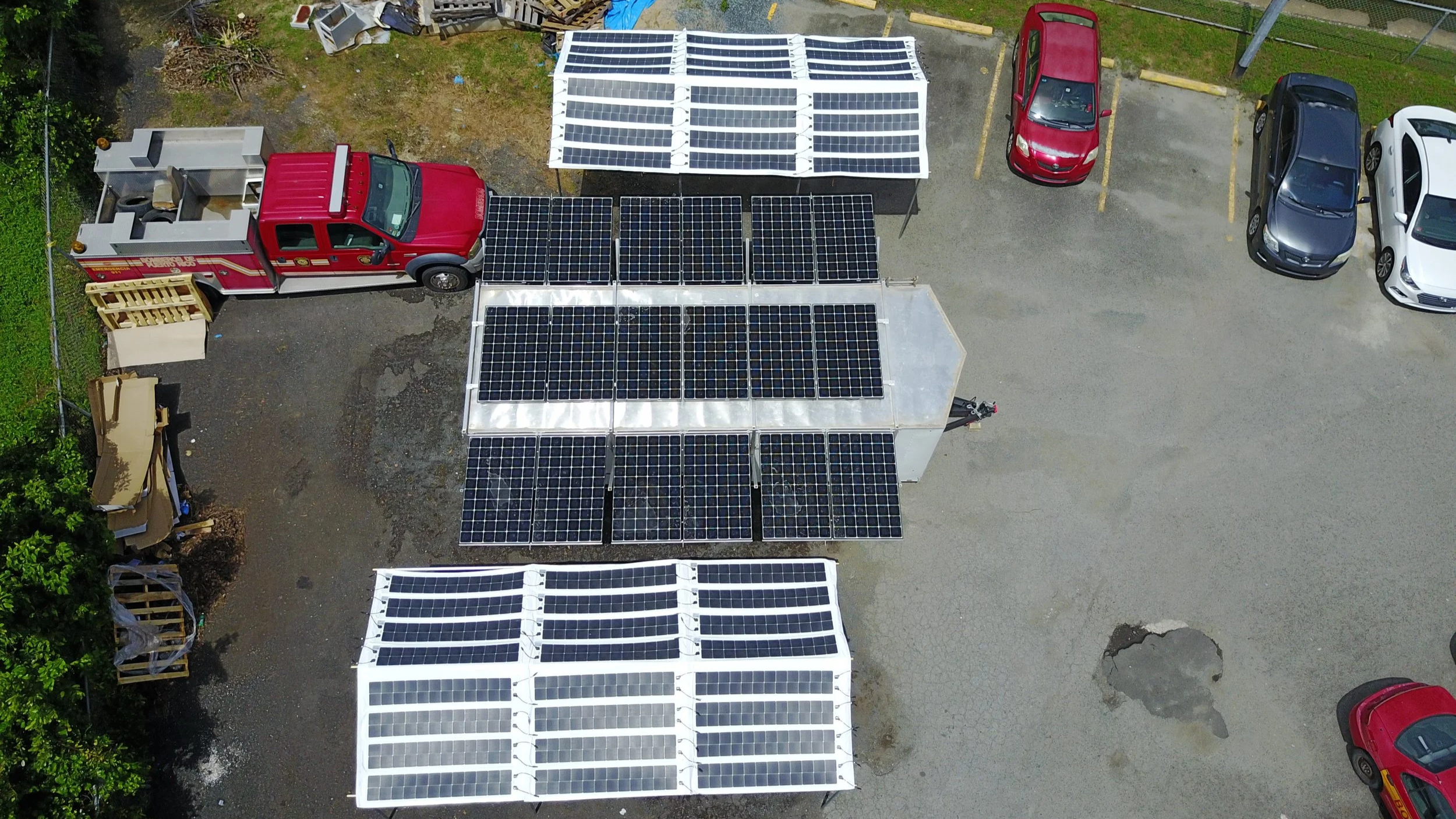
From a single solar trailer to now over 25 disaster response missions, 300 kilowatts of solar deployed and 4 megawatt hours of mobile batteries in service, Footprint Project has grown to make a real difference. We are committed to decarbonizing disaster management and empowering front-line communities navigating climate survival. But, there’s still much more work to do. Footprint Project now prepares and trains communities for long-term resilience with flexible micro-grids, widespread use of repurposed renewable energy equipment and the knowledge to make it work in times of crisis.
Our origin story reflects our theory of change. We envision a world where the disaster response, recovery and rebuild sector is fully decarbonized. It leaves a net positive impact on our ecosystems while empowering communities to survive future climate disasters. We believe this is possible within our lifetimes, and we understand the urgency in making that vision become reality.

OUR GOALS
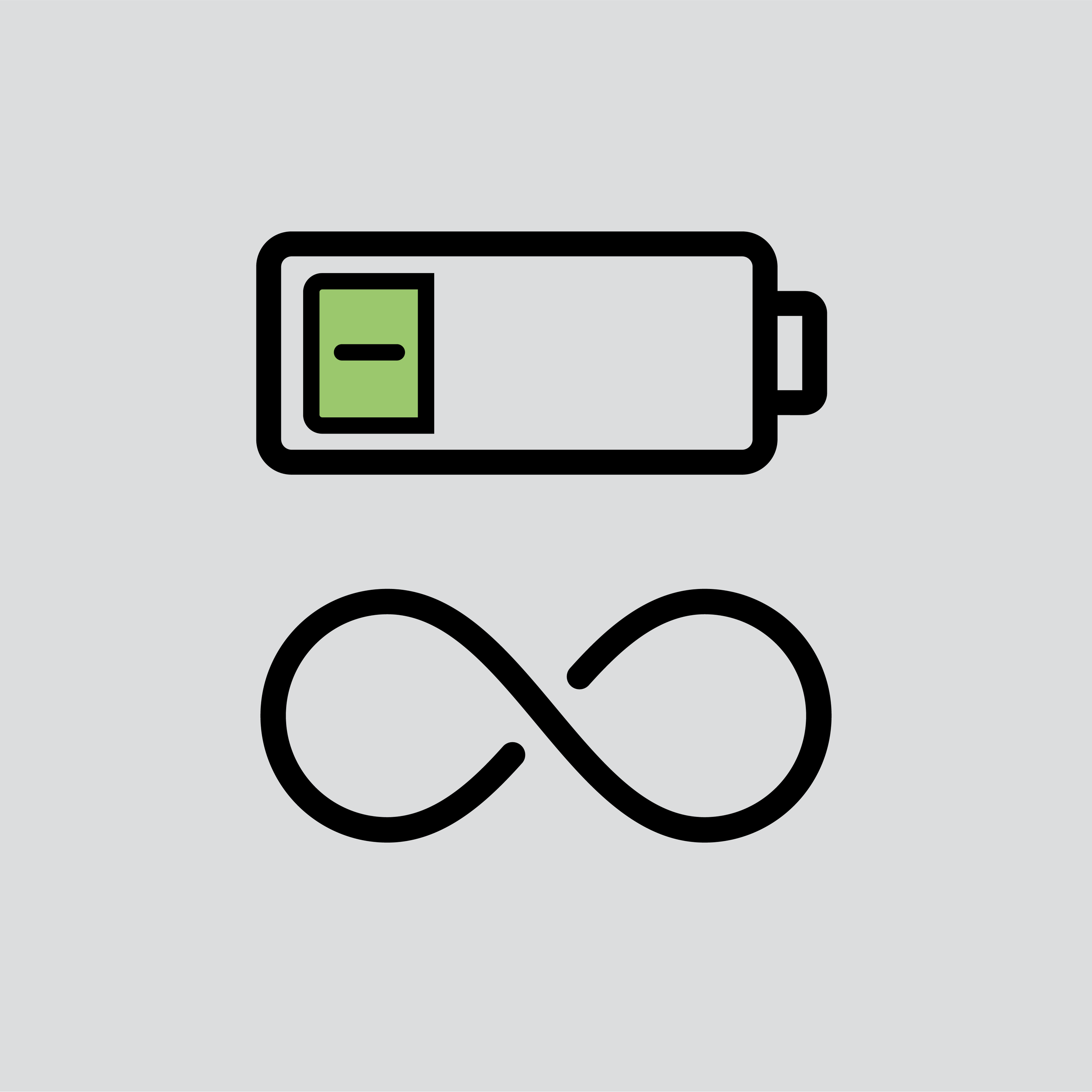
BREAK NEGATIVE FEEDBACK LOOPS.
Like deploying fossil fuel infrastructure to climate disasters or expecting traditional super-capitalism to solve the problems it created...do we need to go on?
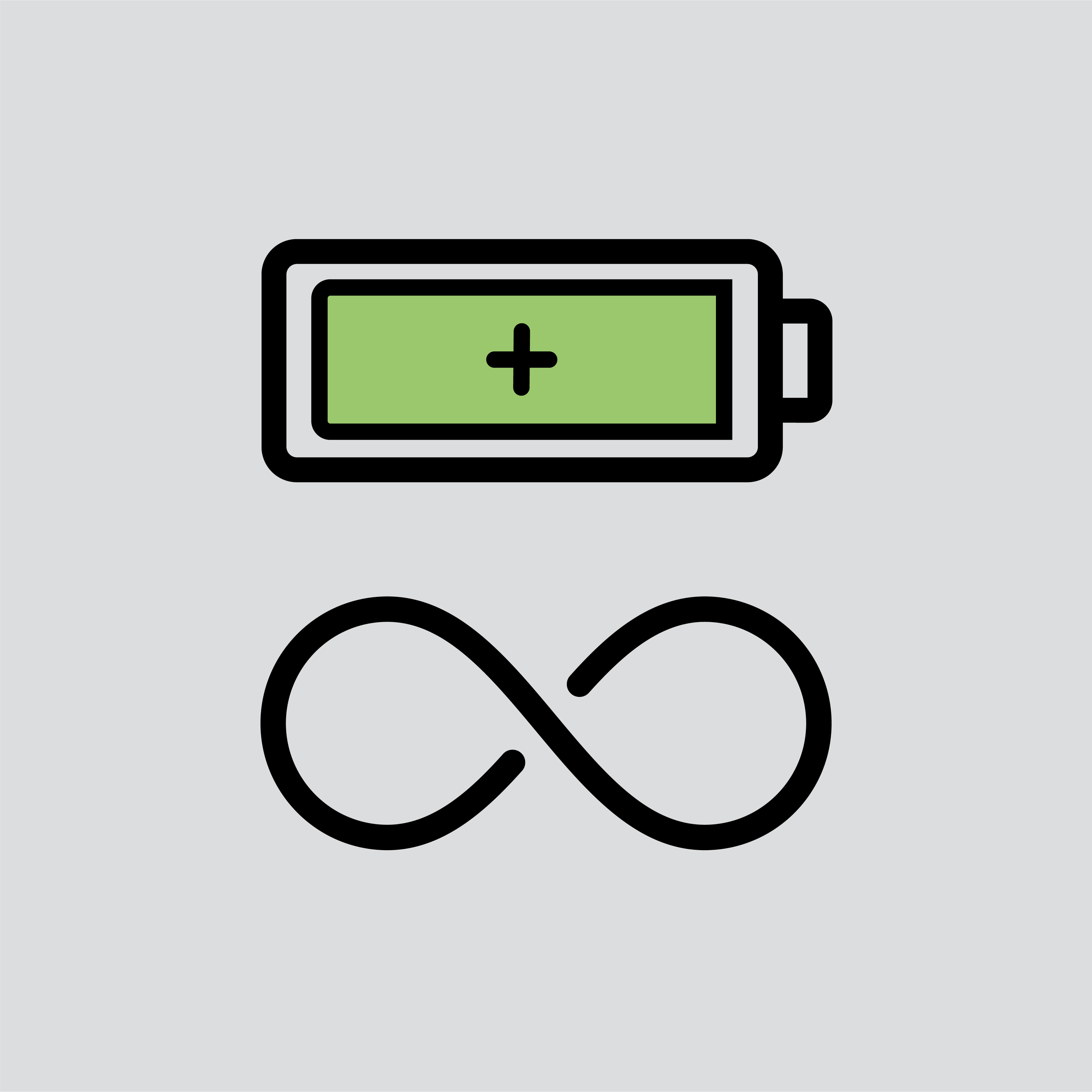
BUILD POSITIVE FEEDBACK LOOPS.
Like developing sustainable, inclusive infrastructure for climate emergencies and training others to do
what we do!

JUMP THE PRIVILEGE GAP.
Let’s get the coolest stuff to the folks who never get
cool stuff. Why else are we here?

BRIDGE HIGH TECH WITH HIGH TRUST.
Activating cutting edge technologies based on local partner insight requires us to take significant risks.
Those risks are worth it.

STAY CRITICAL. STAY NIMBLE.
Just because we thought something was a good idea doesn’t mean that it still is. We learn as we grow.
OUR METHODS
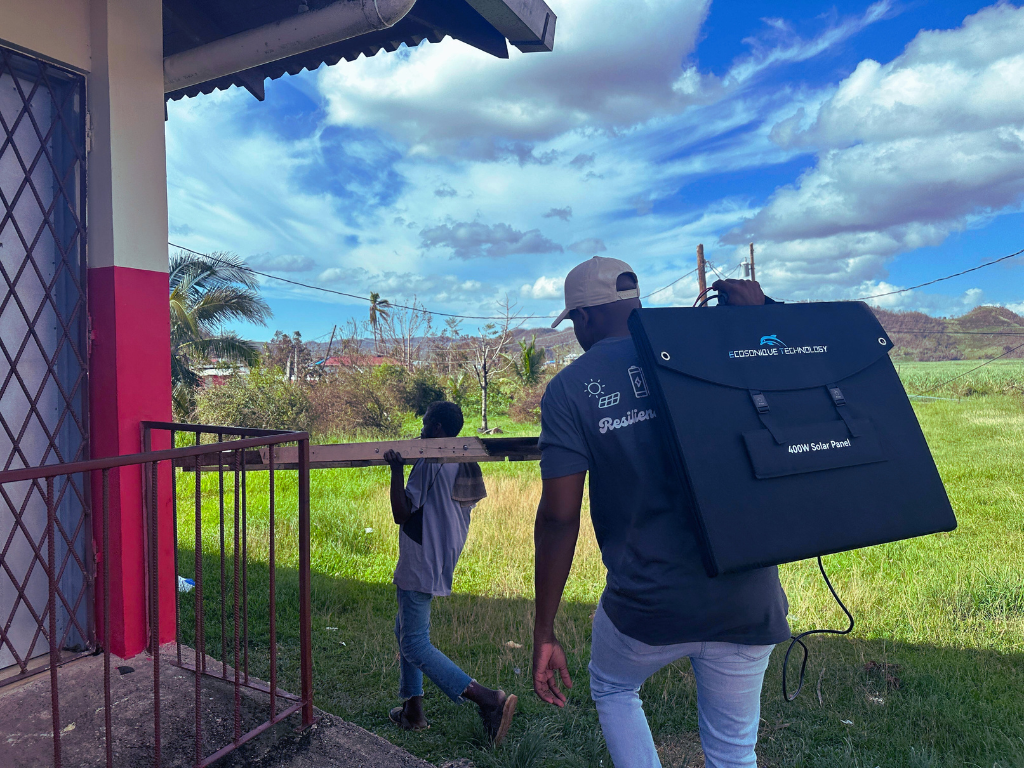
Footprint Project aims to accomplish our vision of decarbonizing disaster management and empowering community resilience by integrating sustainable energy solutions into every aspect of our work. We develop mobile solar microgrid networks in climate vulnerable regions, deploy them to support critical services during power outages, and train local responders for effective use. Since 2018, we’ve mobilized solar generators to over 30 disaster response and recovery missions, providing emergency power access to over 50,000 people.
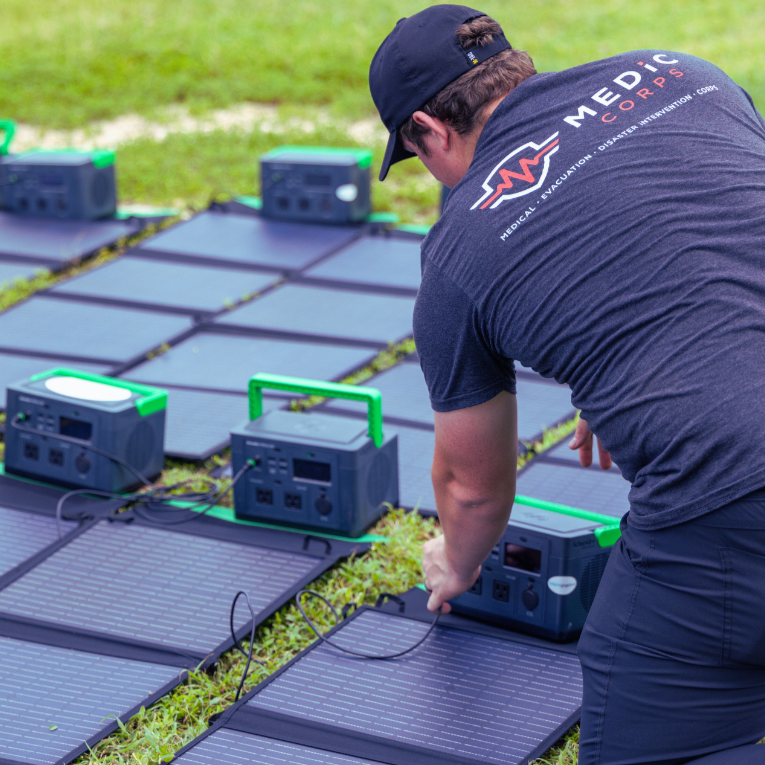
Through our Rapid Disaster Response program, we deploy solar-powered generators to provide clean, reliable energy in the aftermath of extreme weather events, reducing reliance on fossil fuels. For the bigger picture, our Long-Term Resilience program includes developing Beehive Microgrids in strategic, vulnerable locations. Our long-term program also facilitates networks of community organizations, grassroots infrastructure experts and supportive businesses at events like Resilience Fest.
Our Community Builds initiative focuses on training and equipping communities with the tools and knowledge needed to establish their own renewable energy infrastructure.
Finally, Upcycled Energy connects sustainable organizations with repurposed solar materials, encouraging the creation of solar generators for community use, while minimizing waste. Together, these programs work together to reduce carbon footprints, support sustainable recovery, and build stronger, more resilient communities in the face of increasing climate challenges.