
From Response to Resilience: Two Years After Hurricane Helene
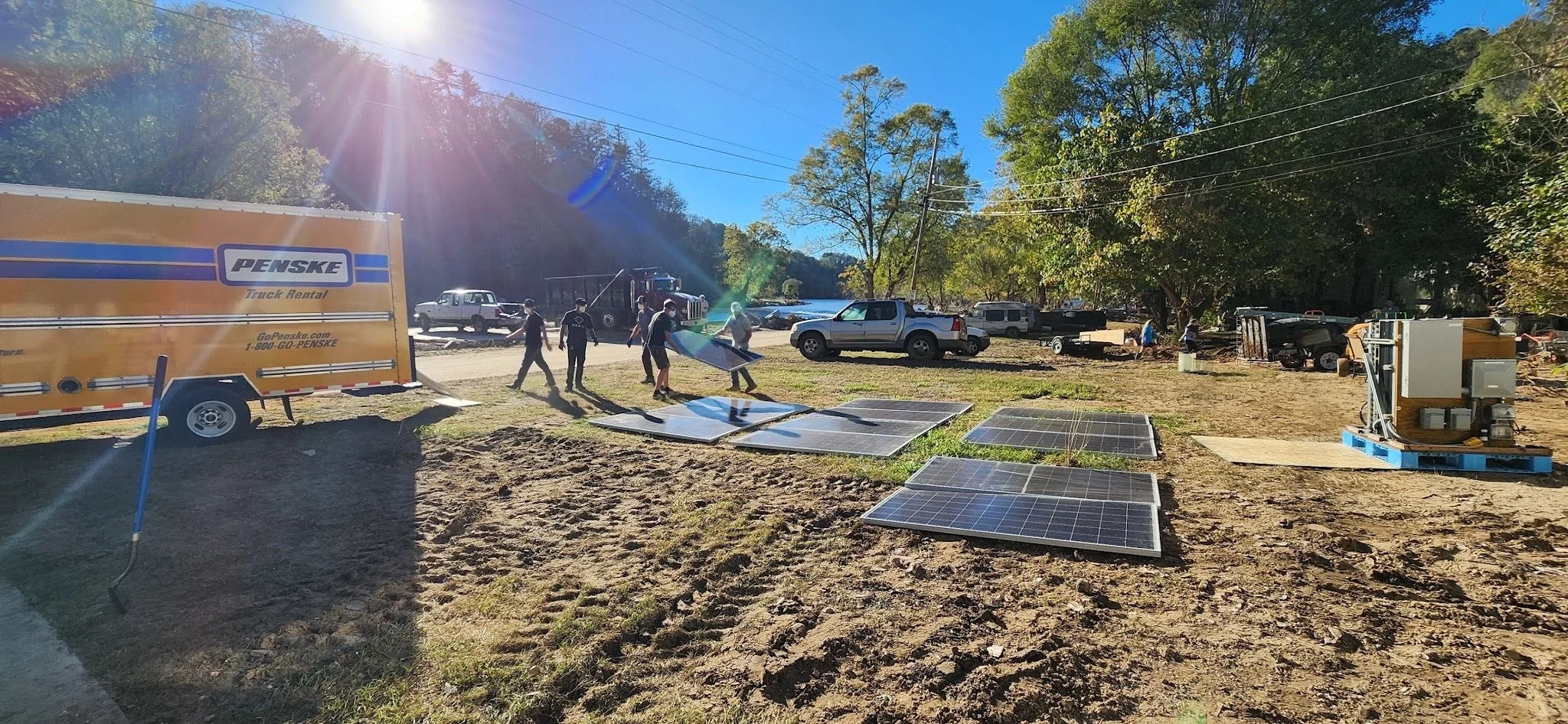
Setting up a temporary solar microgrid shortly after Hurricane Helene
Two years ago this week, Hurricane Helene tore through the Southeast and left Western North Carolinians cut off from power, communications, water, roads, and, in many places, one another.
Looking back, it’s hard to say exactly where the response ended and the recovery began. The people who flagged us down in those early days became our partners, our friends, and in more than one case, our coworkers. Fire stations we kept running on temporary solar now have permanent microgrids. Donated microgrid equipment has found its way to more than 120 individuals and families. So much of this work has quietly come full circle.
What follows is a look back at two years of renewable response and recovery. The journey is slow, tangled, heartbreaking, and deeply hopeful.
Those Early Days of Response
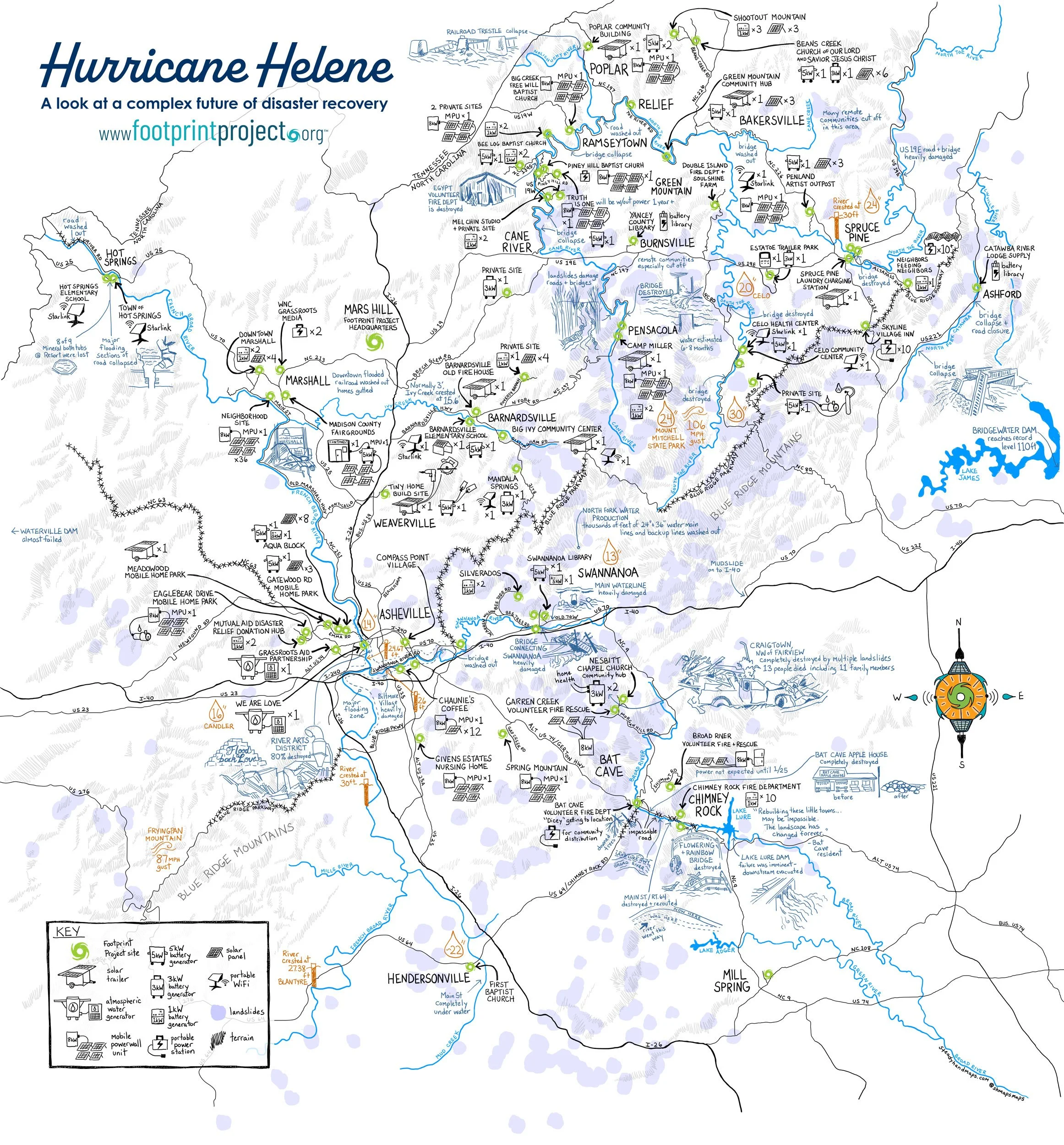
We arrived in Asheville on September 28 by way of Highway 26, not yet knowing how deep or widespread the damage ran. It didn’t take long to find out. Our first stop was the functional needs shelter at A-B Tech. More than a dozen people there depended on oxygen machines. The building had no grid power, and fuel for the portable generators was running low. We set up a solar generator on the spot. Down the road, an elder care facility’s generator had failed, so we sent batteries their way too. That was just the first day.
From there, the map kept opening up. With cell and radio communications towers down, site requests came in by mouth. On our first day outside Asheville, we found a note left on the conference table at Sundance Power Systems: “Barnardsville got really f*cked up. Bring extra solar generator parts to the post office in town.” We called. It went to voicemail. So we drove out and found the man who had written it, helping out at a makeshift distribution hub for communities cut off by washed-out bridges and downed power lines. We left the hub a mobile solar microgrid from Schneider Electric and came back the next morning to talk through fanning out power and water to the communities beyond. The man who left that note was Jamie Trowbridge, who now leads our Appalachia programs as Senior Program Manager.
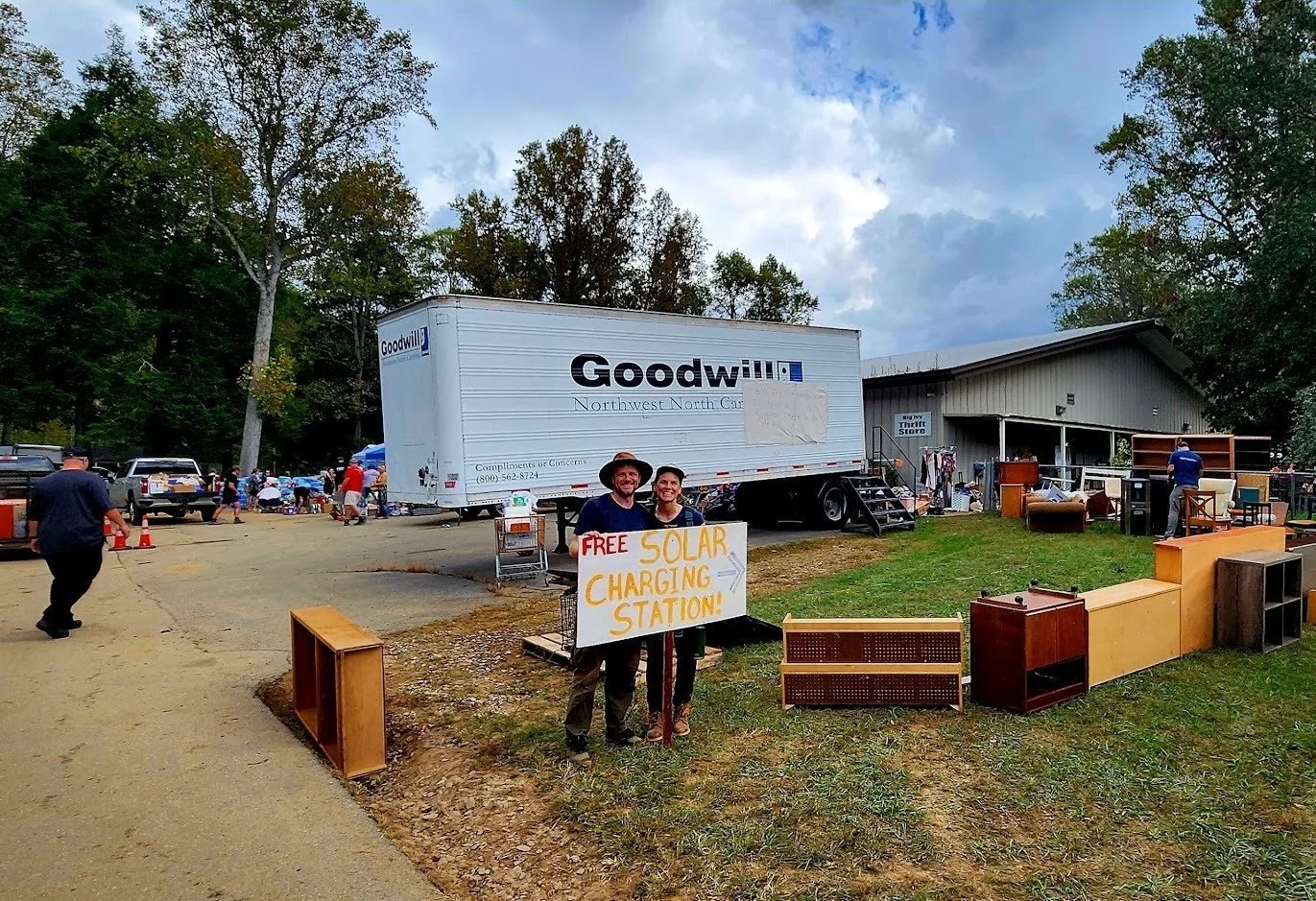
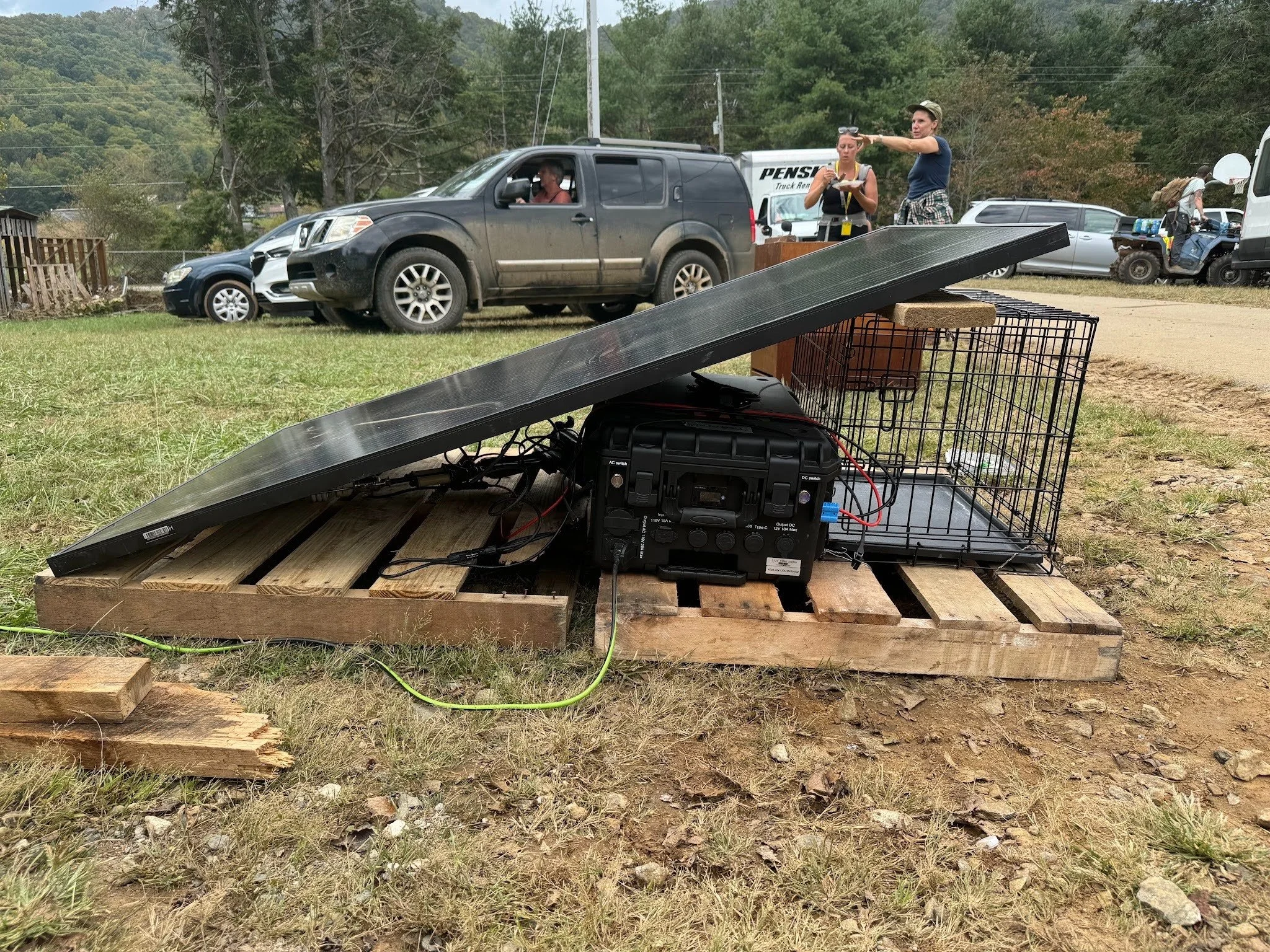
Some calls for help were met from the sky. A family stranded on a mountaintop received a battery, a flexible solar panel, and a Starlink unit by National Guard helicopter, just enough to reach the outside world and let people know they were alive. When a woman on an oxygen machine lost her gas generator, we got her a solar one. In Garren Creek, we moved a fire station off its gas generator and onto solar power, so its fridges, freezers, and radios could keep running.
Water access became the next emergency. At Sourwood, a mobile home community outside Asheville, we got a well pump running on solar so neighbors could share water. Almost as soon as it turned on, trucks started lining up to haul that water out, and over the weeks that followed it reached some 30 mobile home parks across the region, supporting thousands of people. We also set up atmospheric water generators, small machines that pull water from the air, so people could flush toilets and relief workers could stay hydrated without cutting into the bottled water everyone else needed.
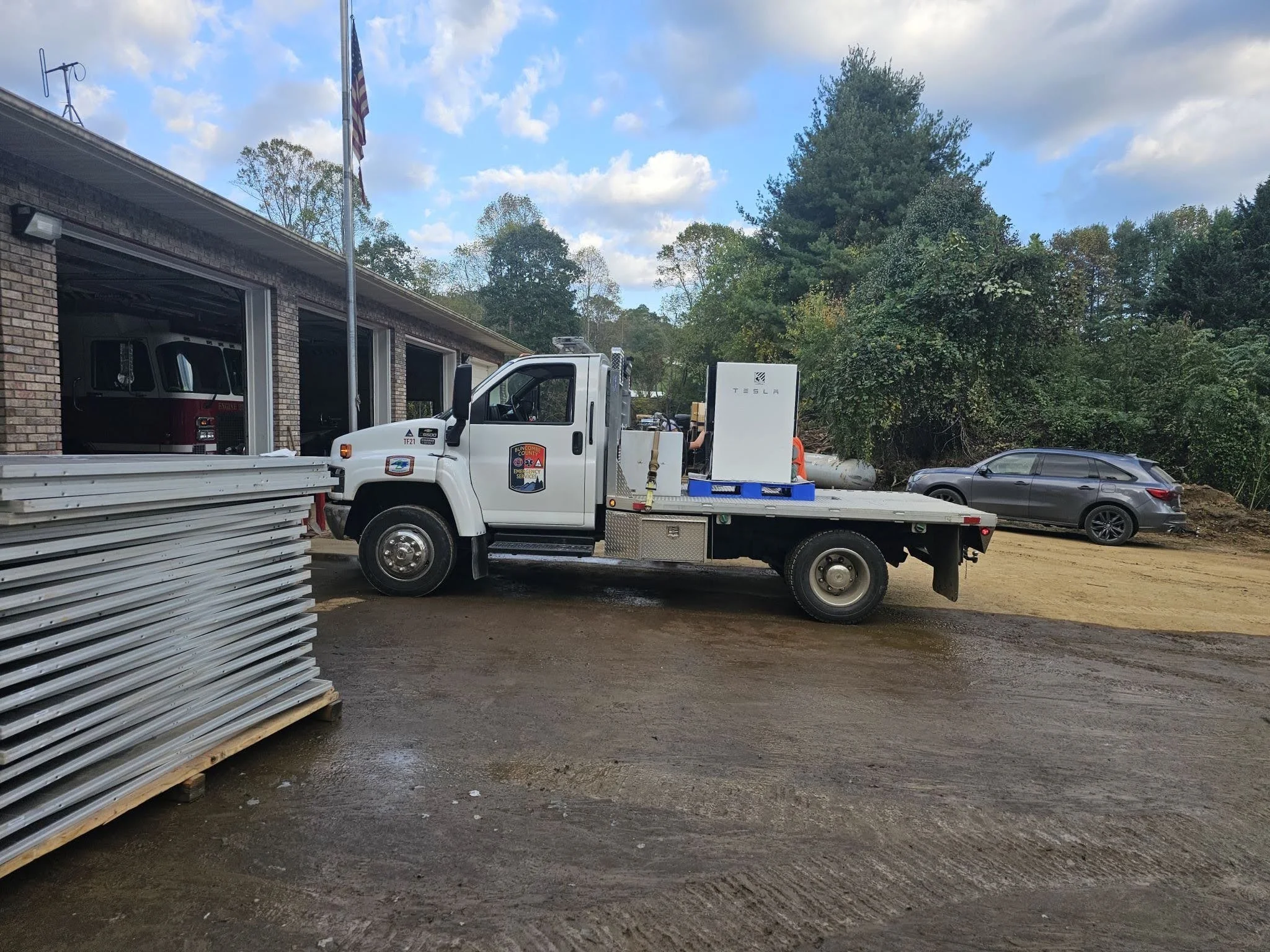
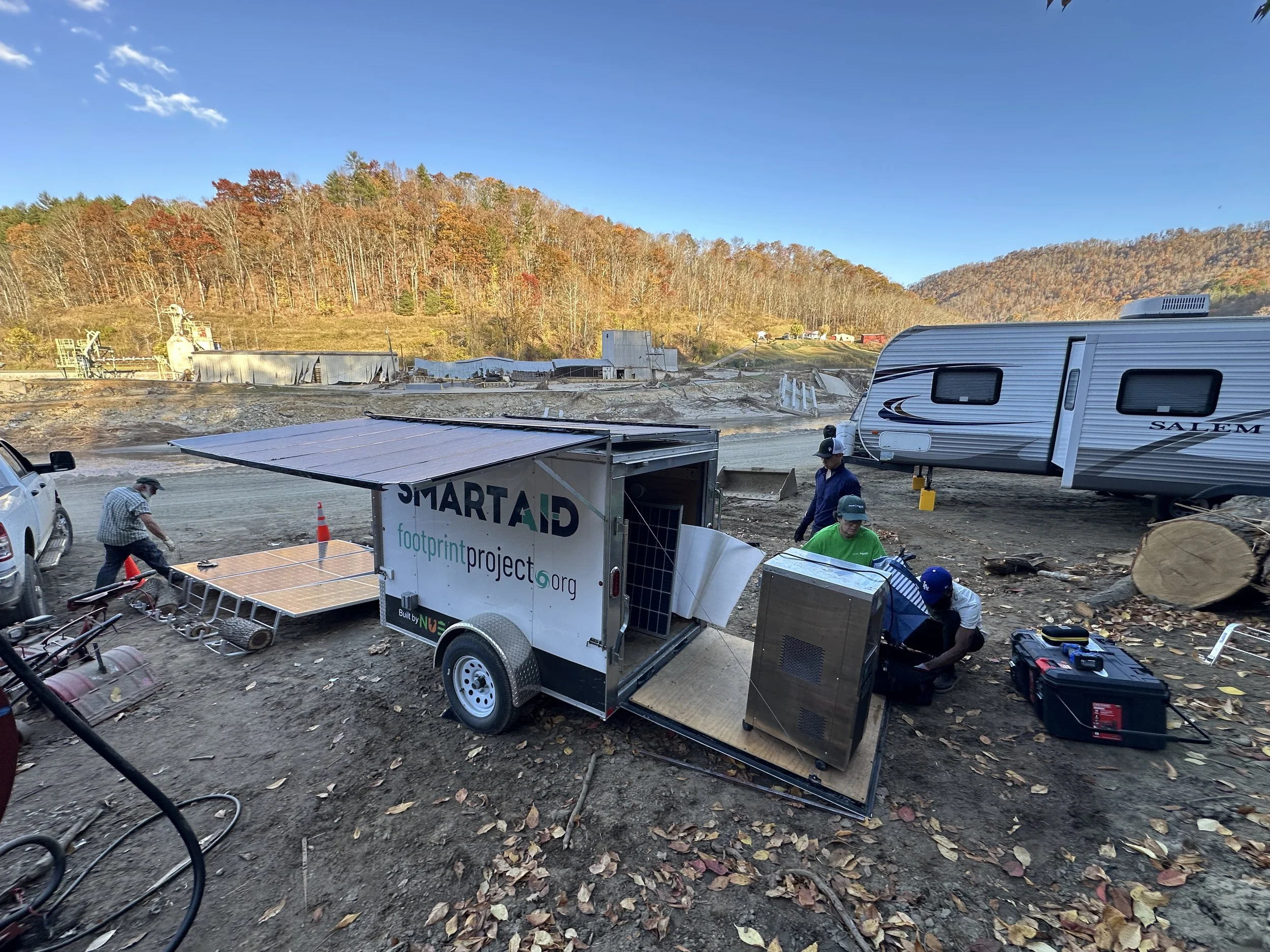
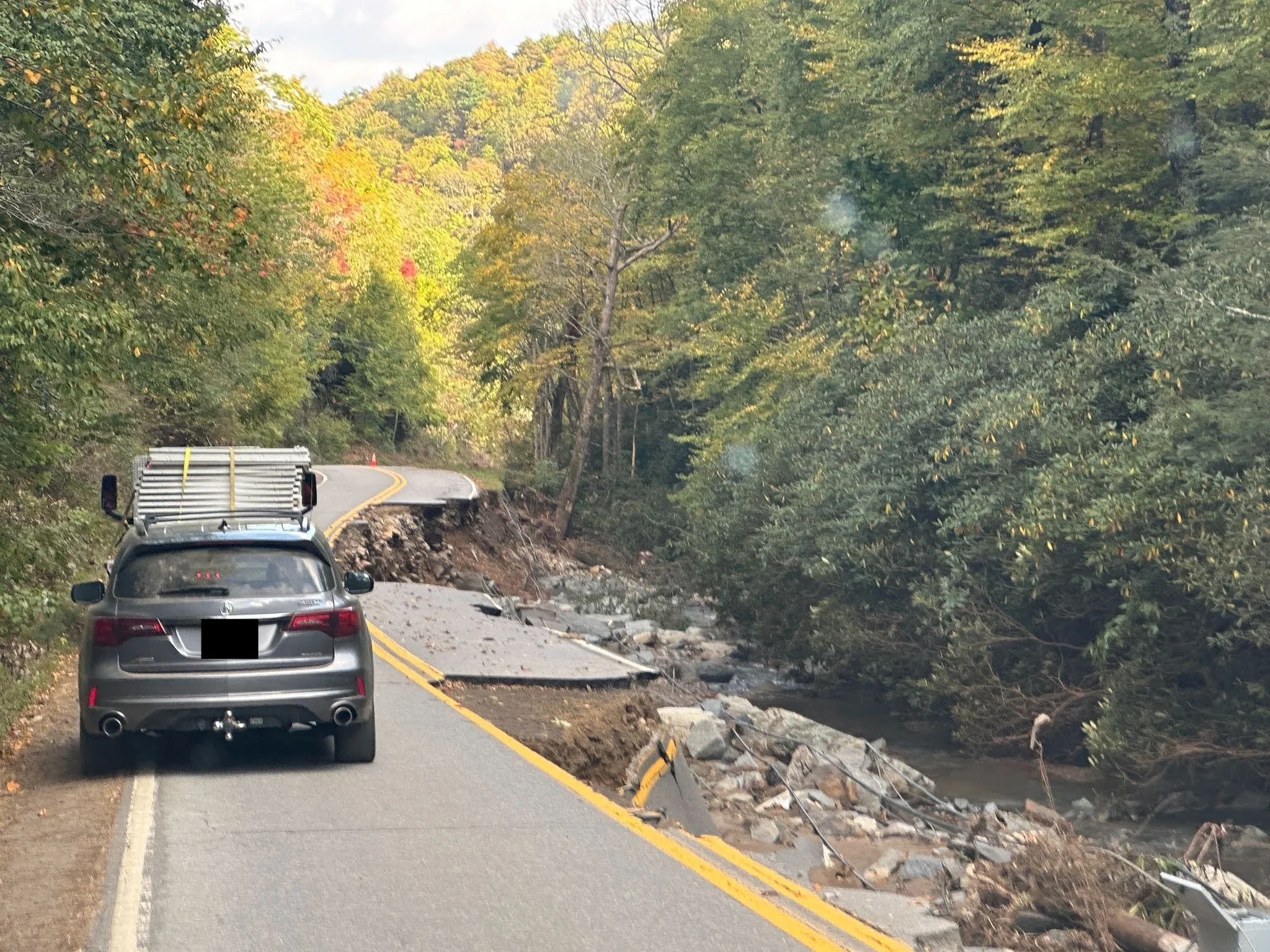
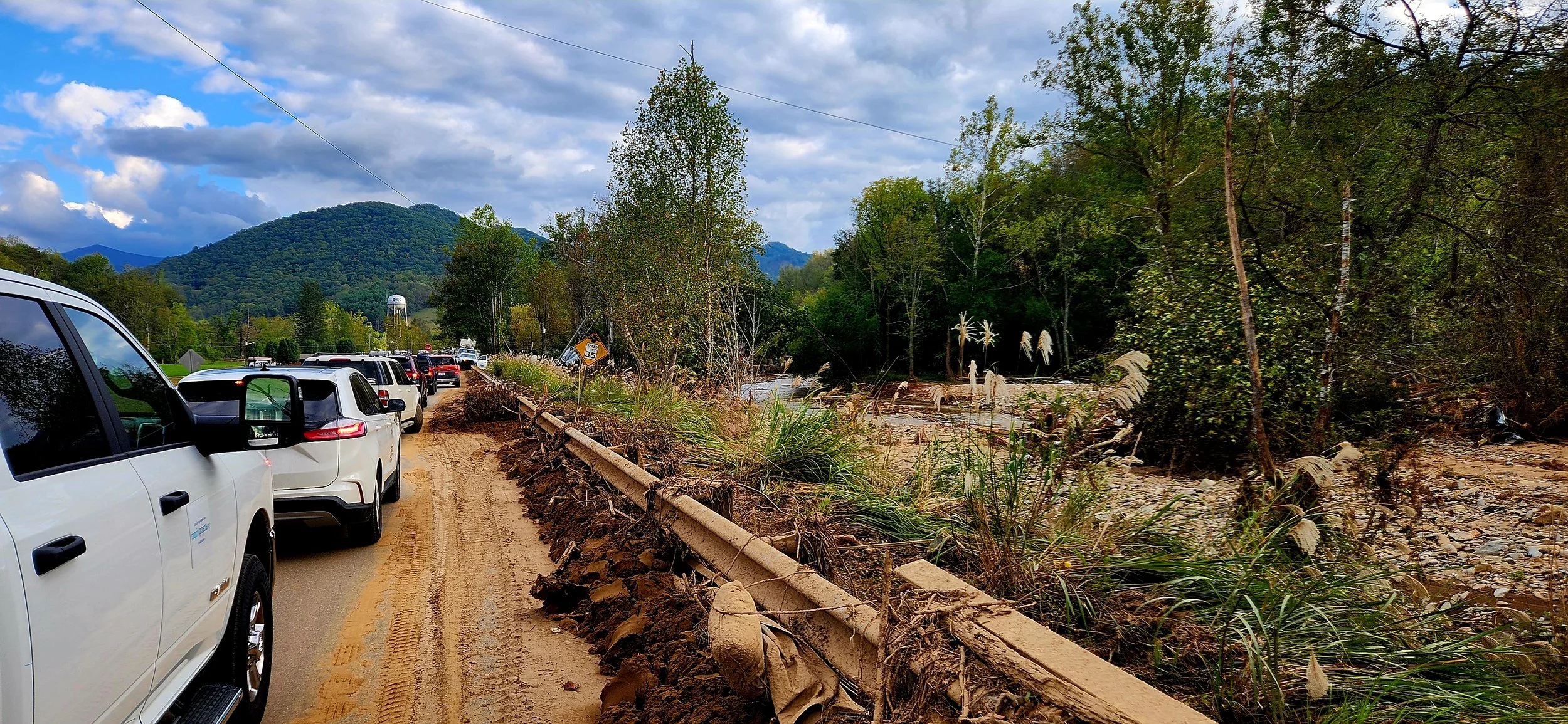
None of this was Footprint Project alone. It was local guides pointing us down the right roads, donors keeping equipment flowing, and partners who fed and sheltered our crew while we worked. Many of the relationships we built in those first frantic weeks are the same ones carrying this work forward today.
“Two years after Hurricane Helene, I still think about how quickly Western North Carolina came together. Energy resilience became very basic, like keeping shelters open, communications running, food and medicine protected. The work since then has been about carrying those lessons forward and building stronger, more resilient systems for the next emergency.”
From Rapid Response to Long-Term Resilience
Many of the relief sites, coordinating centers and resilience hubs that opened their doors after Helene were never designed to be emergency shelters. They became shelters because they were still standing, and people trusted them. Our long-term work in Western North Carolina starts from a simple idea: the places people turn to in a crisis should never go dark again.
In July 2025, Appalachian Voices profiled the shift underway across Western North Carolina, as communities began moving from emergency generators toward permanent resilience hubs. A year later, that shift has numbers behind it:
13 microgrids completed across Buncombe, Madison, and Yancey counties.
17 more underway, from sites finalizing contracts to two rounds of North Carolina Department of Environmental Quality (NCDEQ) funded builds spanning Buncombe, Madison, Mitchell, Rutherford, Avery, and Macon counties
84 communities on the waiting list, asking for a microgrid of their own
Completed sites include the Broad River Volunteer Fire Department (VFD) Shumont Substation, Double Island VFD, Celo Community Center, Firestorm Books, and PODER Emma’s resilience hub, along with one of PODER Emma’s demonstration mobile homes and the Chispas trailer. Every one of them has a story that begins in the days right after the storm.
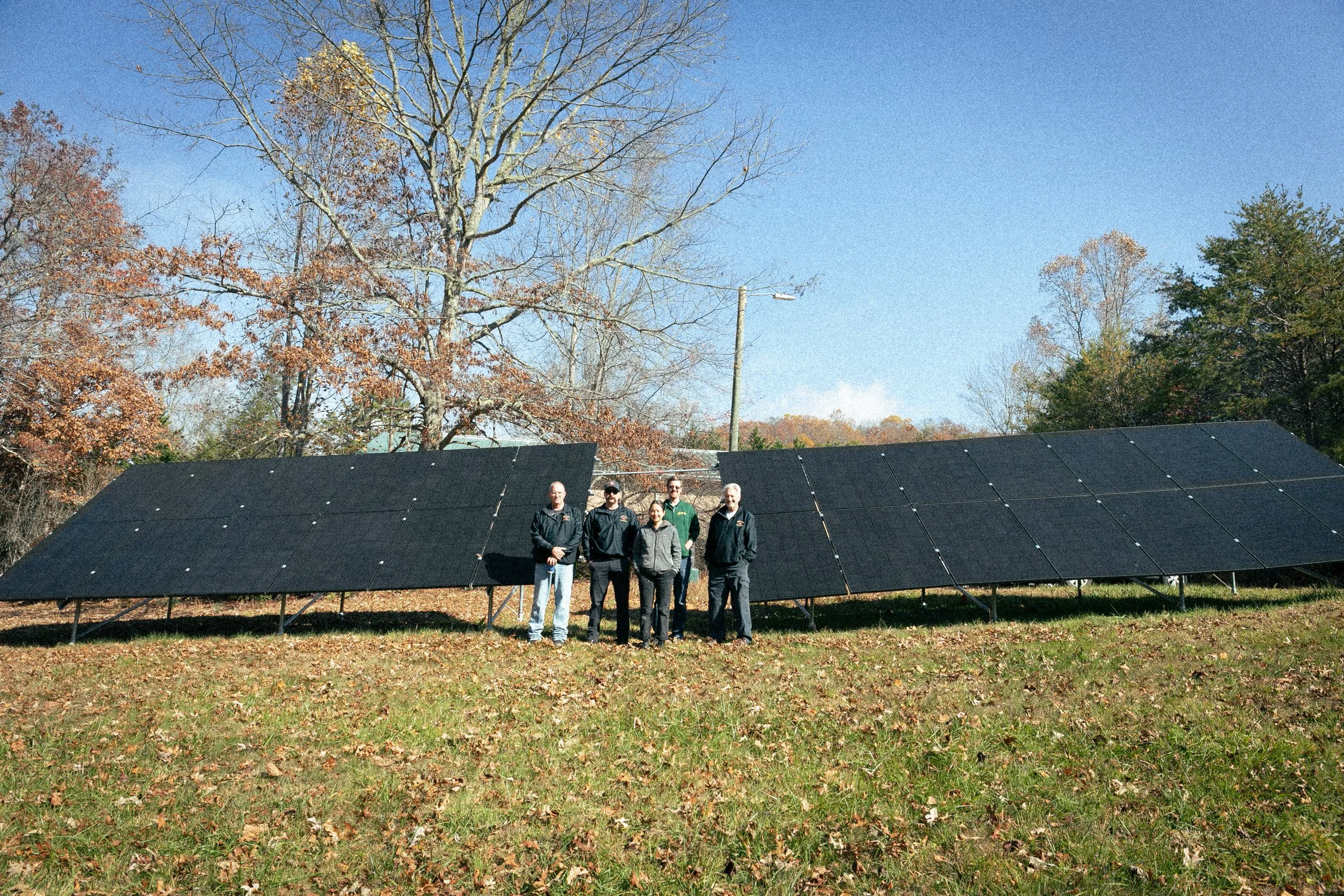
Broad River VFD Shumont Substation’s Permanent Solar Microgrid
Broad River VFD’s Shumont Substation shows the full arc of how we work. We first met the station in the immediate aftermath of Helene, when we installed a temporary solar microgrid to keep emergency services running. From there, we worked with Sundance Power Systems, WNC Long Haul, and Fortress Power to install a permanent, grid-tied solar microgrid on-site. One of our solar trailer “Bees” also lives at another Broad River station a little ways down the road, ready whenever the department needs reliable mobile power in the field.
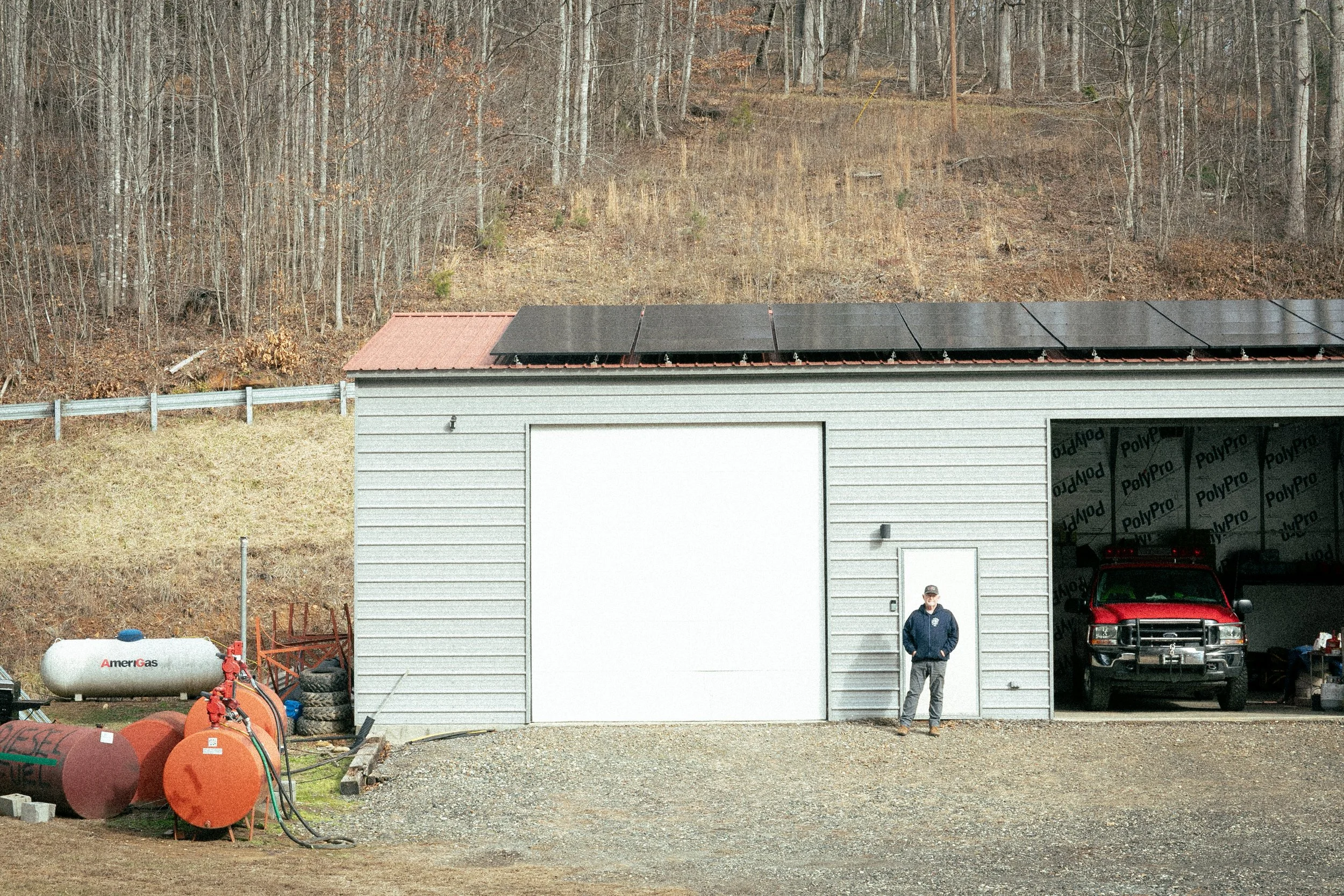
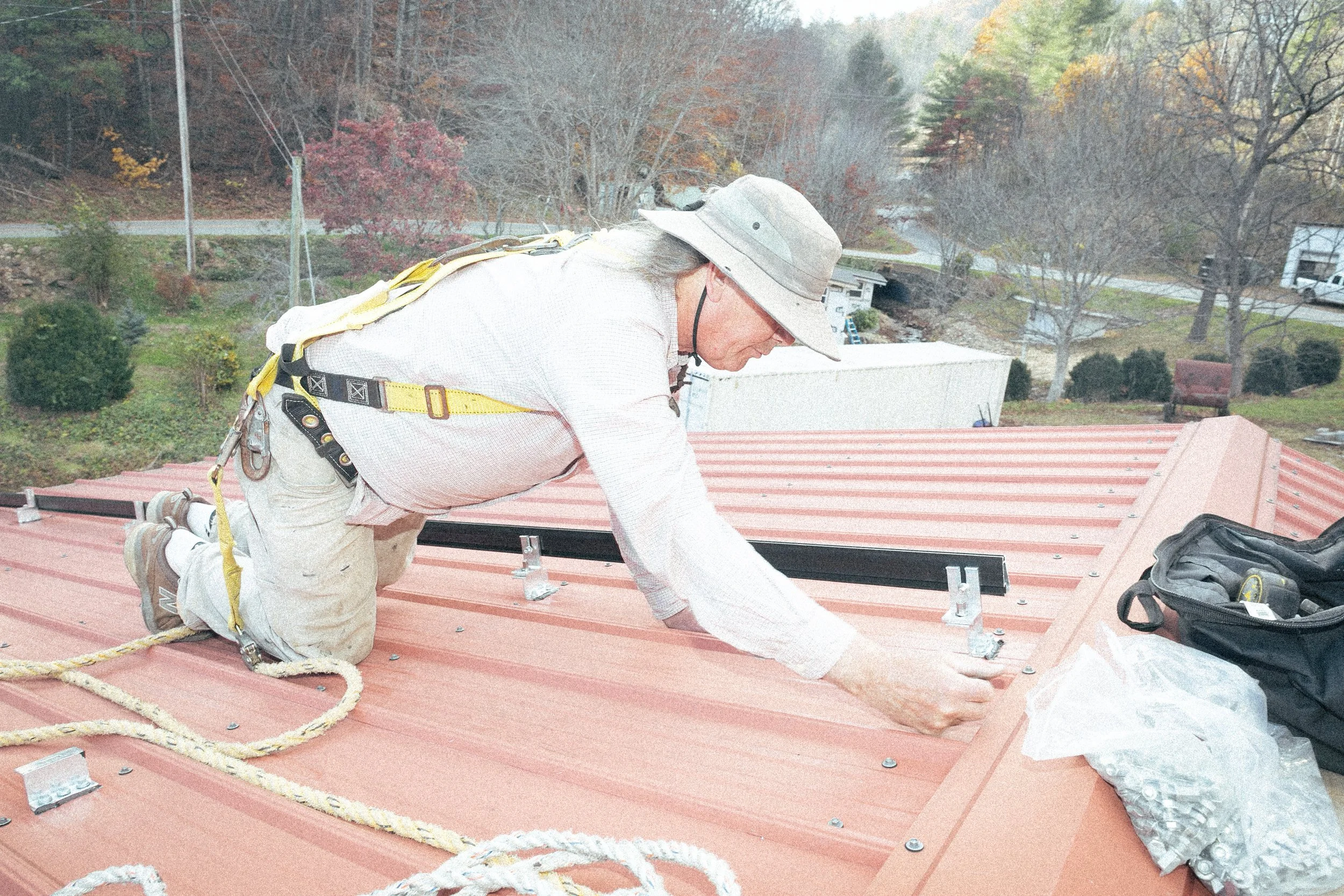
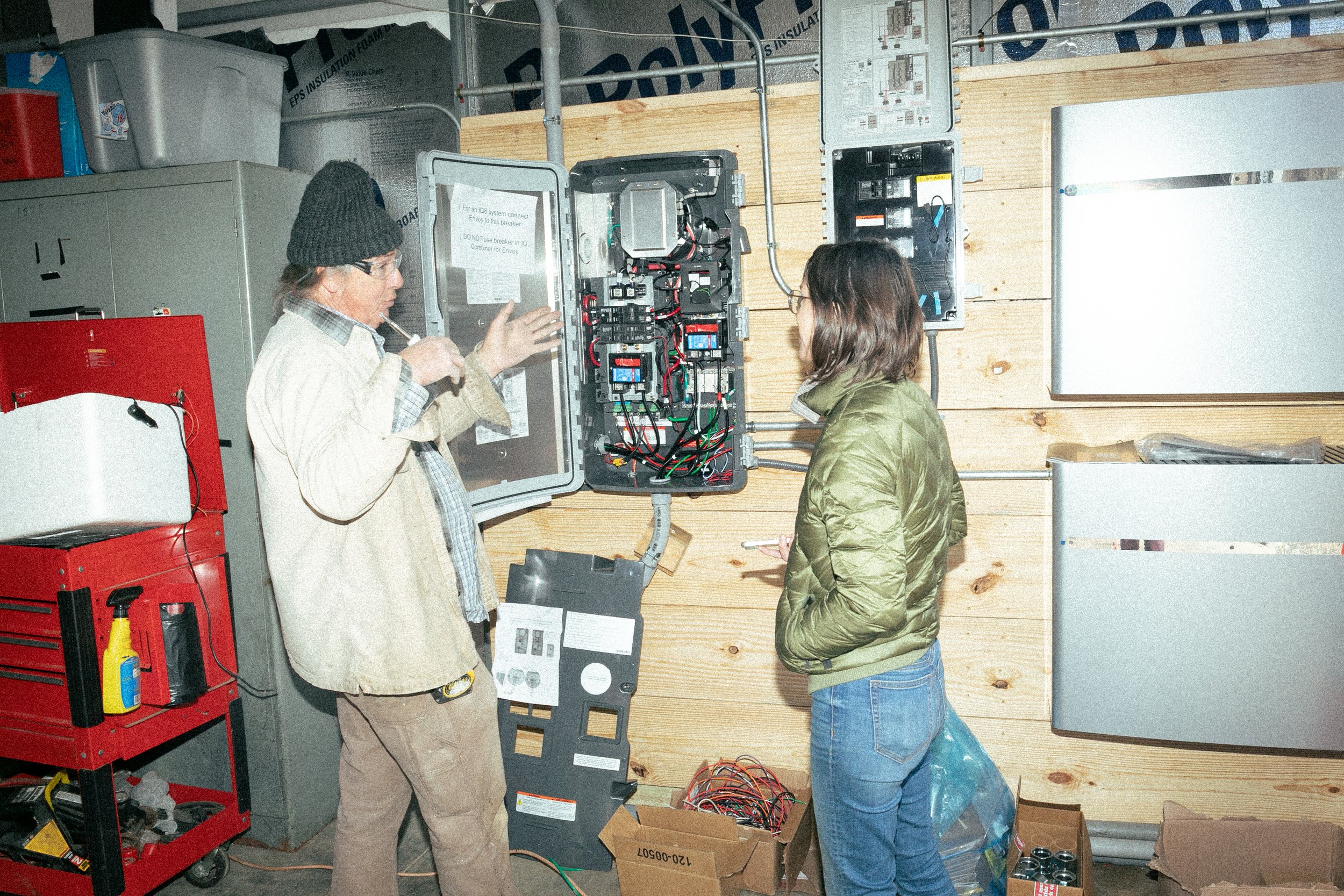
Double Island VFD, in rural Yancey County, sat in one of the hardest-hit areas of the storm and went six weeks without power. The fire department became a community hub for rescues and rebuilding, even housing out-of-state volunteers for three months. Its main station now runs on a stationary solar microgrid.
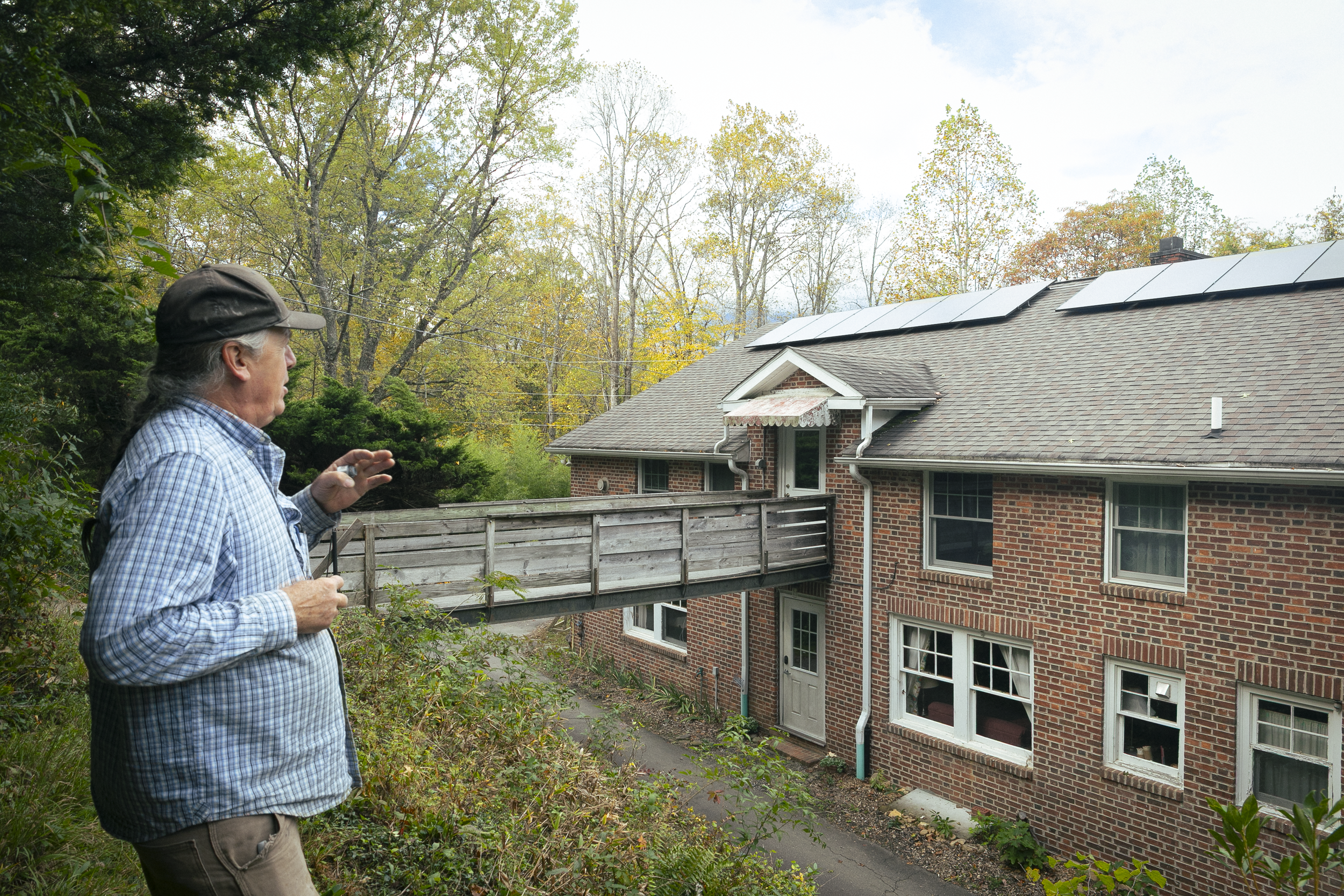
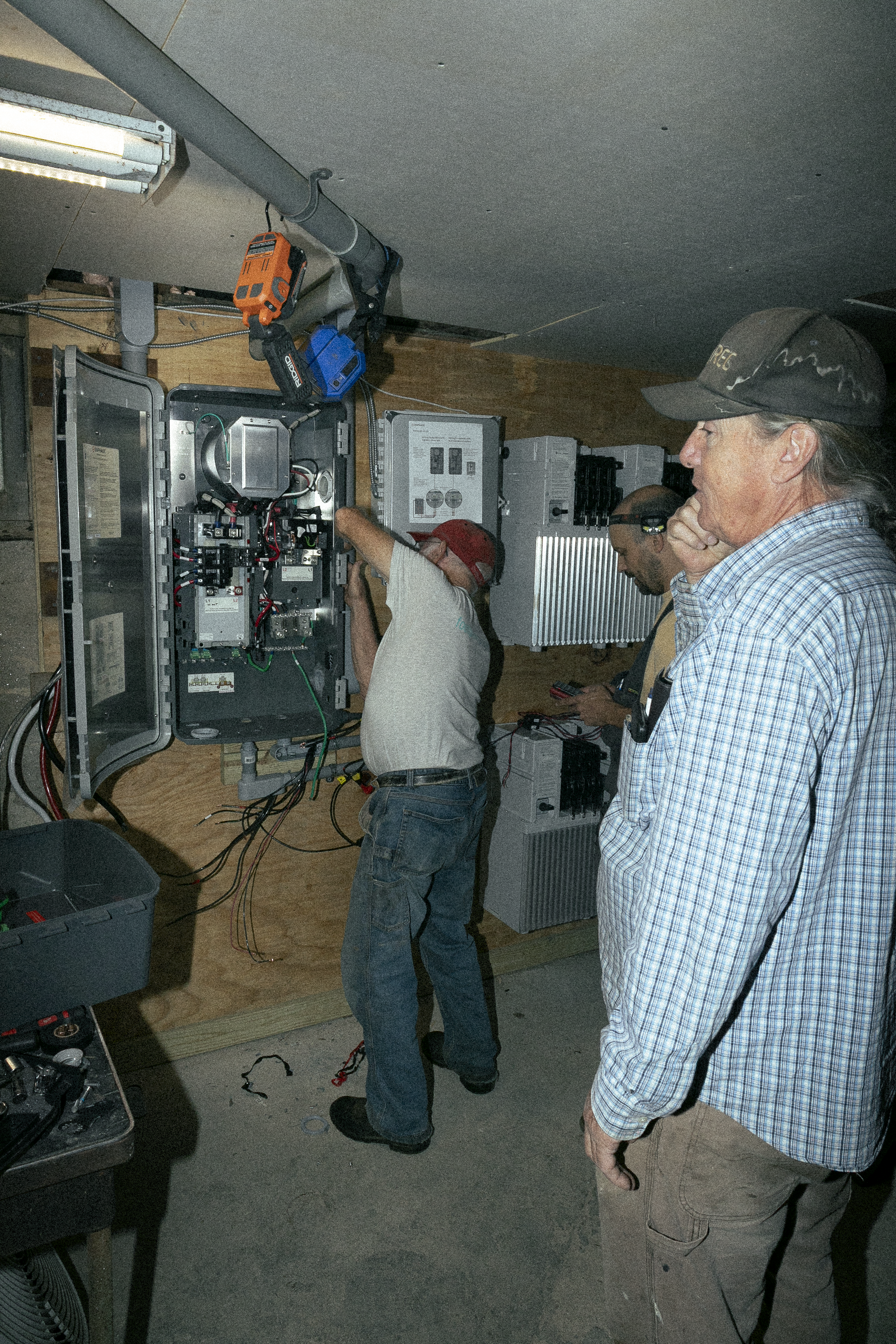
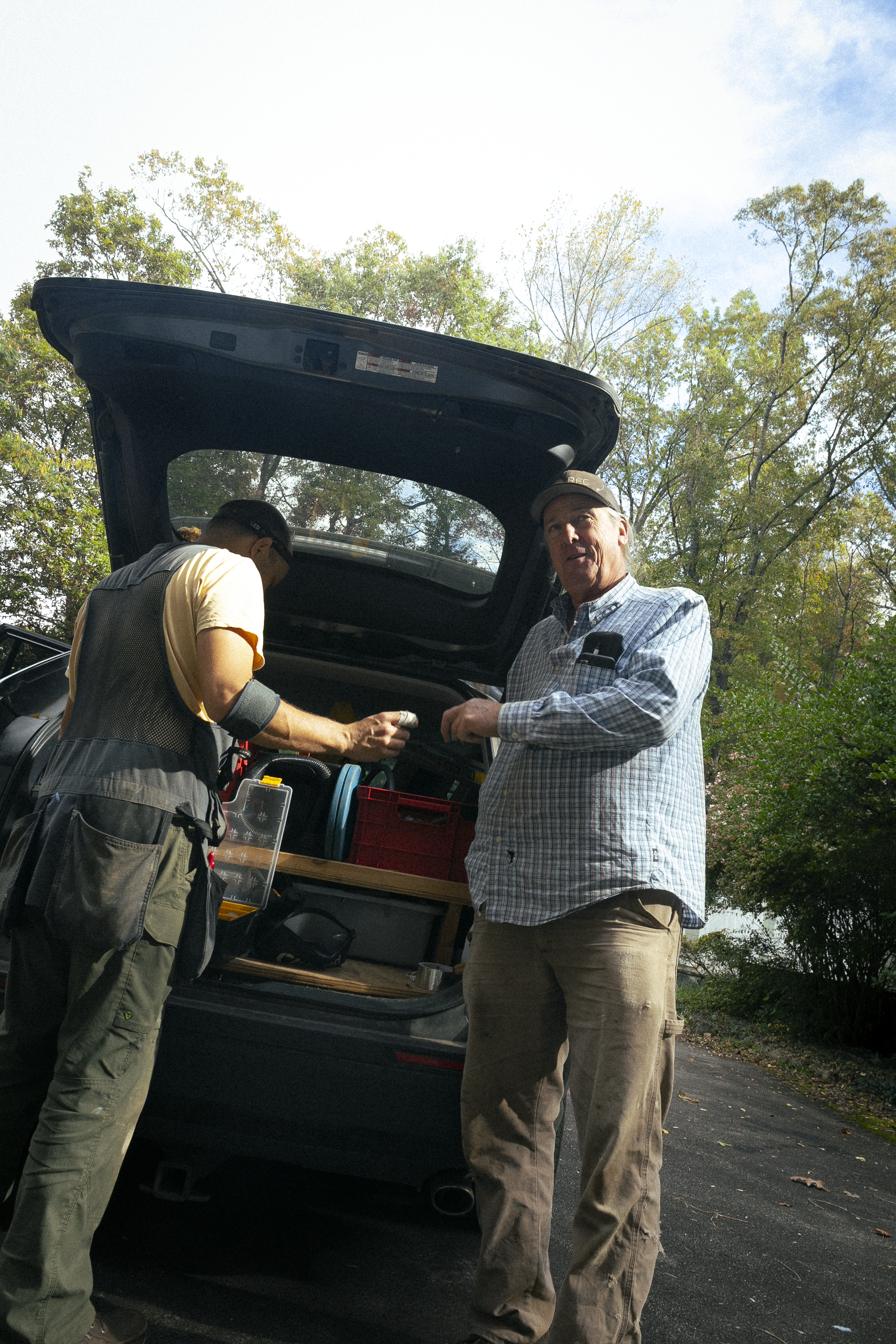
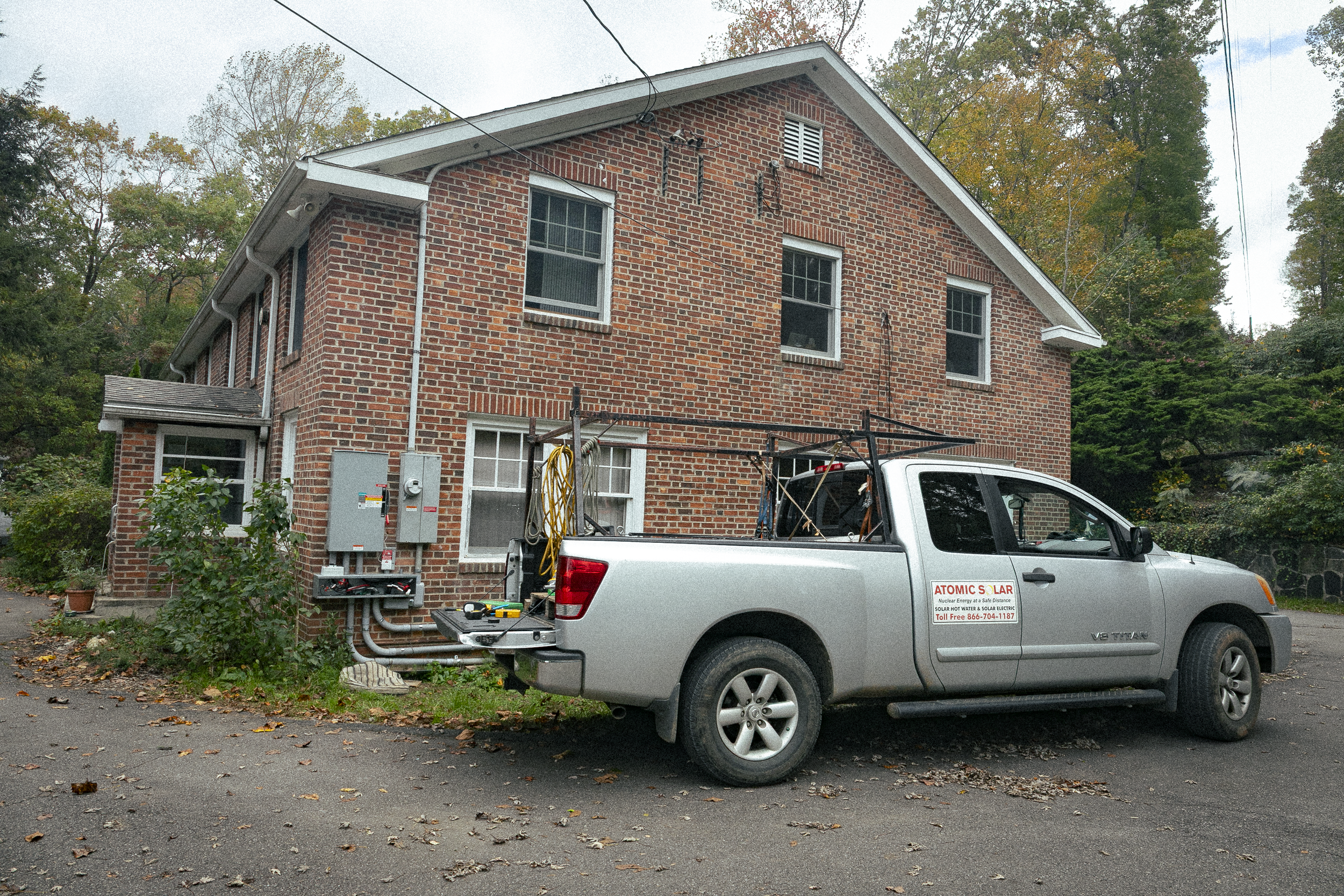
Celo Community Center is part of a cooperative settlement along the Toe River dating back to 1937. Flooding took several of the community’s buildings, but the center survived and became an essential gathering space, running on generators for about a month to power a Starlink connection, shared fridges and freezers, supply distribution, and childcare while schools were closed. It now has a solar microgrid of its own.
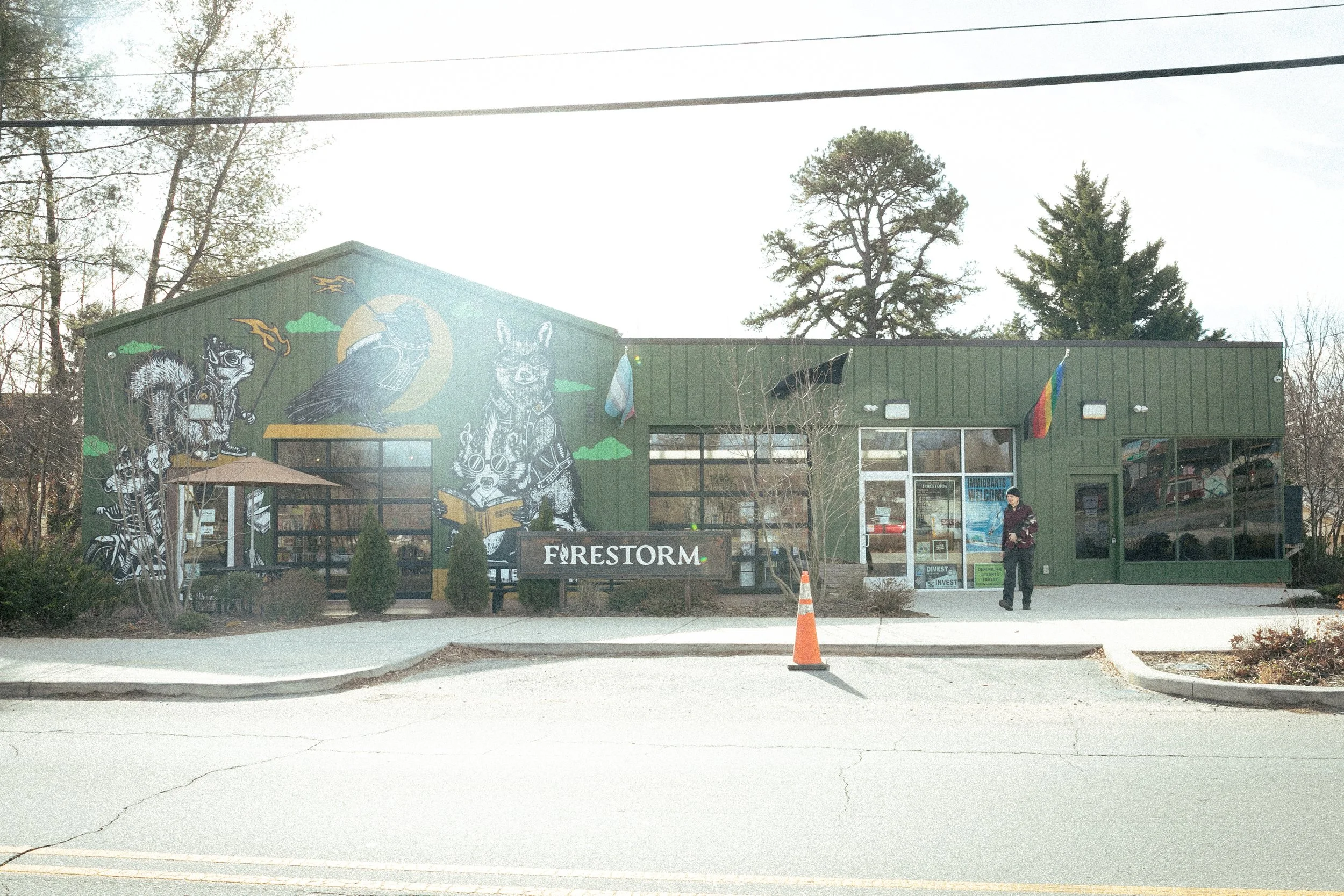
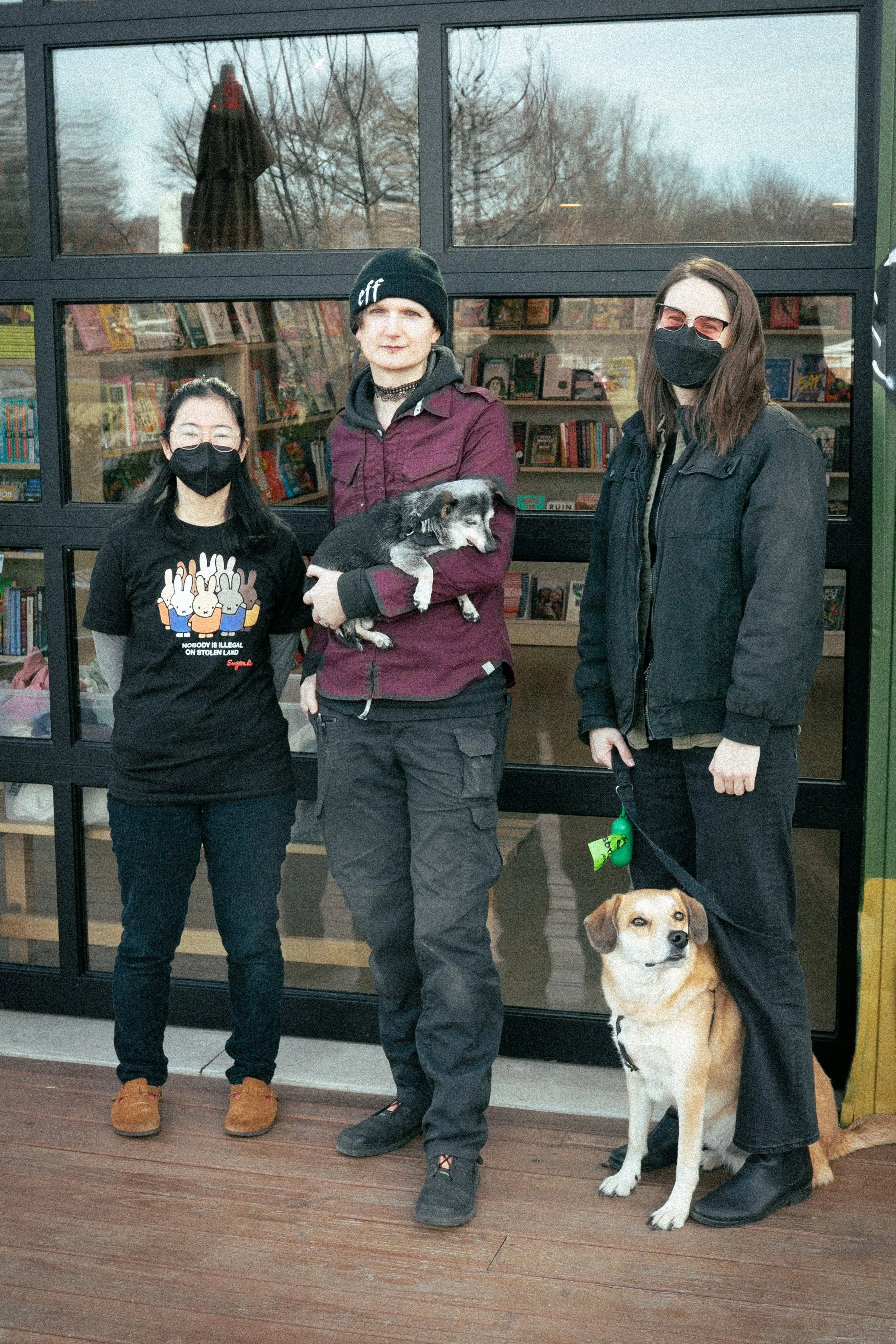
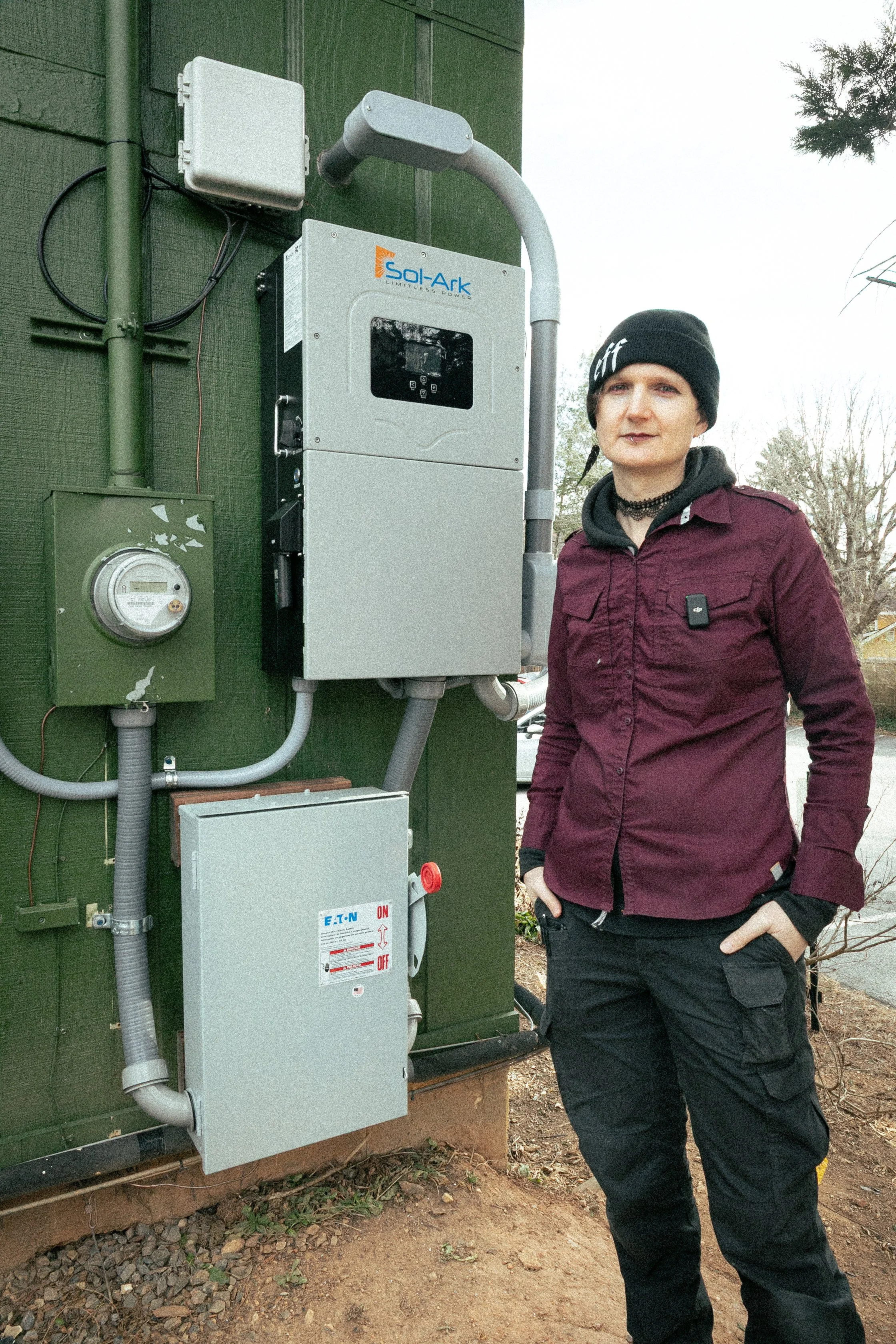
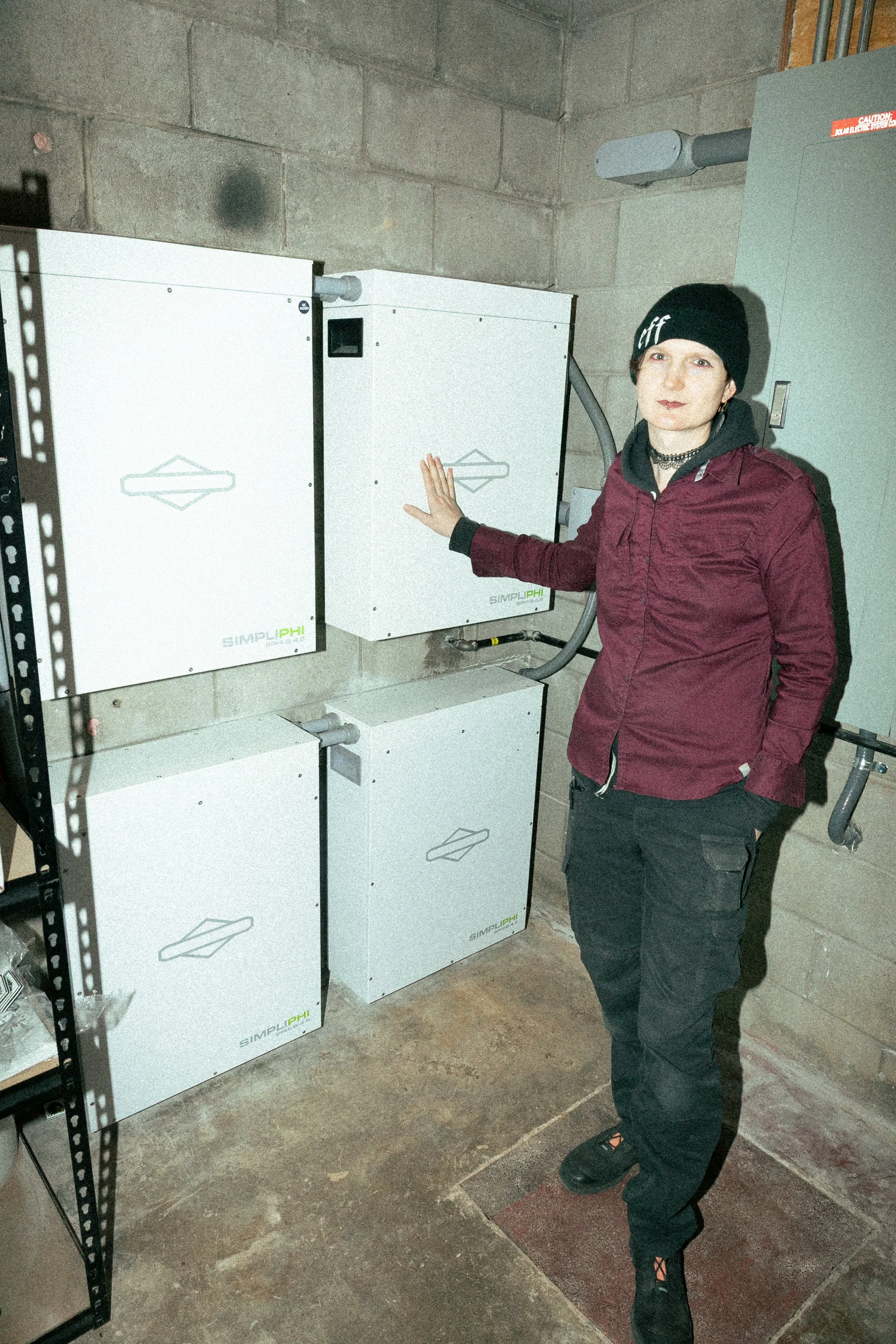
Firestorm Books, a longtime hub for mutual aid in the region, lost power for the first five days after Helene and kept going anyway, running daily community meetings, supply drops, water distribution, and grassroots relief. Its retrofit now pairs the store’s existing rooftop solar with battery backup.
📸 by David Uttley for Direct Relief
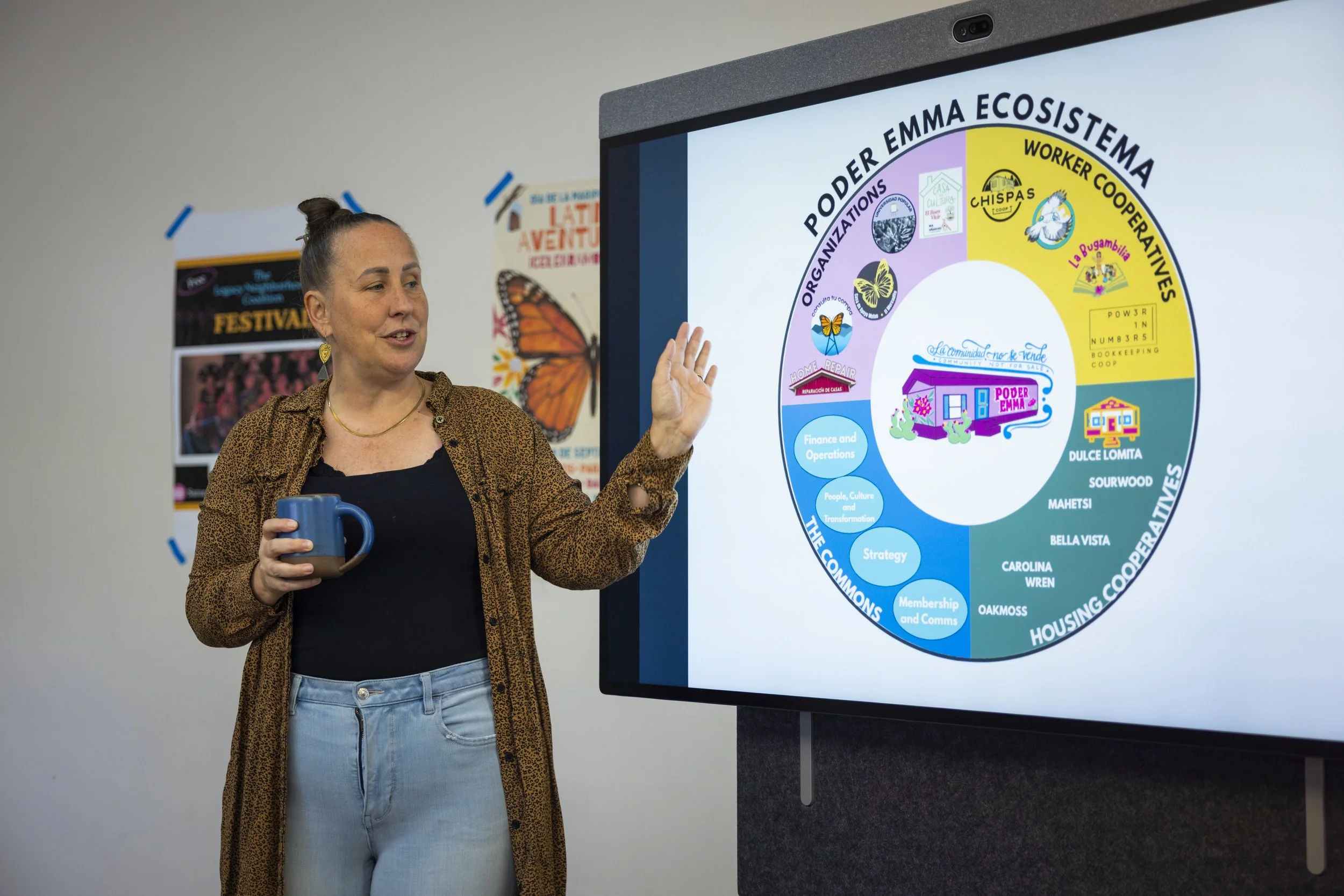
PODER Emma works to prevent displacement and protect the close-knit mobile home communities of Asheville’s Emma neighborhood, alongside its worker-owned cooperative, Chispas, which handles home repair for the neighborhood’s mobile home co-ops. Helene left Emma without power for more than a week and without potable water for 52 days. Through it all, Chispas led chainsaw and road-clearing crews to free trapped residents.
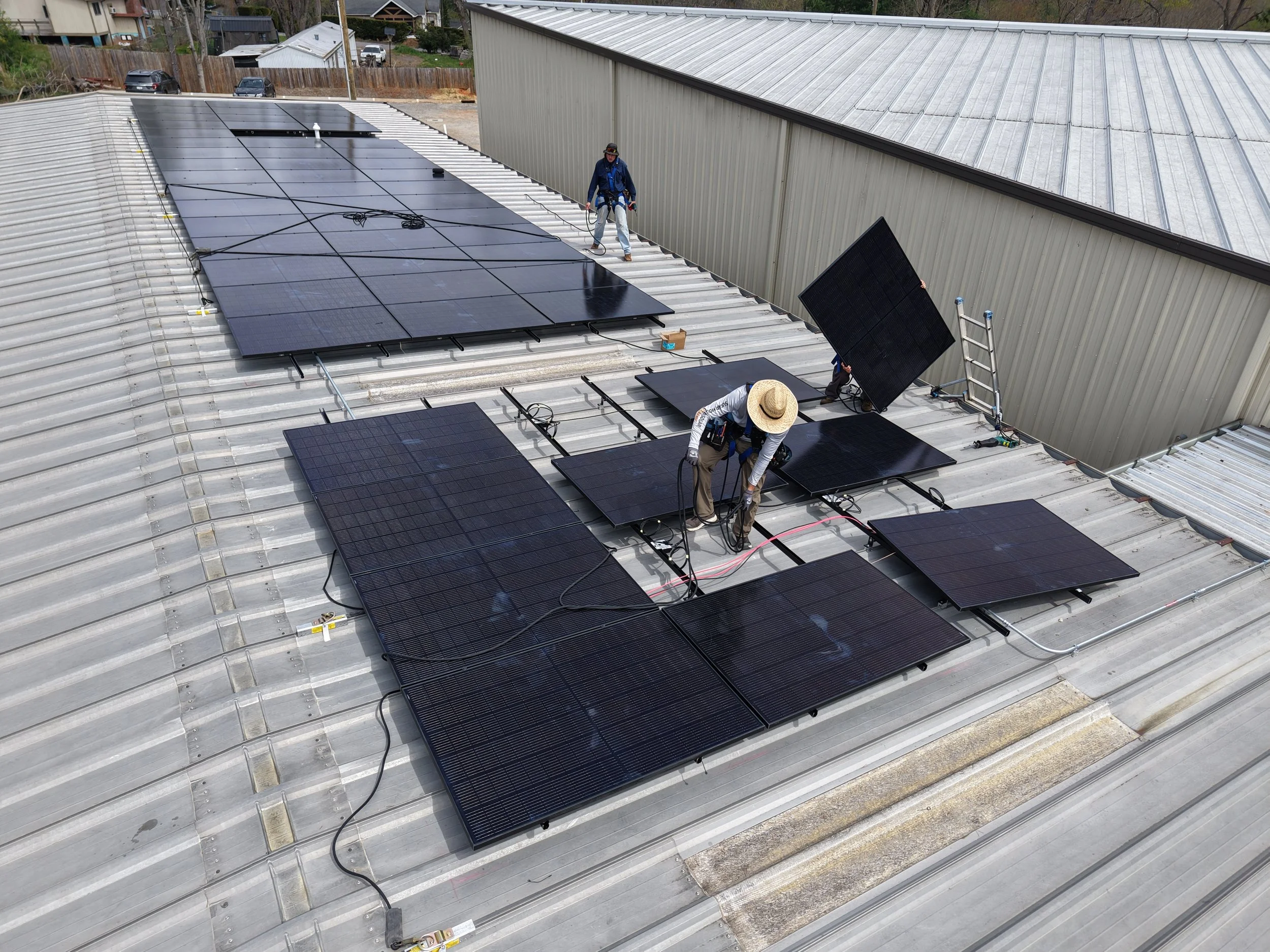
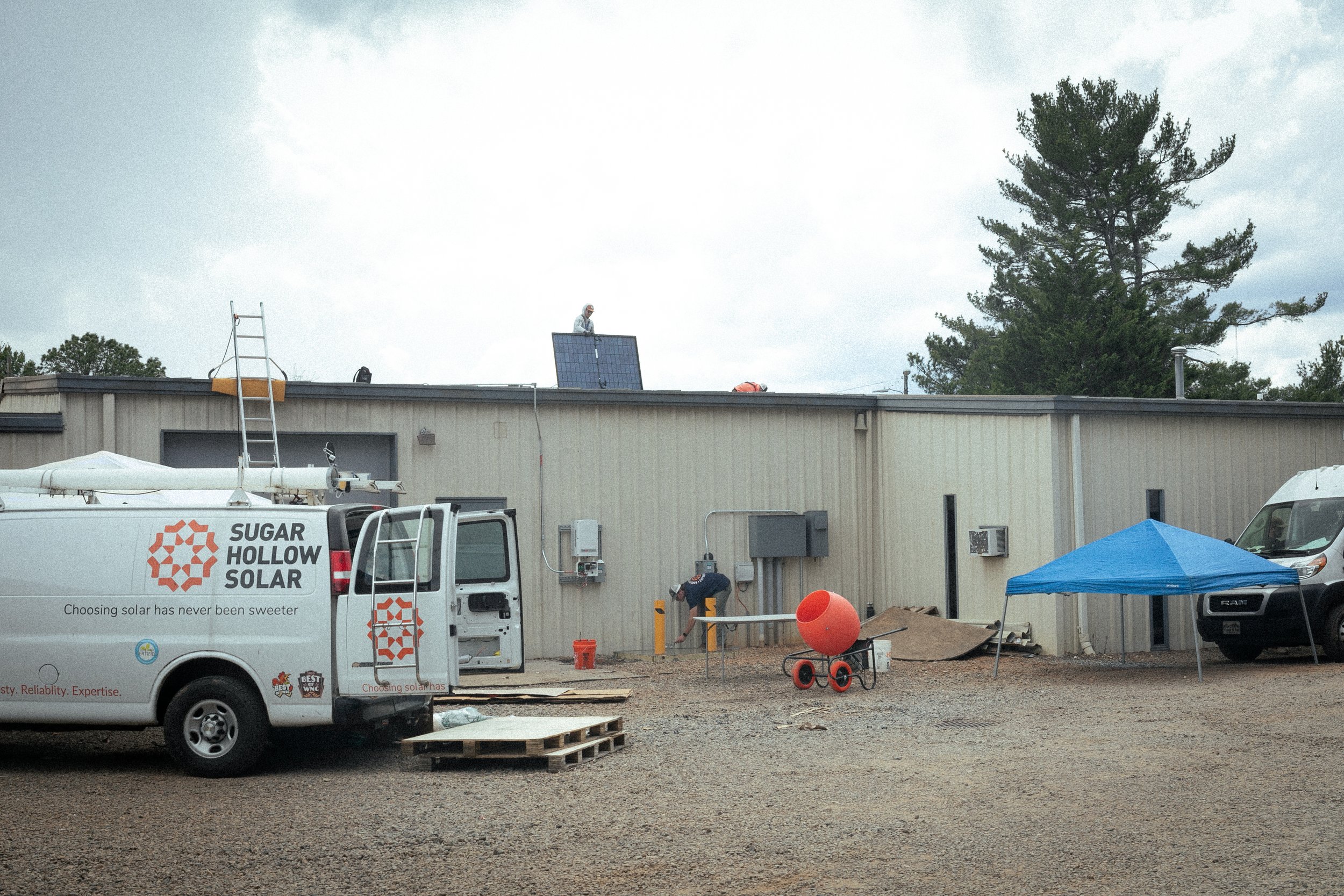
Through our long-term resilience program, we worked with PODER Emma and Sugar Hollow Solar to install a 46-kW system on PODER Emma’s community hub. The array itself is grid-tied, and three-phase battery backup for the building was prohibitively expensive. So to make the hub resilient, we added a single-phase critical loads subpanel and transfer switch that a mobile solar trailer can plug into and power during an outage. It’s a novel approach, and one we’re excited to replicate.
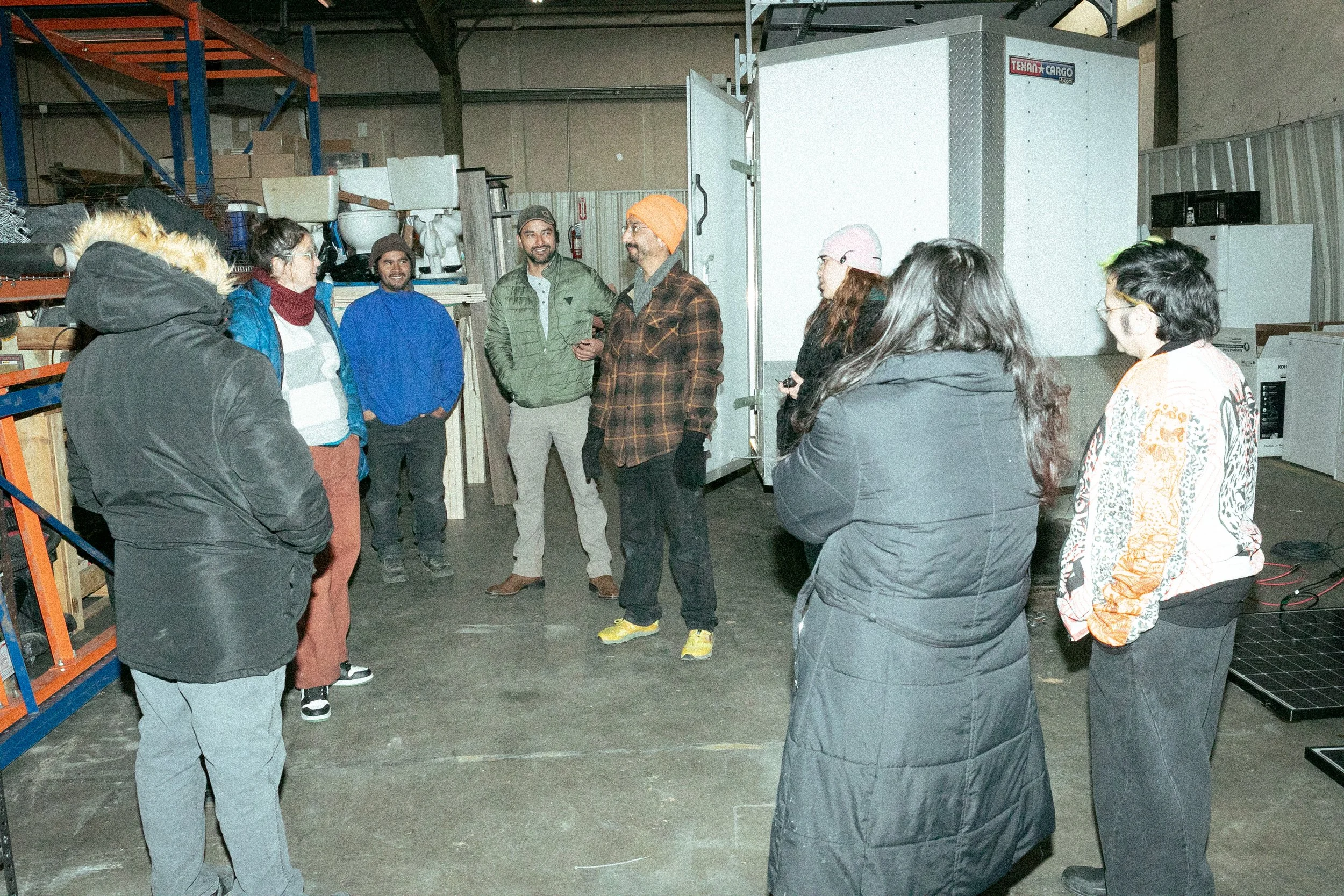
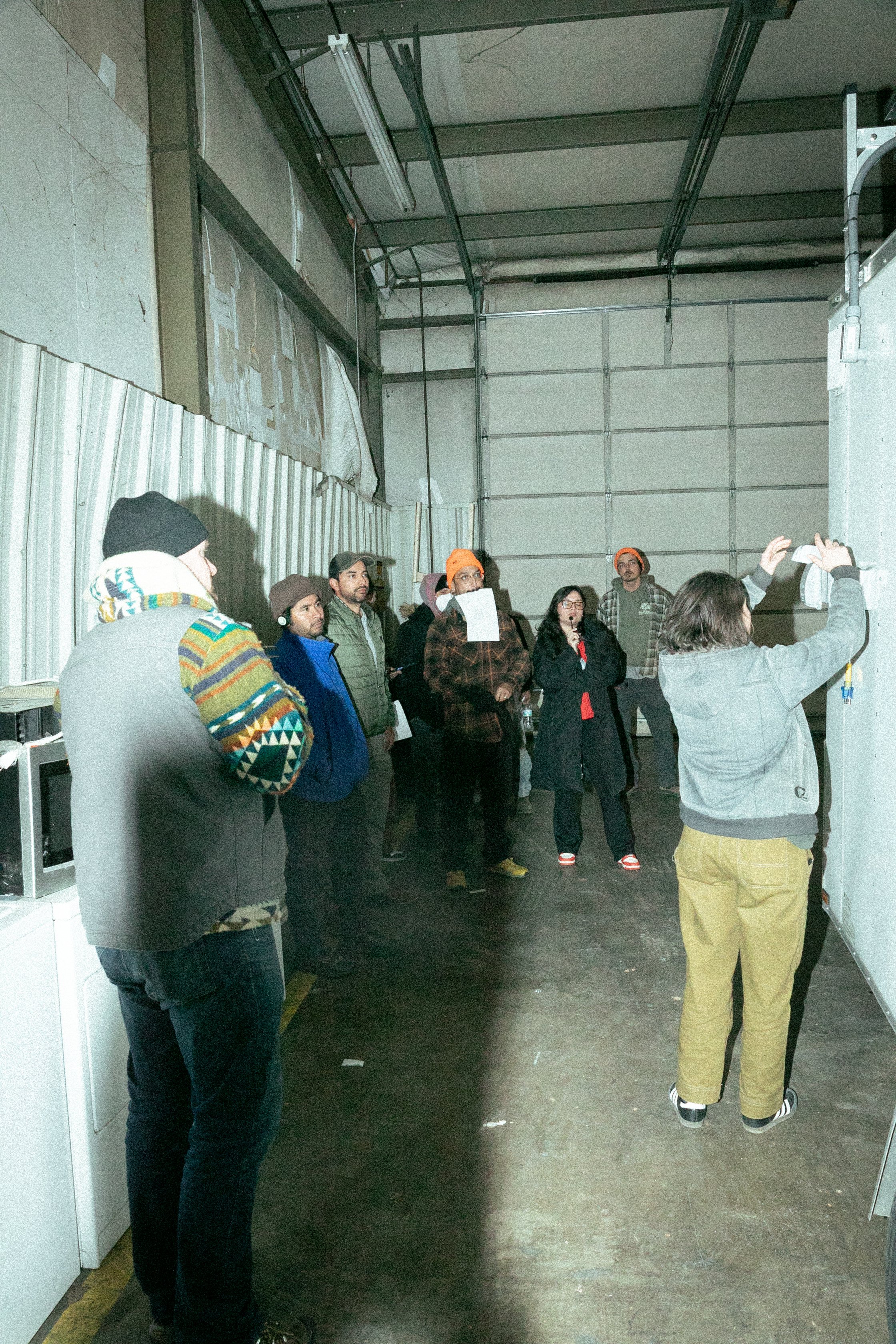
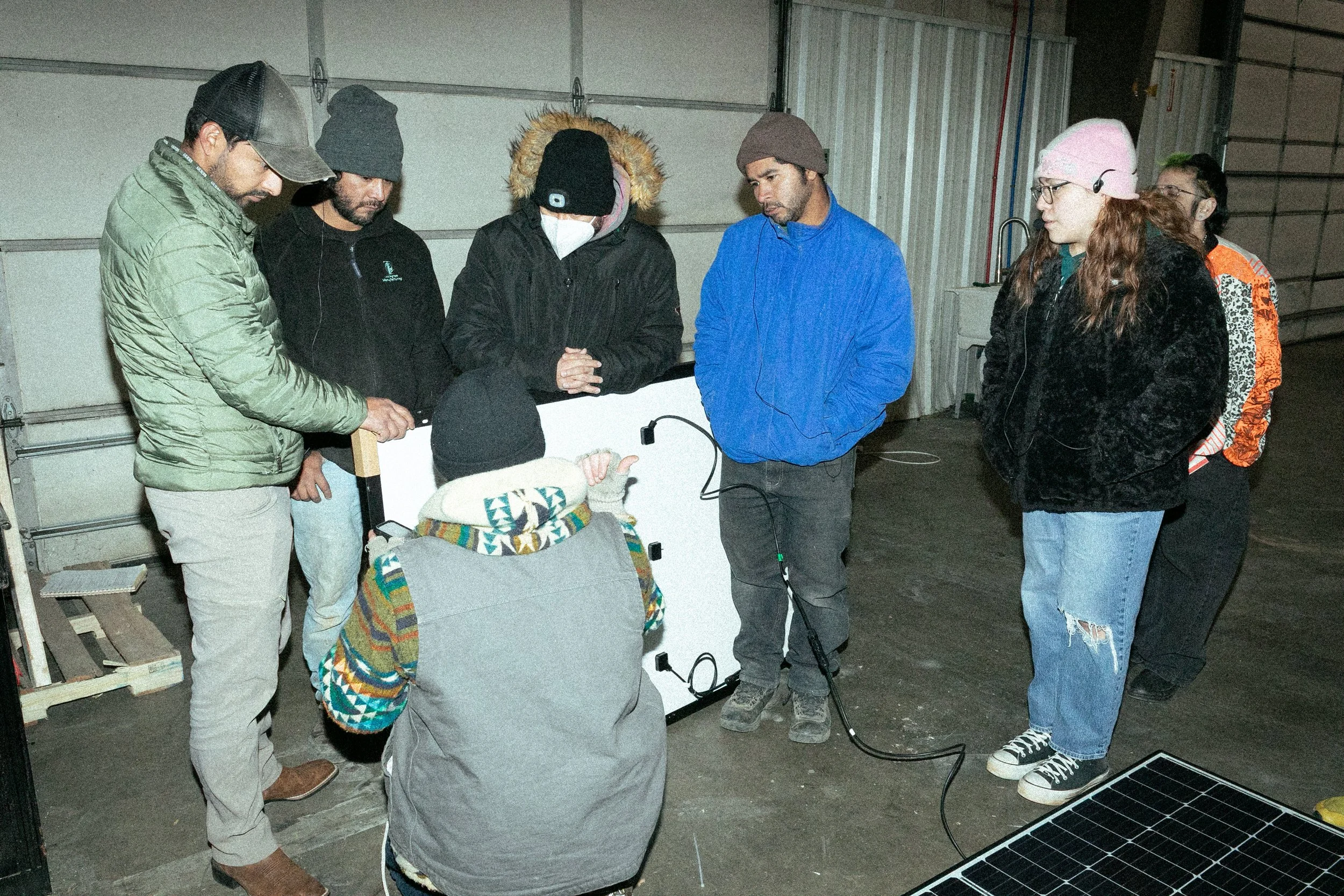
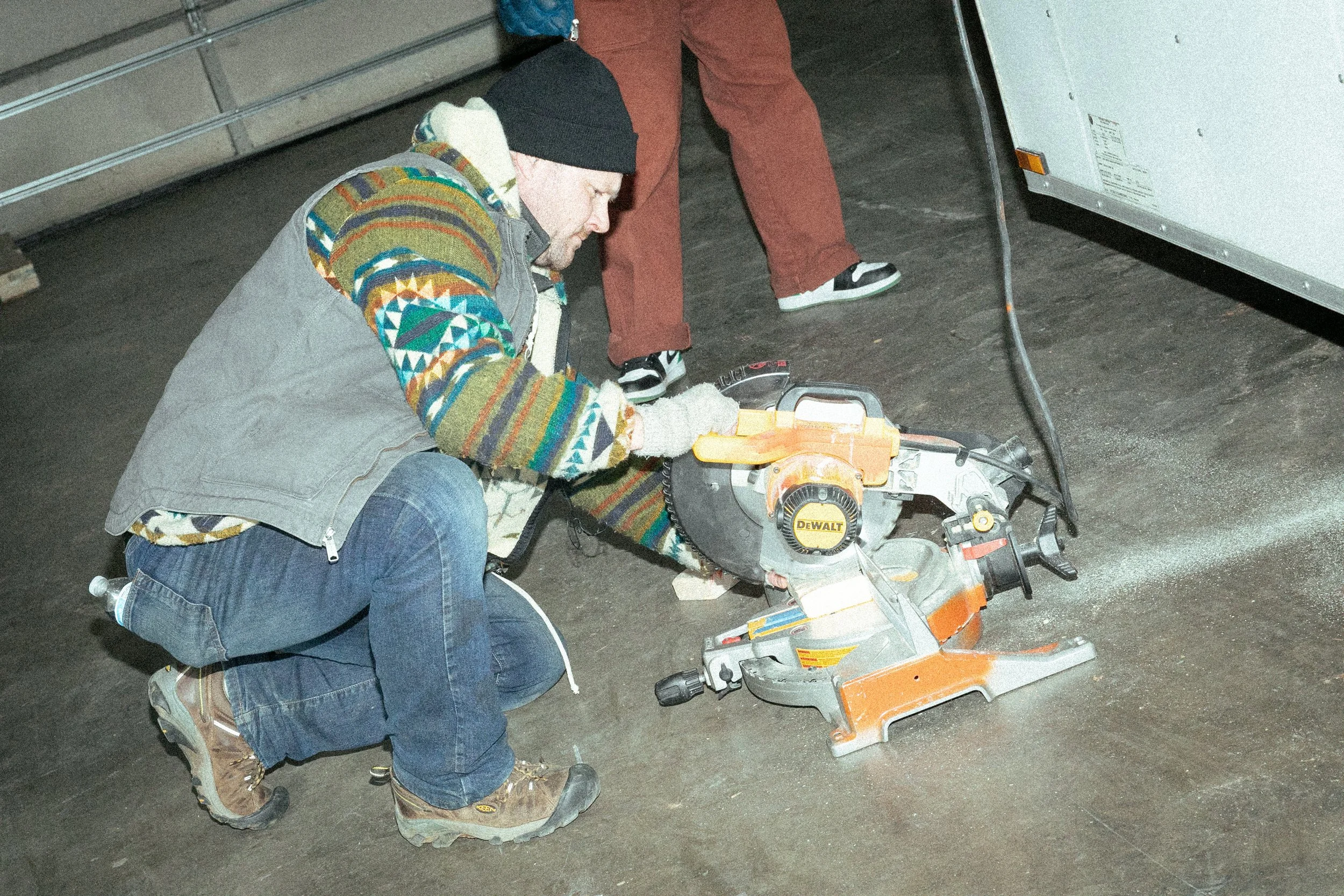
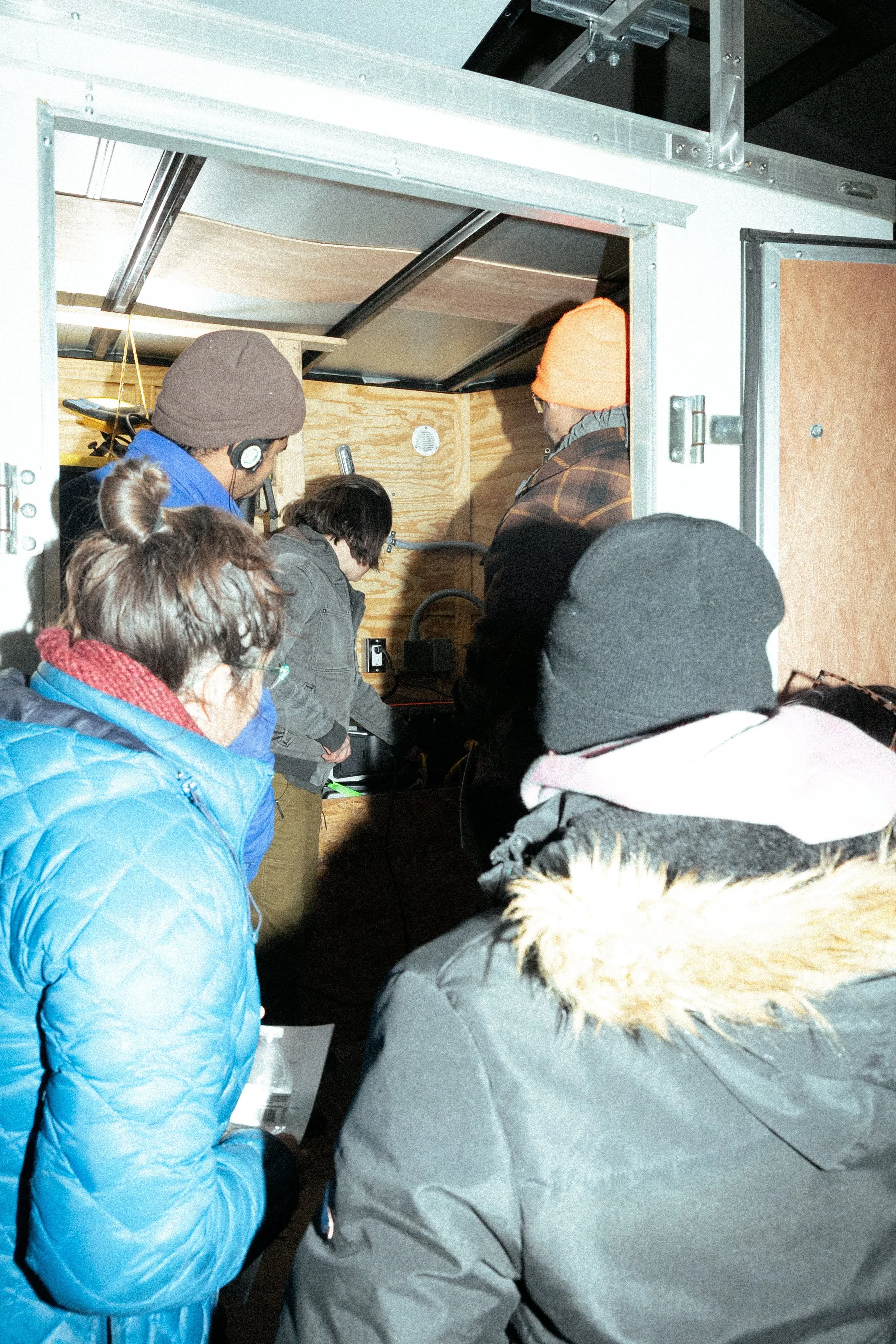
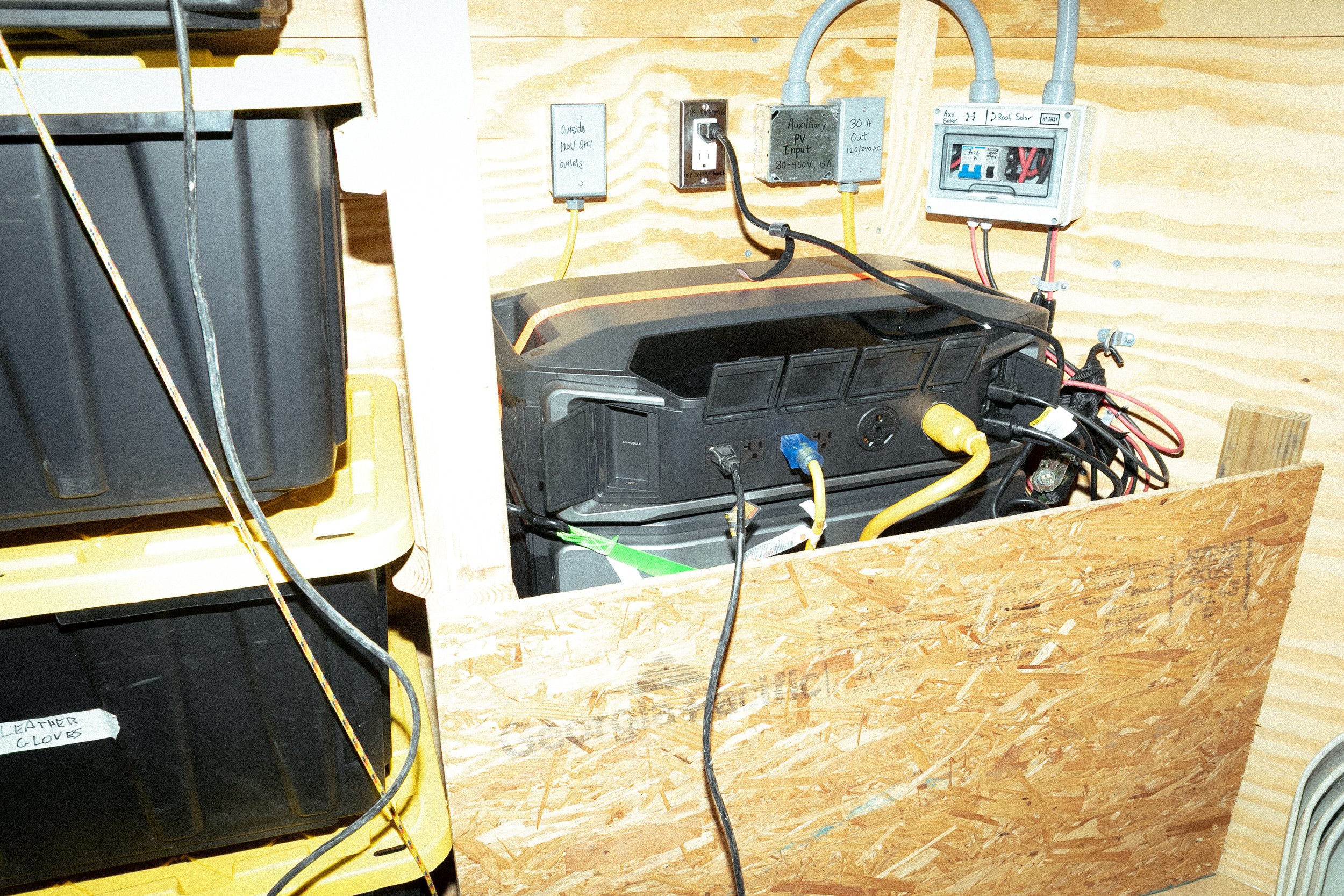
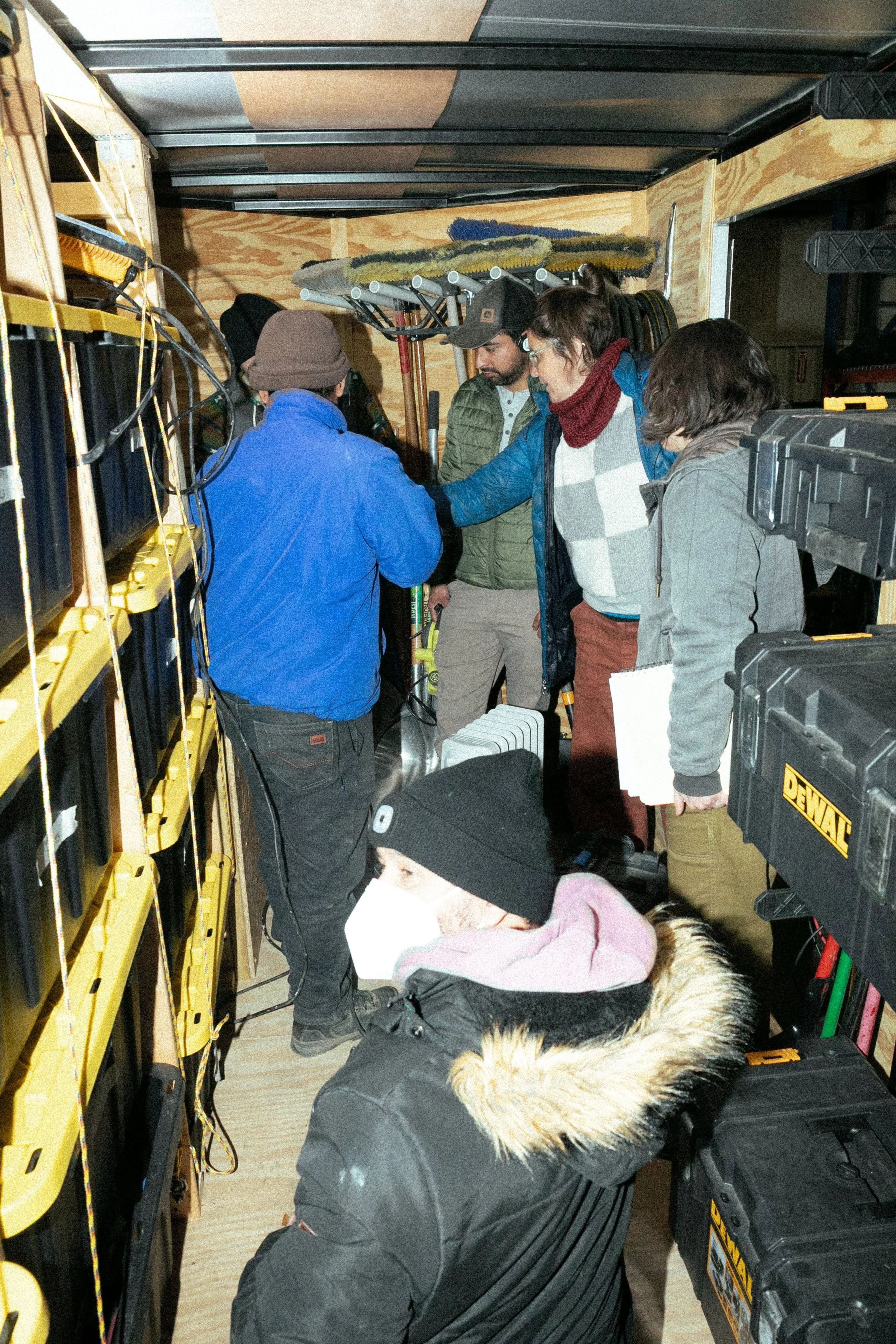
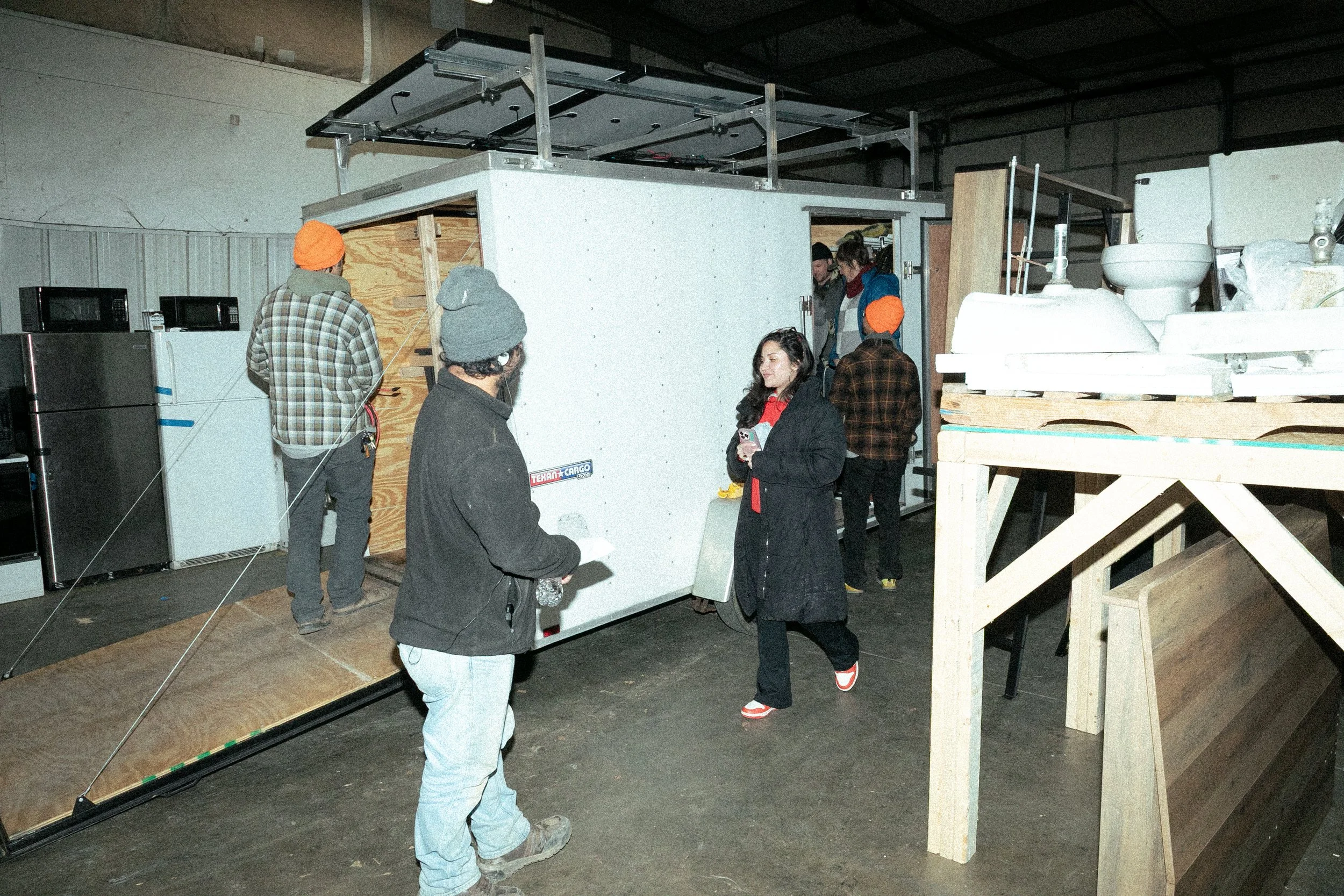
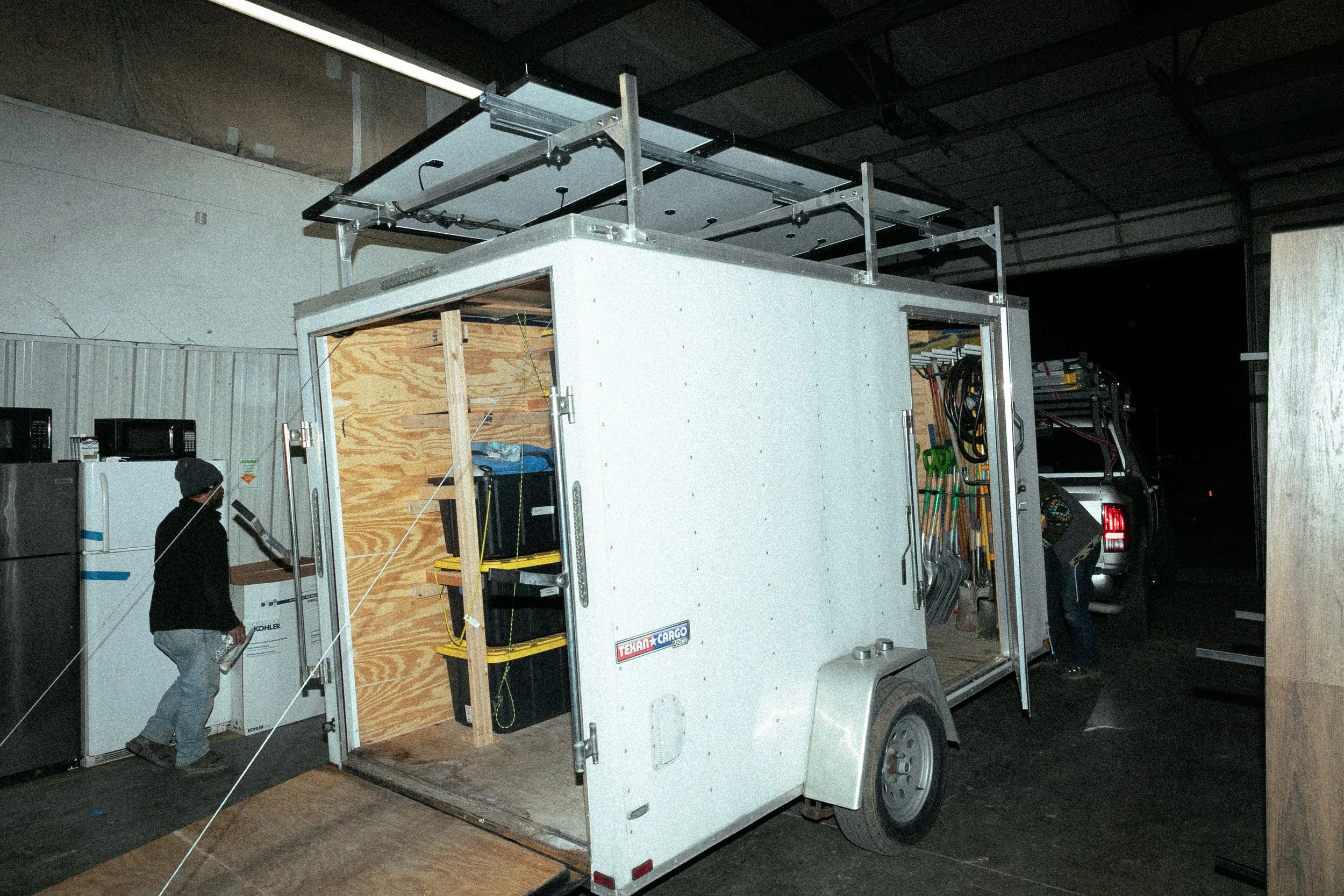
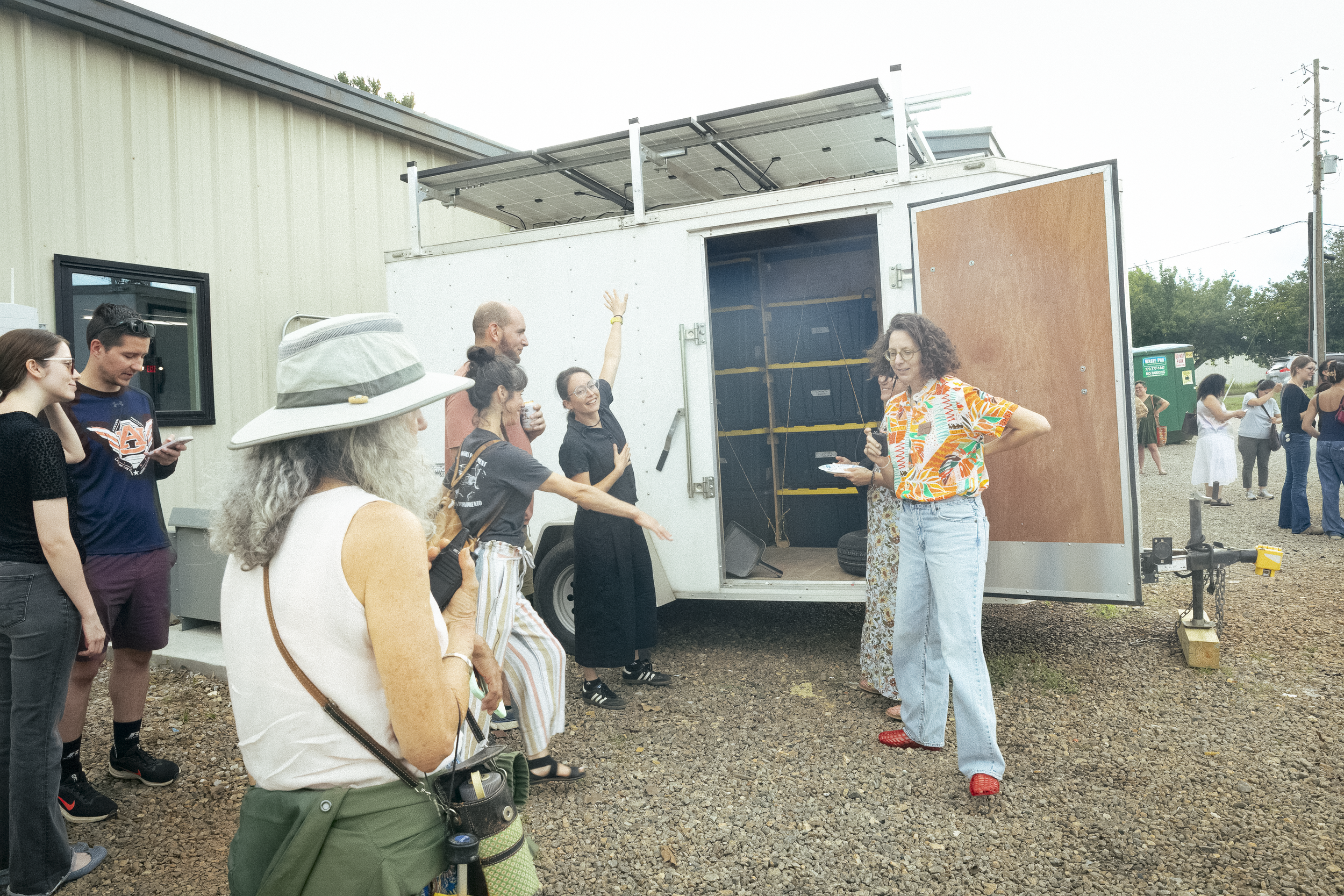
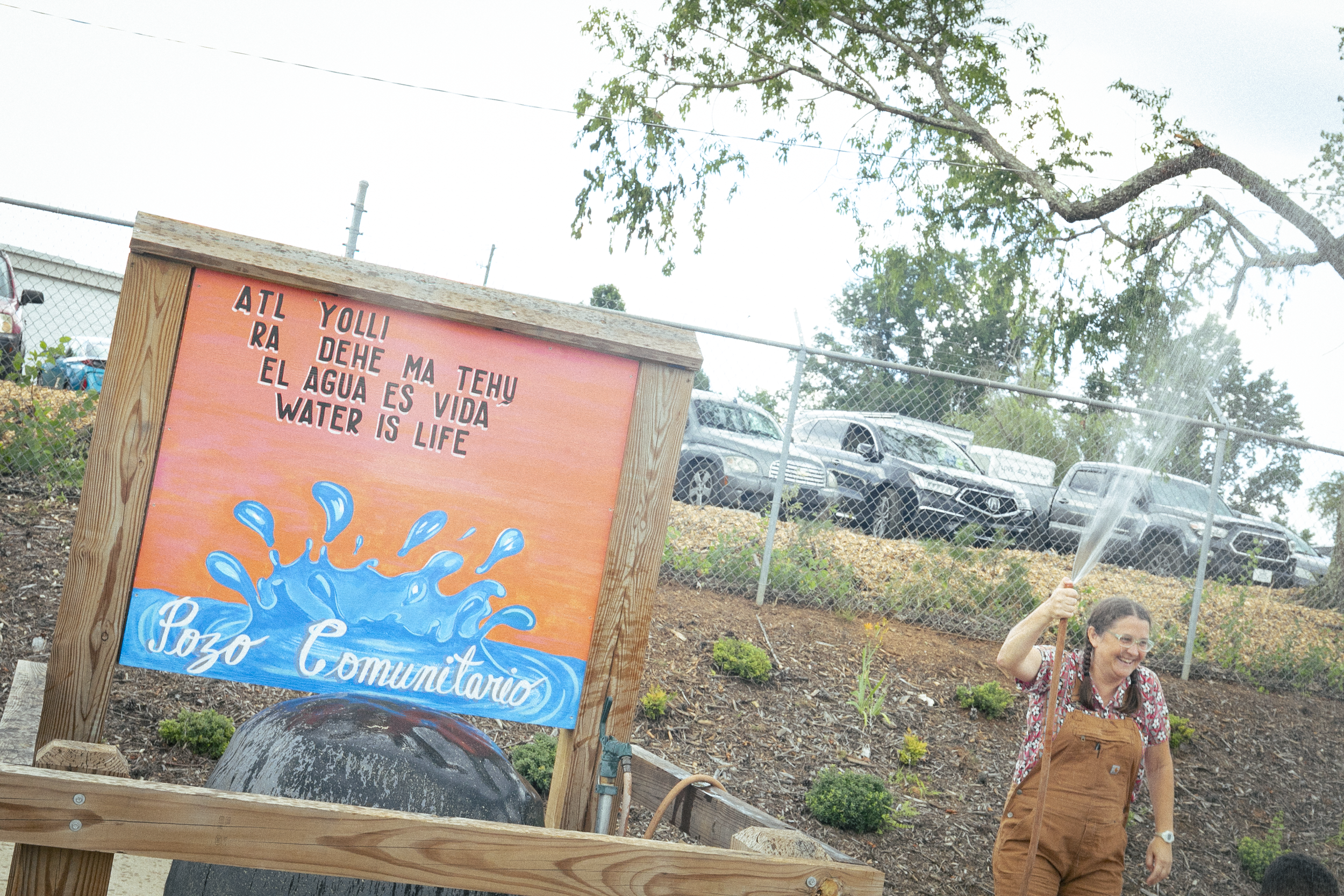
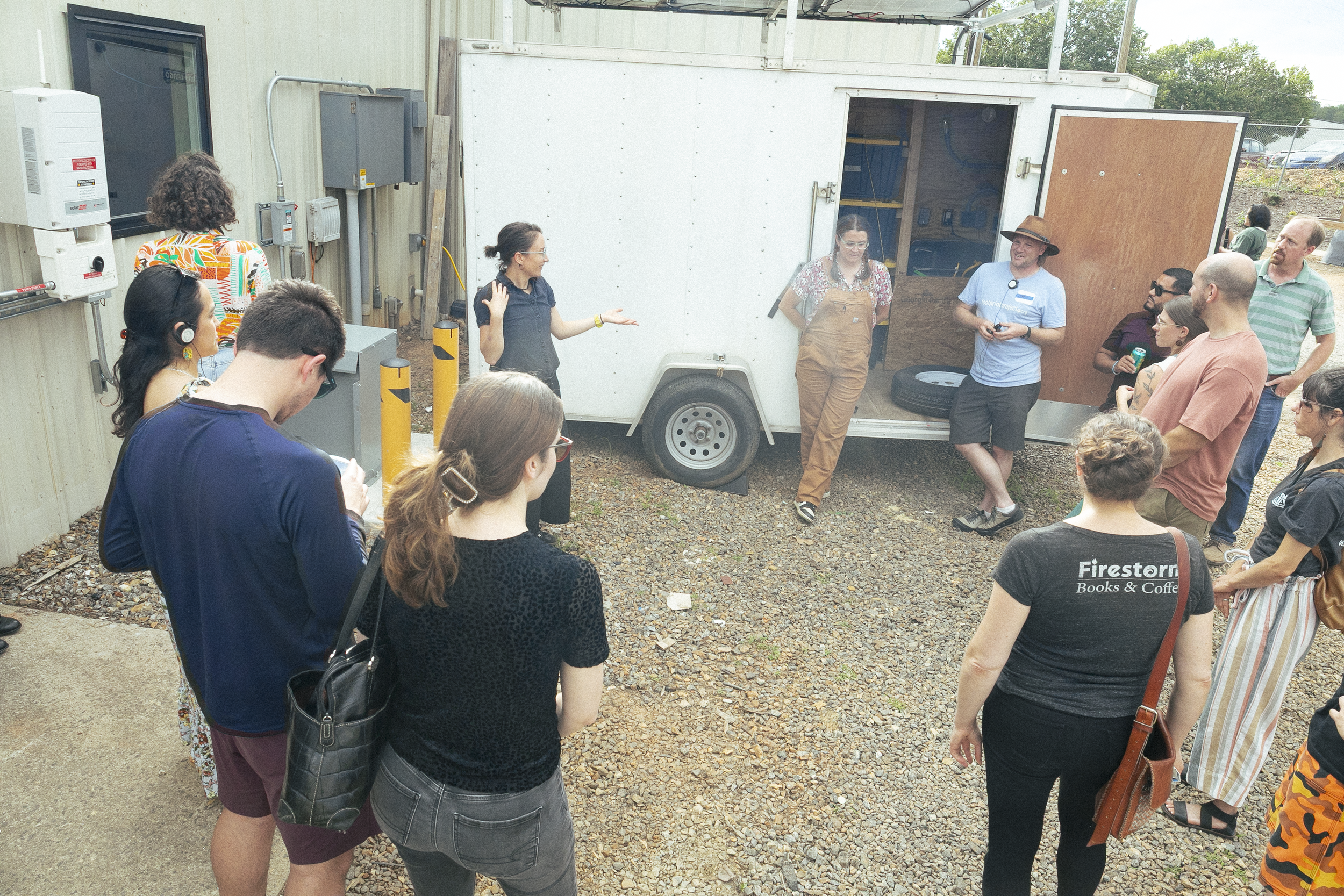
That trailer belongs to Chispas. We delivered the solar trailer to Chispas’s headquarters, where under blue skies it powers lights, tool charging, and equipment at construction sites without electricity, so crews no longer have to rely on residents for power on-site. When the next storm comes, it can plug into the hub and keep the essentials running.
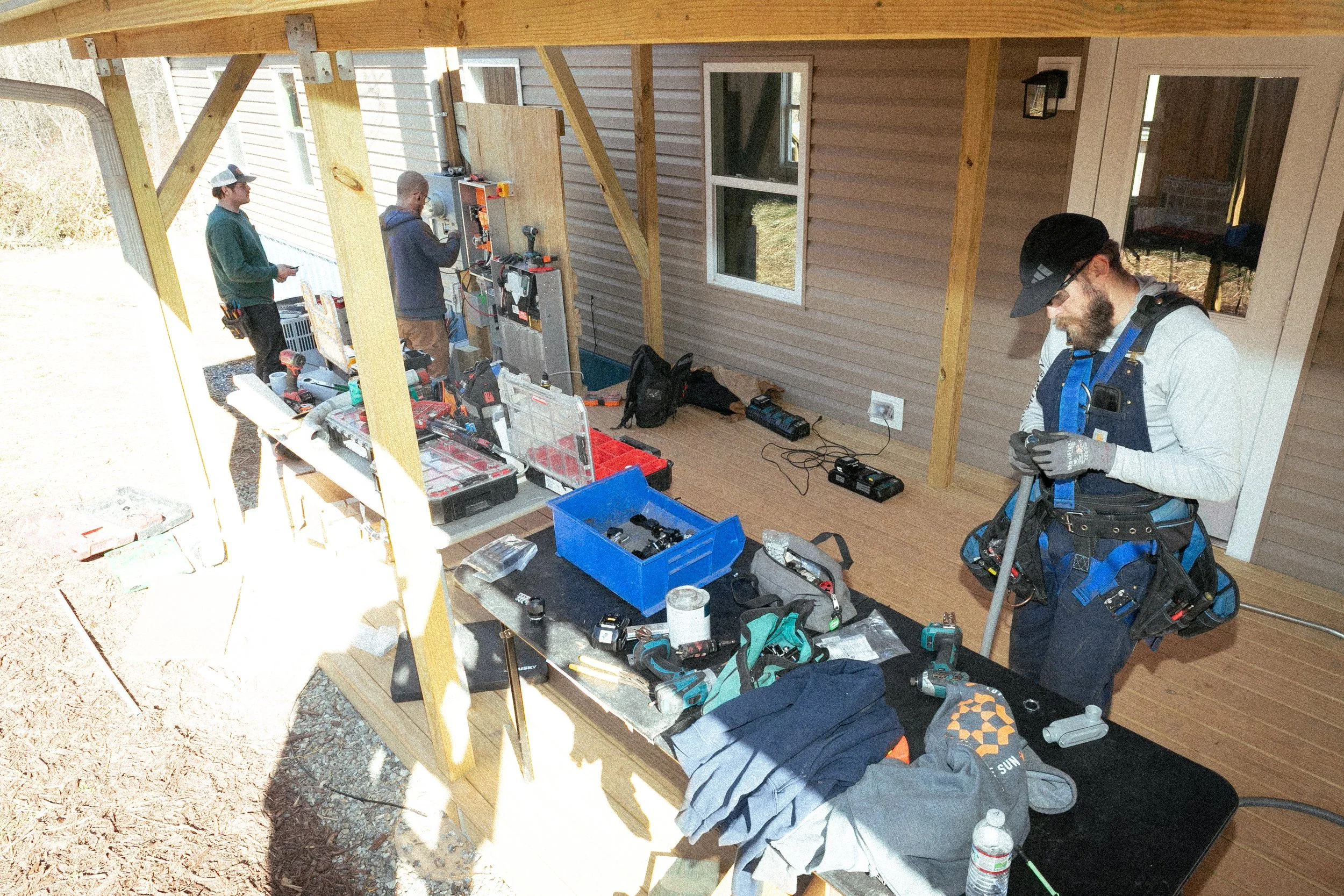
📸 by David Uttley for Direct Relief
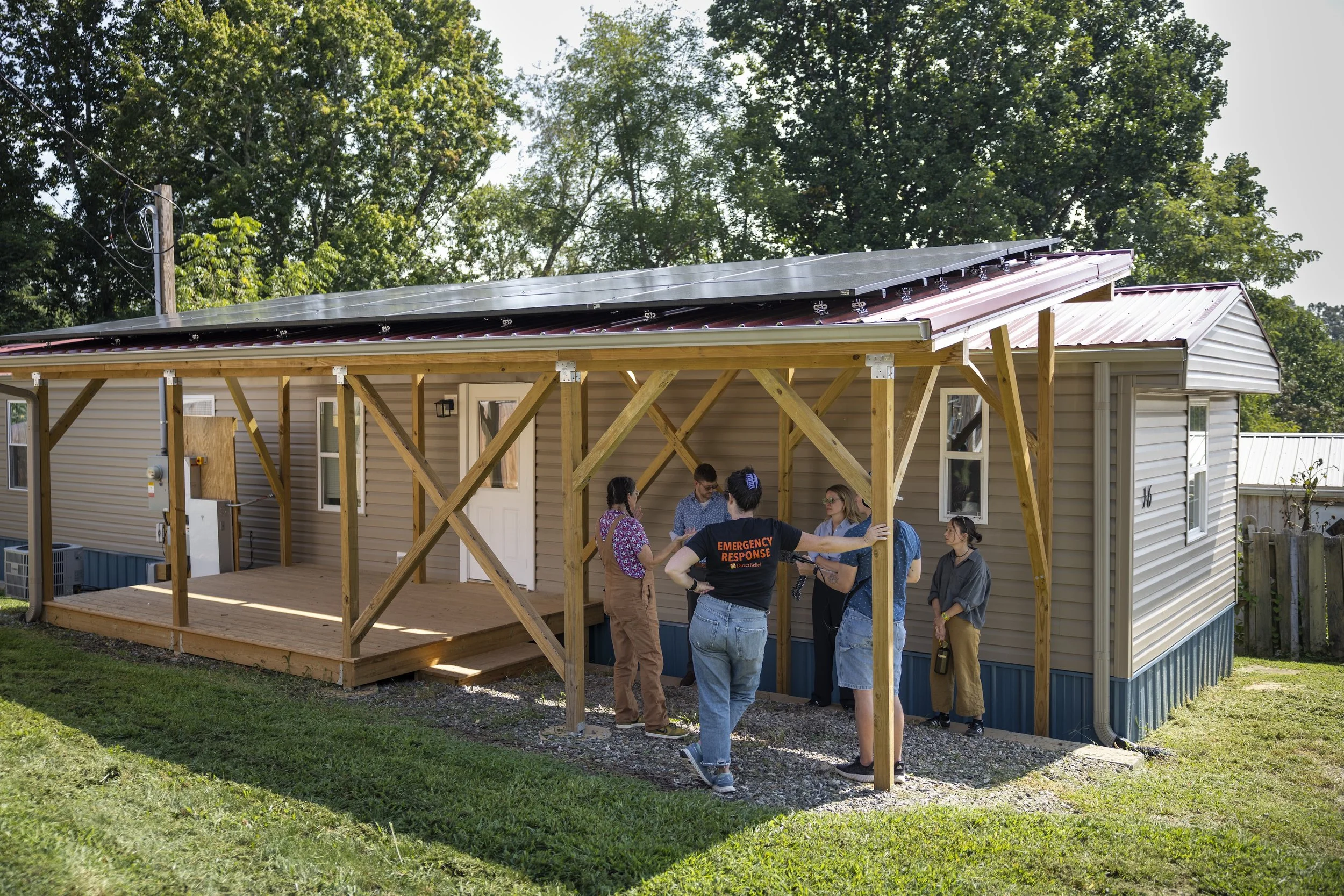
Because mobile home roofs can’t support traditional solar mounts, Emma residents worked with Chispas and Sugar Hollow Solar to develop the “Front Porch” model: 15 solar panels mounted on a custom-built porch roof that leaves the home’s own roof untouched. The prototype home now houses a family who lost their house in the hurricane, and it’s helping PODER Emma gather data on cutting energy costs across the cooperative’s mobile home communities.
Support that began with a small group of thoughtful donors (NC Sustainable Energy Association, Schneider Electric, Target, Long Haul Fund, Appalachia Funders Network, Southeast Climate and Energy Network (SCEN), Invest Appalachia, Direct Relief, and so many donated equipment partners) has grown into a coordinated network of renewable recovery investors.
The next wave is already moving. NCDEQ Round 1 investments are bringing microgrids to the East Asheville Library, Beacon of Hope Food Pantry, Buladean Community Center, Bills Creek Community Center, and the Burnsville Fire Department. DEQ Round 2 follows close behind, with sites in Newland, Black Mountain, Hot Springs, Spruce Pine, Union Mills, and Burnsville.
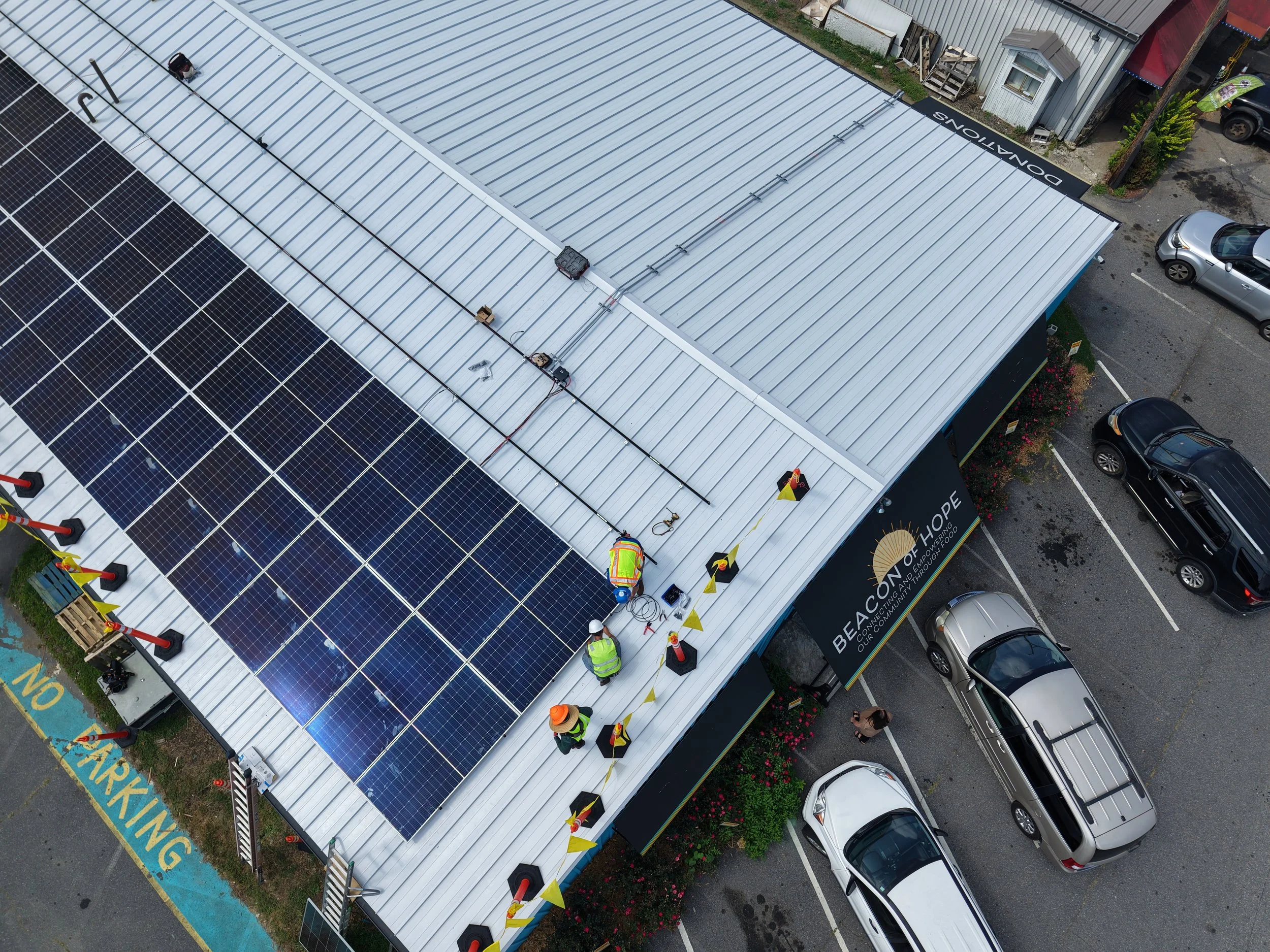
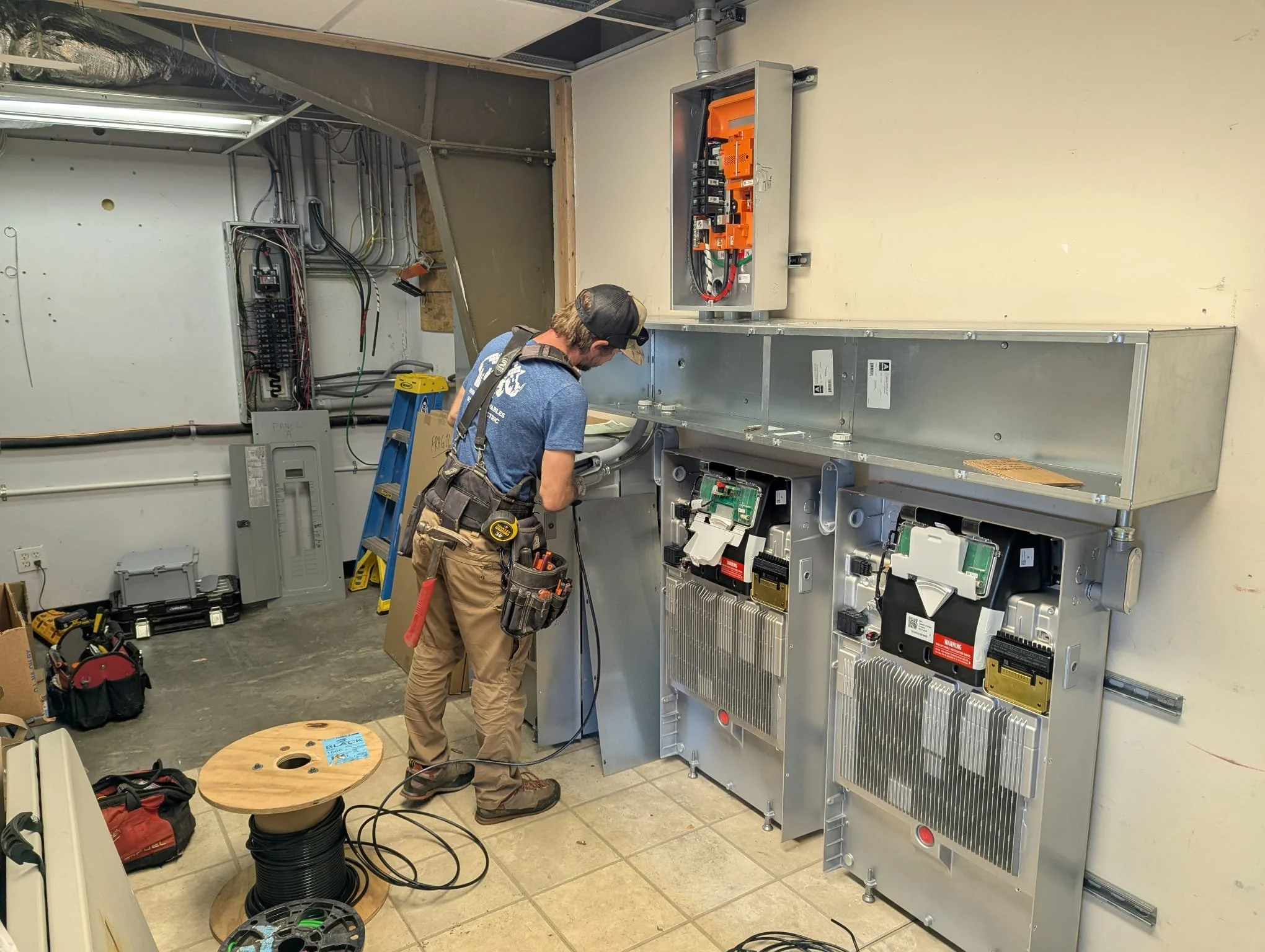
One of those Round 1 sites is already taking shape. Beacon of Hope, Madison County’s largest food pantry and thrift store, distributed more than 661,000 pounds of food in 2025 alone. Construction is underway now. We visited in mid-September to catch up with Jessi Koontz, Beacon of Hope's Executive Director and CEO, and see Rhino Renewables install Beacon of Hope's new rooftop solar. Watch the video from our visit below, and check out our recent interview with Mack, a crew lead at Rhino Renewables.
Beyond the DEQ permanent microgrid installations, more renewable resilience is coming this fall: PV panel donations and sub-grants to Bounty & Soul and Vecinos, both breaking ground this season, and Rural Organizing and Resilience (ROAR) is putting their Footprint-built solar trailer to regular use. And because disaster work never stays in one place, when Tropical Storm Chantal flooded the Triangle, we donated batteries and an inverter to Benevolent Farms, where microgrid construction is now underway.
WNC Solar Free Store
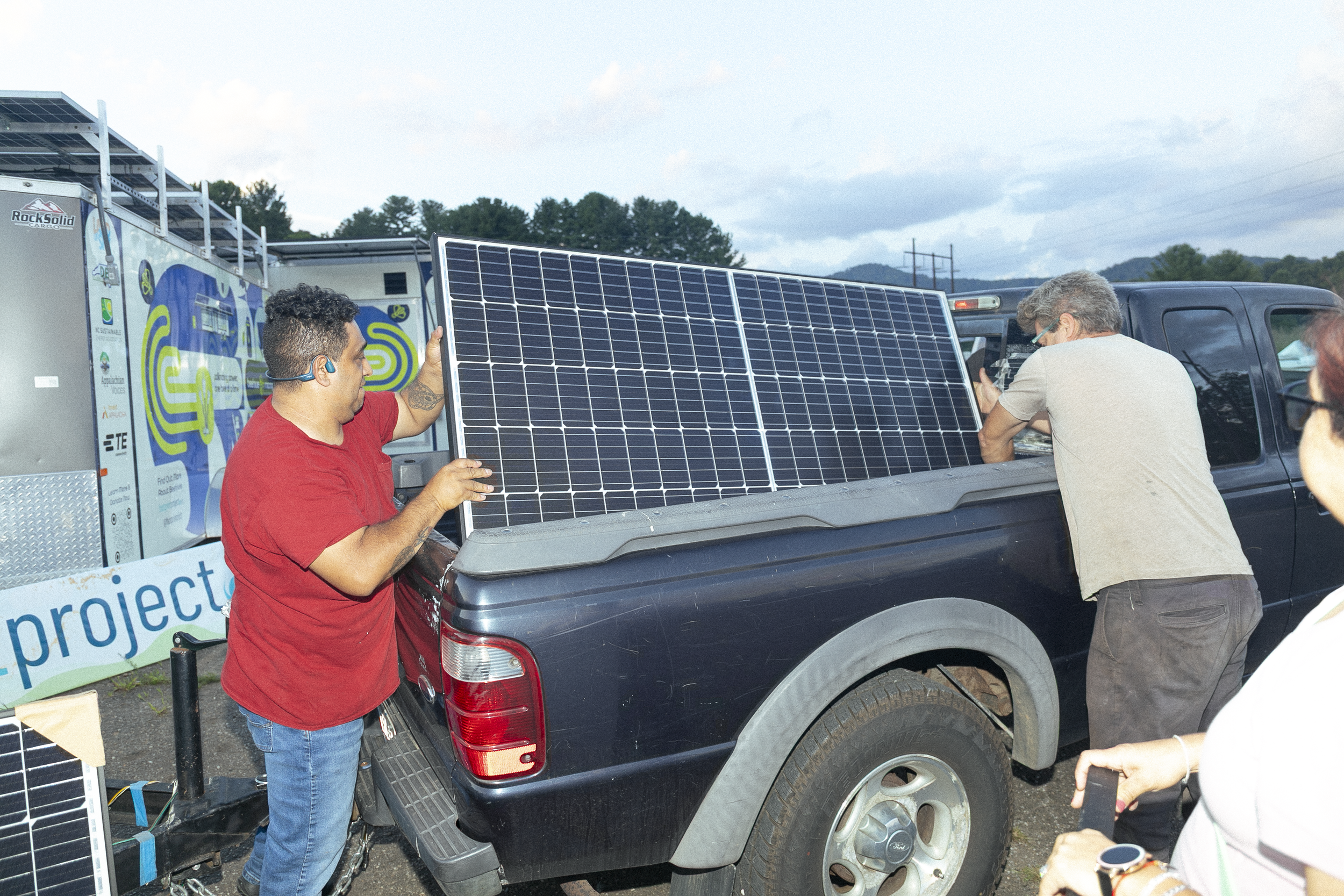
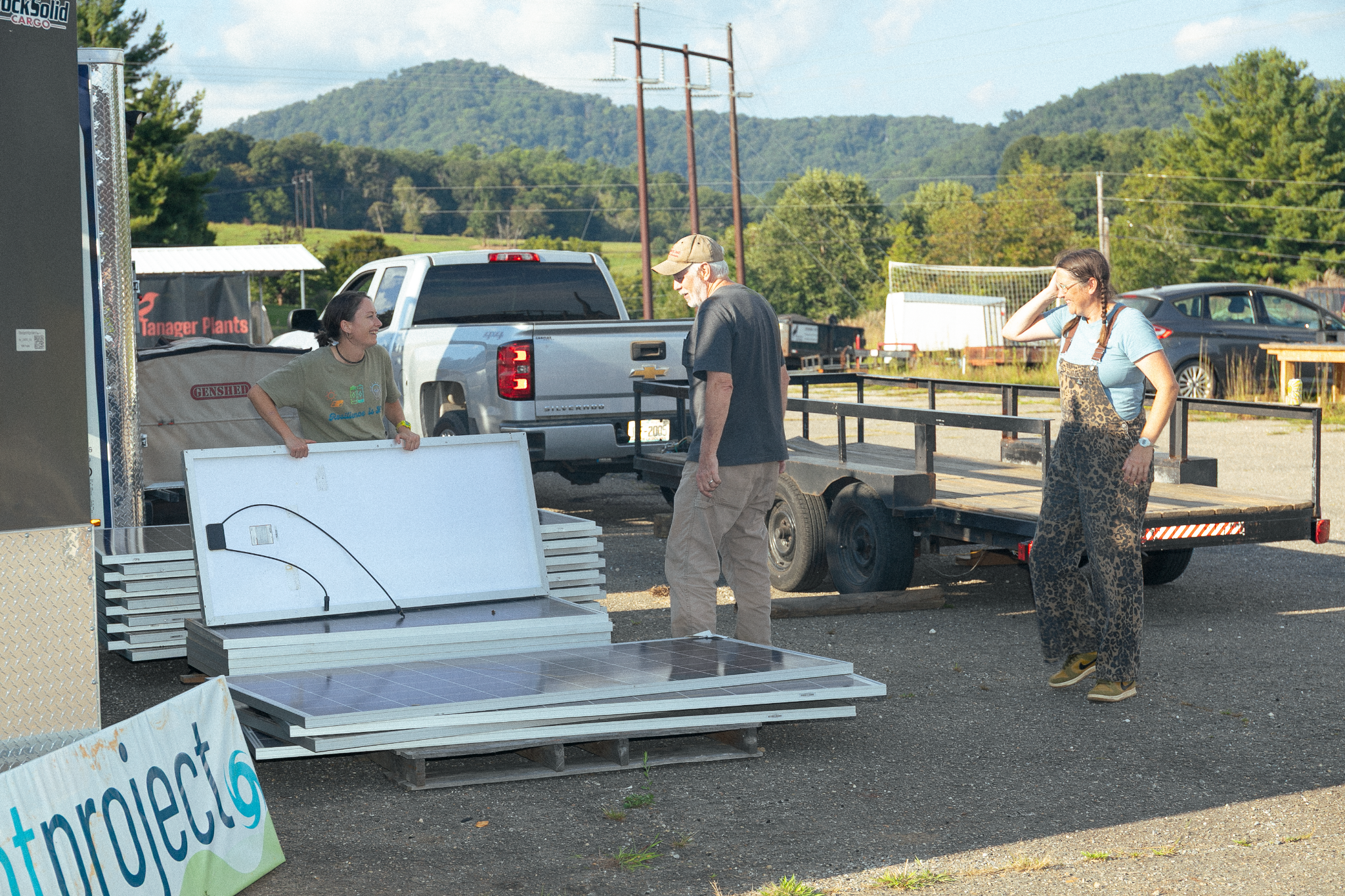
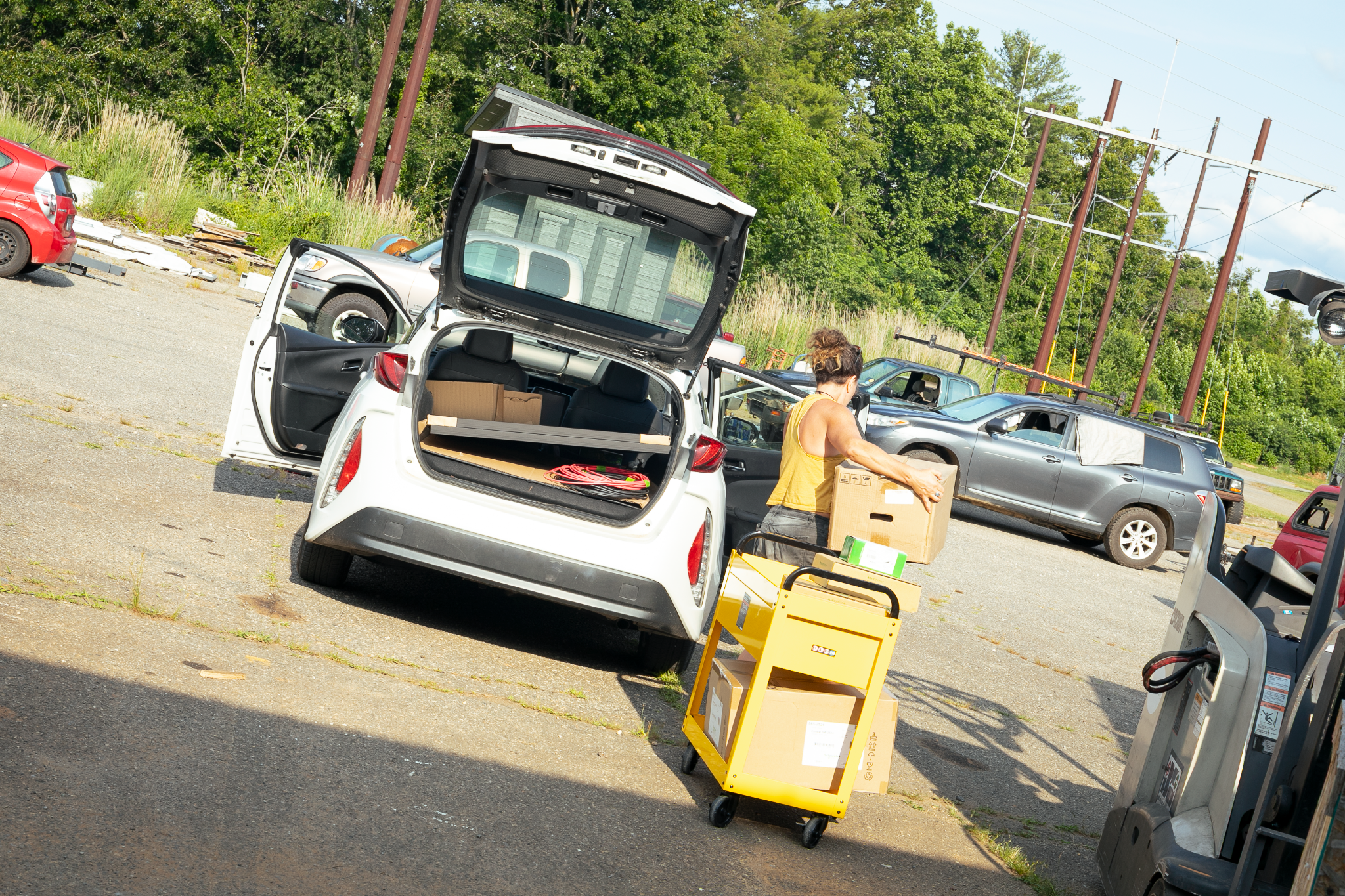
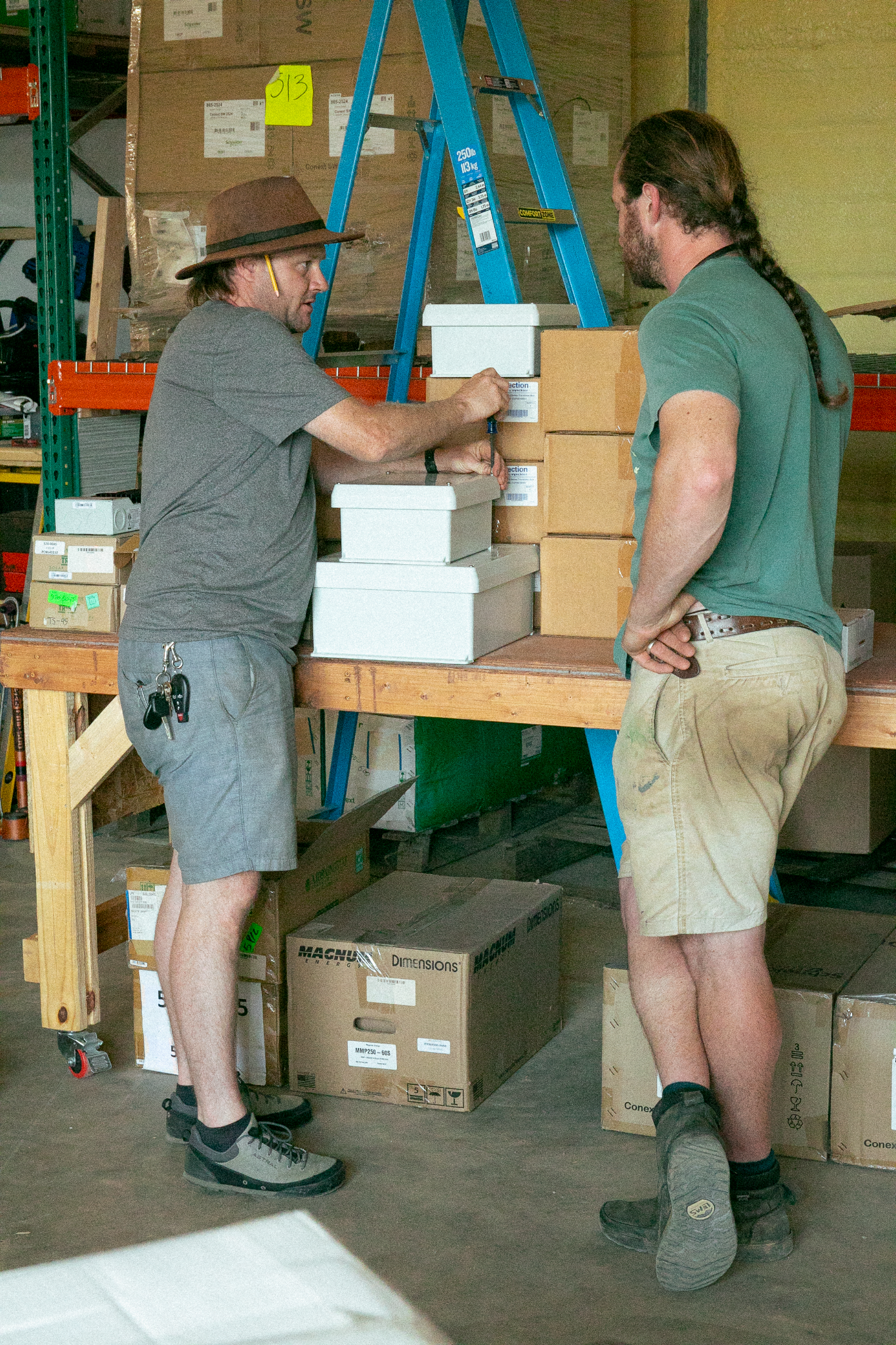
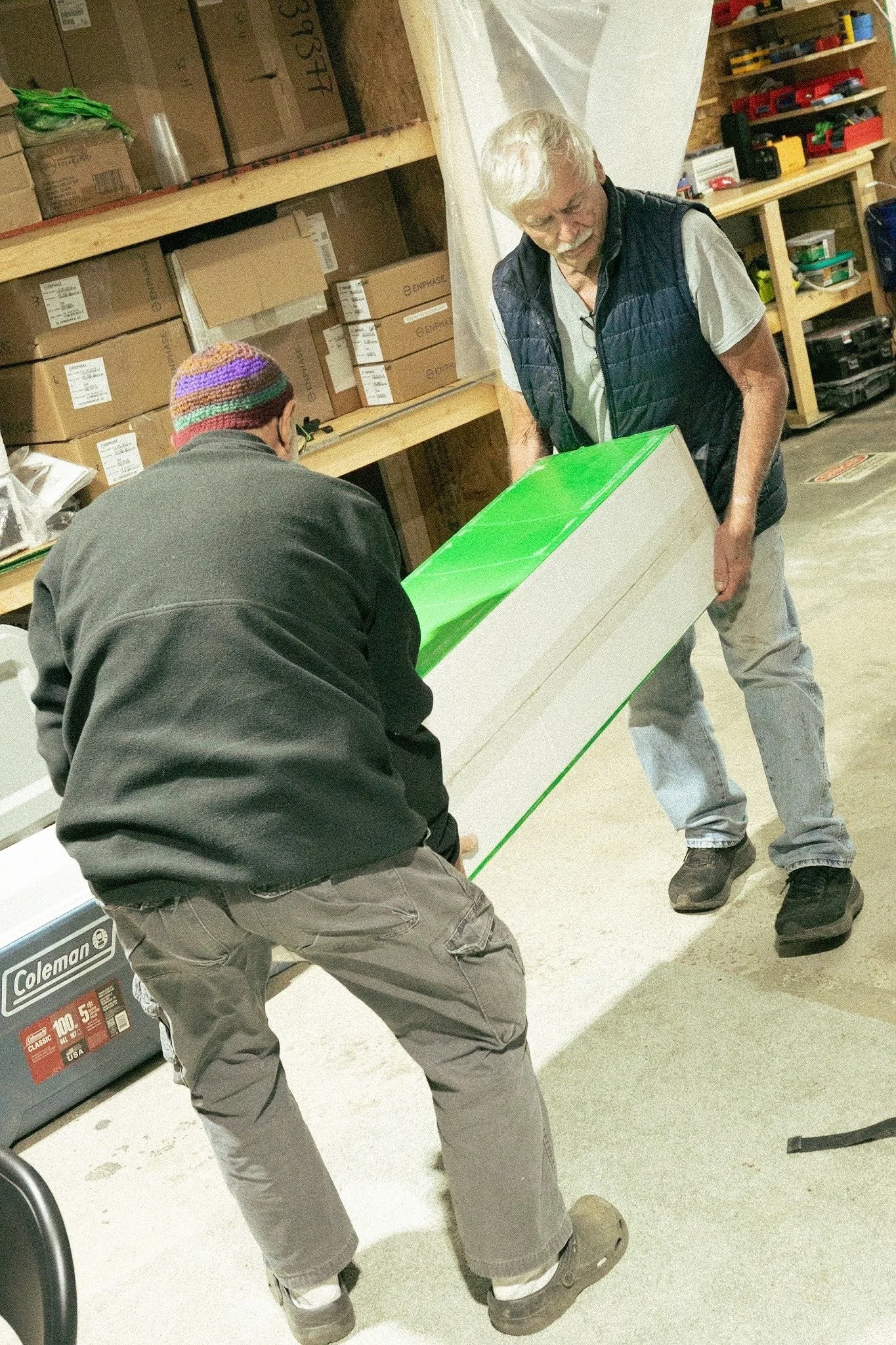
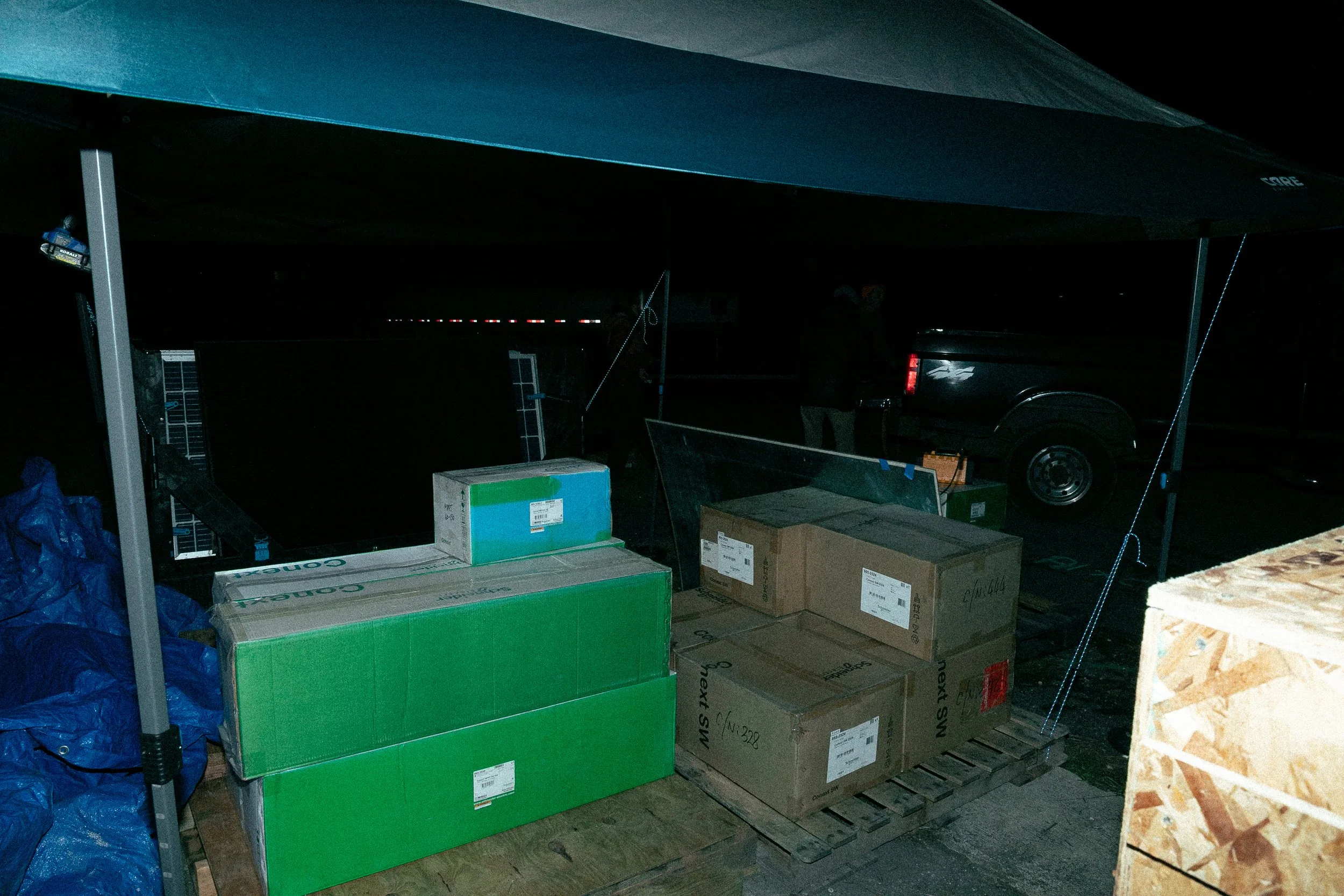
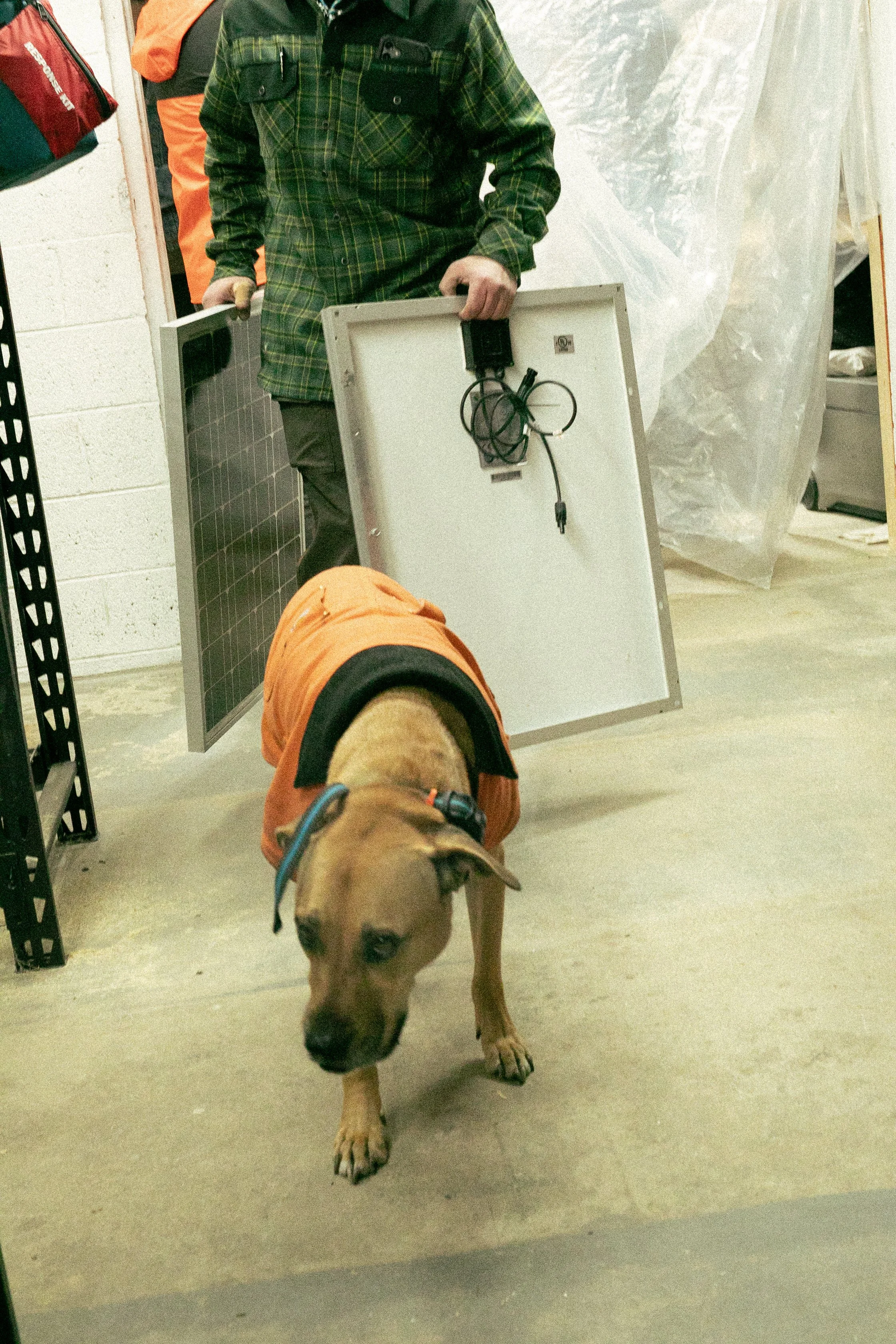
The Solar Free Store evolved out of a surge of industry support. As word spread that the mountains needed power, in-kind donations started arriving in waves. Not all of it fit our emergency response needs, and loose components began piling up in our temporary warehouse in Mars Hill. We realized we were becoming a bottleneck, and needed a plan, so we decided to pass the tech on at no cost!
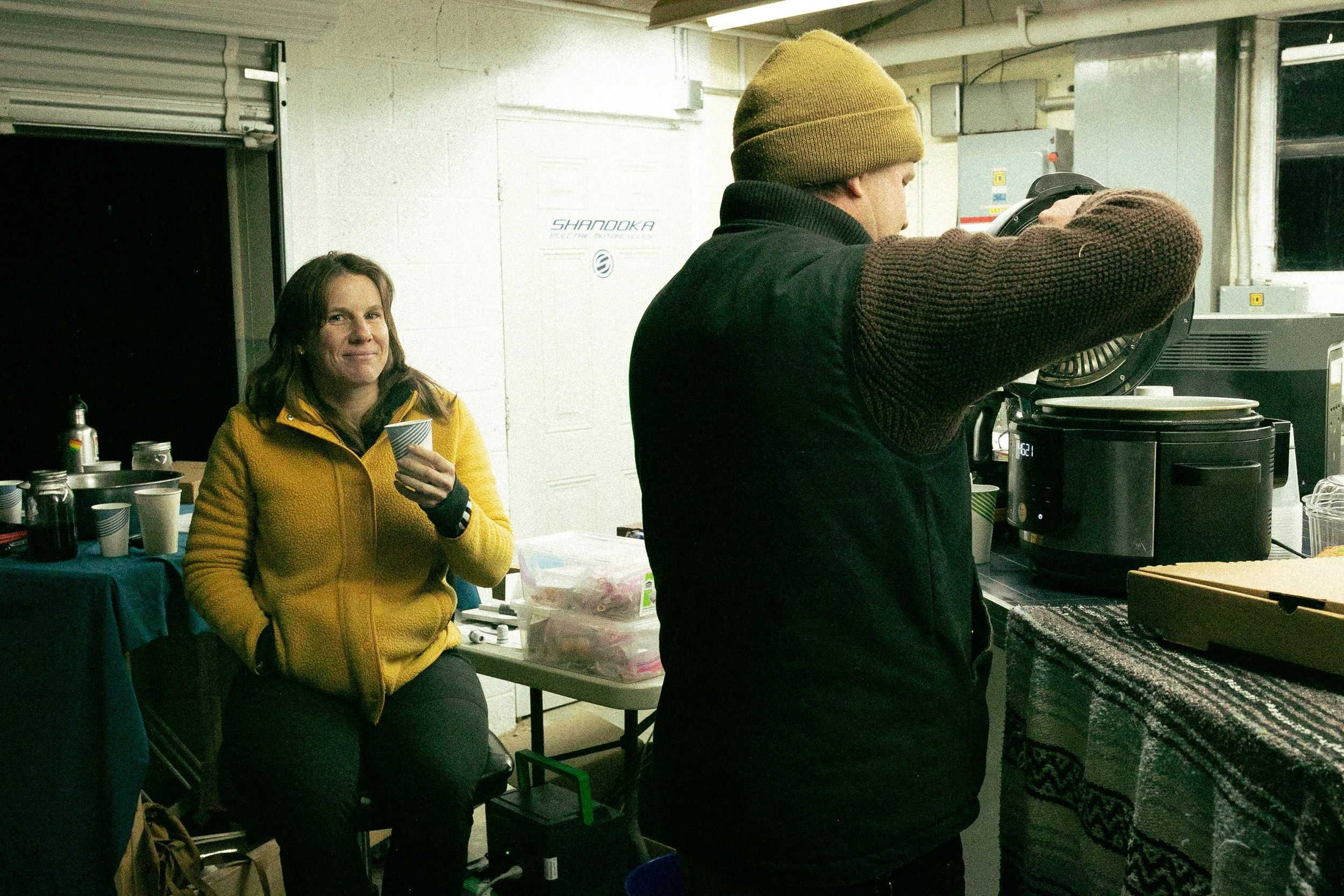
The idea was simple: in a crisis, neighbors share with neighbors. To date, the Free Store has passed along more than $380,000 worth of equipment to more than 120 individuals and families. Every solar and storage project it makes possible weaves the fabric of community resilience a little tighter, and keeps high-quality, working equipment out of the e-waste stream during a period of fast-changing solar technology.
![[EDITED] August WNC Solar Free Store (33 of 91).png](https://images.squarespace-cdn.com/content/v1/5b62523bc258b48b233cabe6/1790462320539-CL1JR8SI2M3QF0ZX73UY/%5BEDITED%5D+August+WNC+Solar+Free+Store+%2833+of+91%29.png)
![[EDITED] August WNC Solar Free Store (34 of 91).png](https://images.squarespace-cdn.com/content/v1/5b62523bc258b48b233cabe6/1790462320548-2AHIDAAGRFONN7ZA04M5/%5BEDITED%5D+August+WNC+Solar+Free+Store+%2834+of+91%29.png)
![[EDITED] August WNC Solar Free Store (44 of 91).png](https://images.squarespace-cdn.com/content/v1/5b62523bc258b48b233cabe6/1790462451844-PW4YZ7394O82DEB790ON/%5BEDITED%5D+August+WNC+Solar+Free+Store+%2844+of+91%29.png)
![[EDITED] August WNC Solar Free Store (29 of 91).png](https://images.squarespace-cdn.com/content/v1/5b62523bc258b48b233cabe6/1790462451716-293VC16PQ6OI4JCAXIKO/%5BEDITED%5D+August+WNC+Solar+Free+Store+%2829+of+91%29.png)
![[EDITED] WNC Solar Free Store (June 2026) (72 of 77).png](https://images.squarespace-cdn.com/content/v1/5b62523bc258b48b233cabe6/1790462895569-T4HB2KHDD7L1AGSV5OUW/%5BEDITED%5D+WNC+Solar+Free+Store+%28June+2026%29+%2872+of+77%29.png)
![[EDITED] WNC Solar Free Store (June 2026) (40 of 77).png](https://images.squarespace-cdn.com/content/v1/5b62523bc258b48b233cabe6/1790462895545-TIFUU6IBNMRJ8NNZ017E/%5BEDITED%5D+WNC+Solar+Free+Store+%28June+2026%29+%2840+of+77%29.png)
The Free Store is still open, and we’ll keep it going as long as we have free renewable technology to share. That depends entirely on in-kind donations. If you have solar equipment or related gear to donate, please fill out our In-Kind Donation Form.
Solar Energy Assistance Program
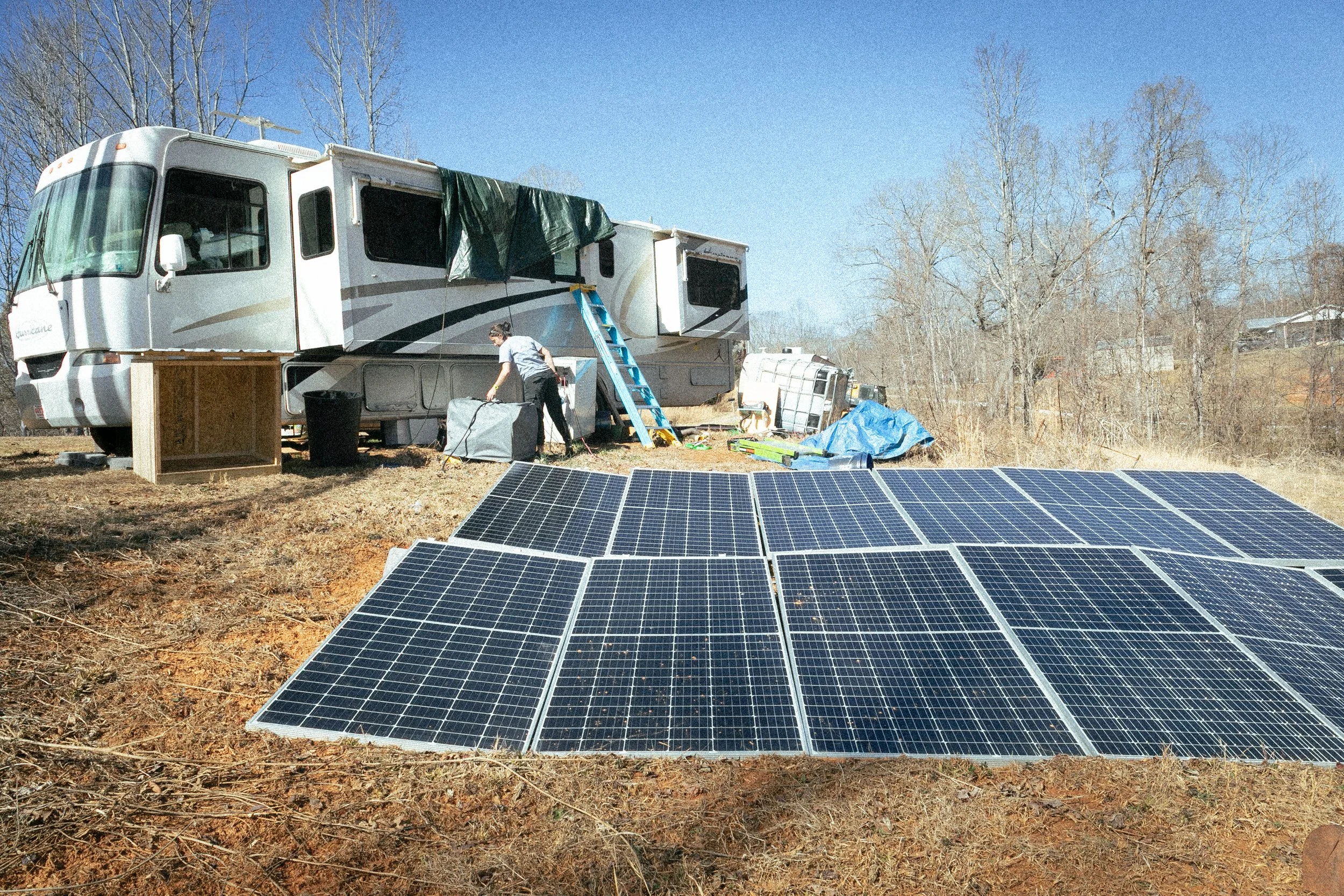
For some of the people we met after Helene, the emergency never really ended. Many survivors are still displaced, living in campers, RVs, and tiny homes with limited or no access to the utility grid. Through our Solar Energy Assistance Program, we install solar generators and supporting equipment for these families at no cost. We keep ownership of the equipment, like a lending library, so it can move on to the next family when they need it. So far, we’ve served 10 individuals and families, plus a community garden in Cherokee, North Carolina.
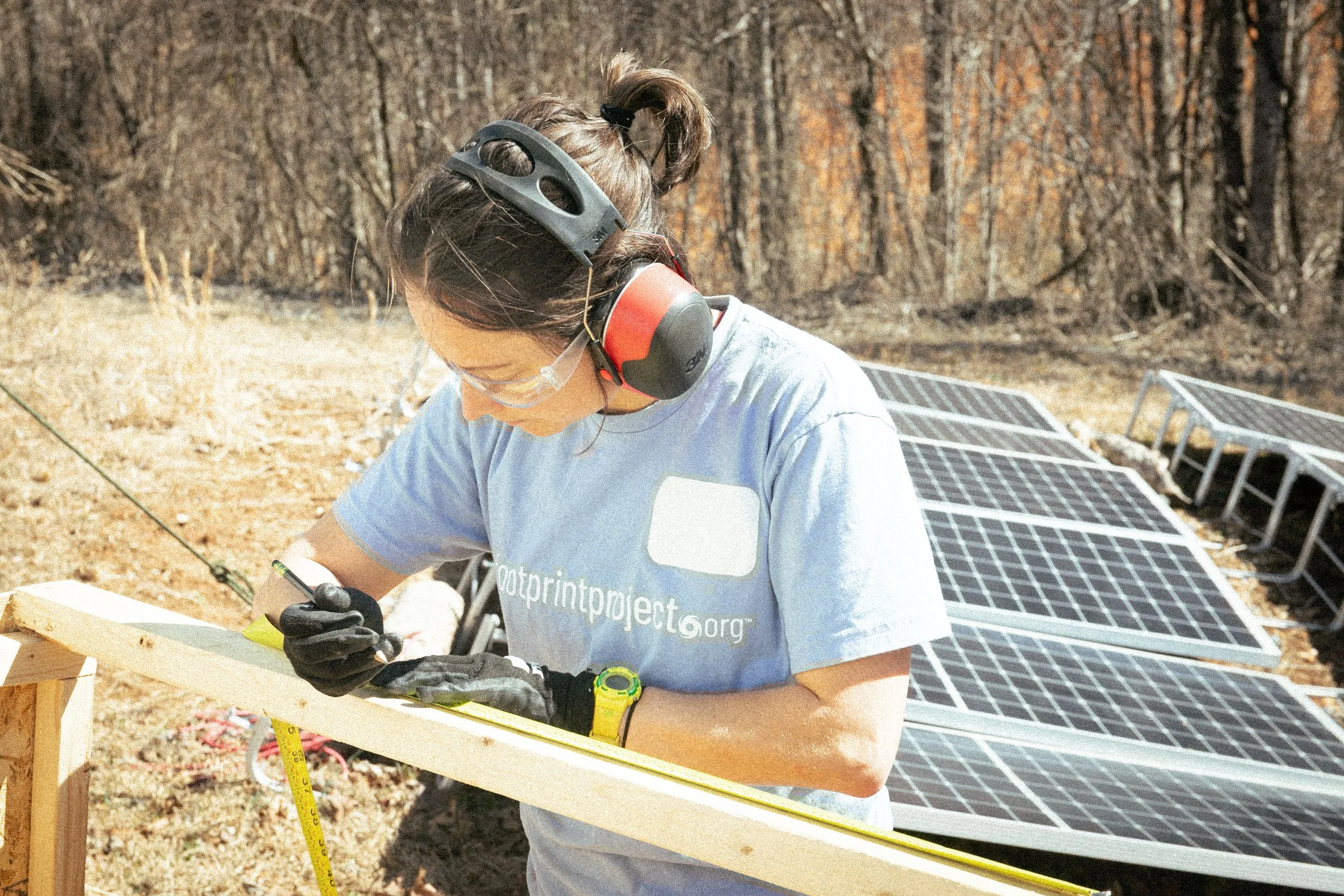
“I am a mom with three kids. We were affected by the hurricane and were given a donated camper that we are still living in to this day... Before we got the solar panels, we were spending right at $200 a week in gas for the generator! I was short on money every week just to try to make sure we had power and heat and air during the night...
We have gone from spending almost $200 a week in gas for the generator to, give or take with gas prices, about $50 a week... Not only are we saving on gas and money, but we don’t have to hear that annoying gas-powered generator for seven to eight hours a night. No getting up in the middle of the night to add more gas to keep the power going!
Catherine also helped us understand what uses a lot of power in our camper... Footprint Project has just been so helpful in so many ways, it’s unbelievable.”
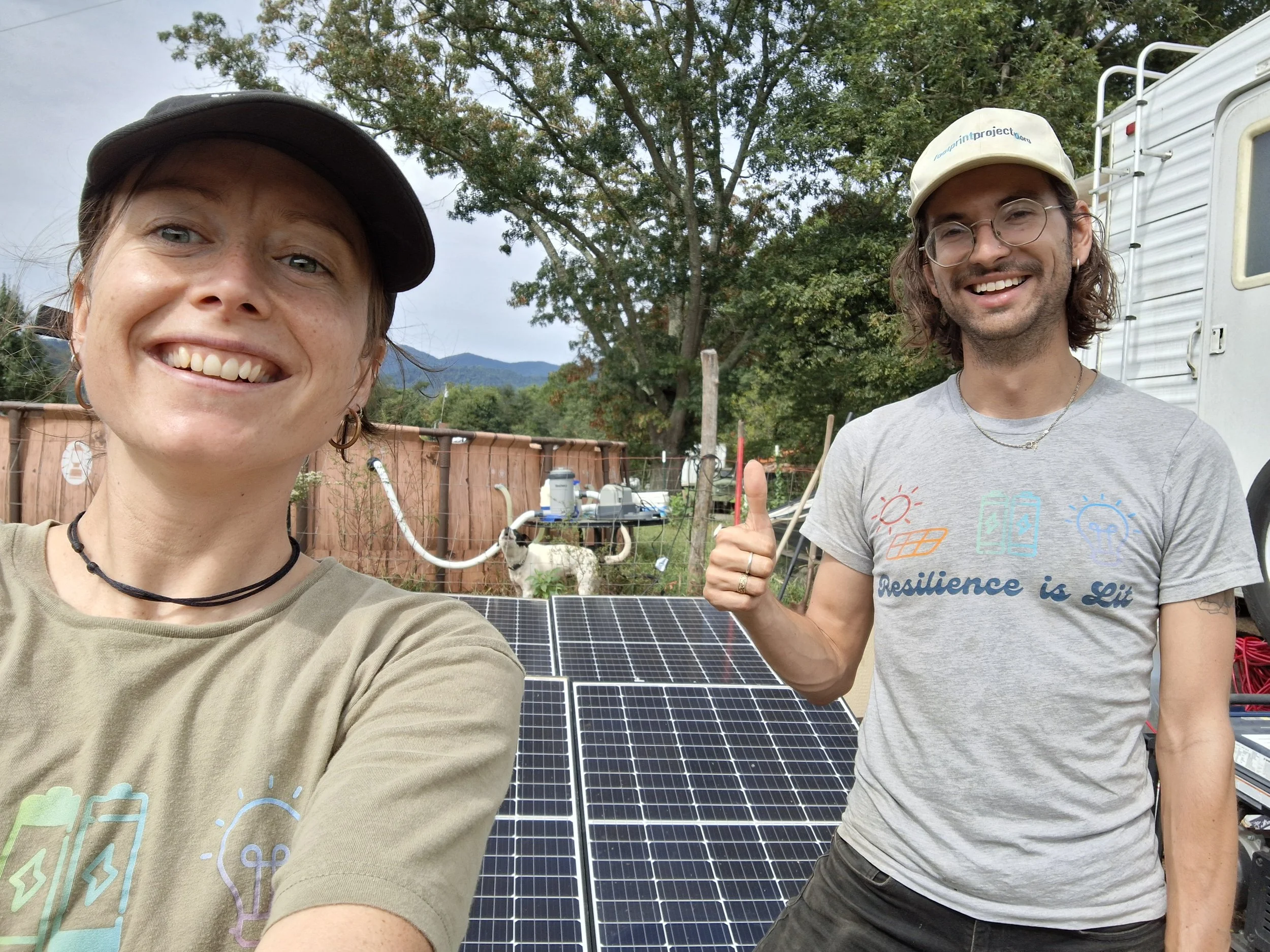
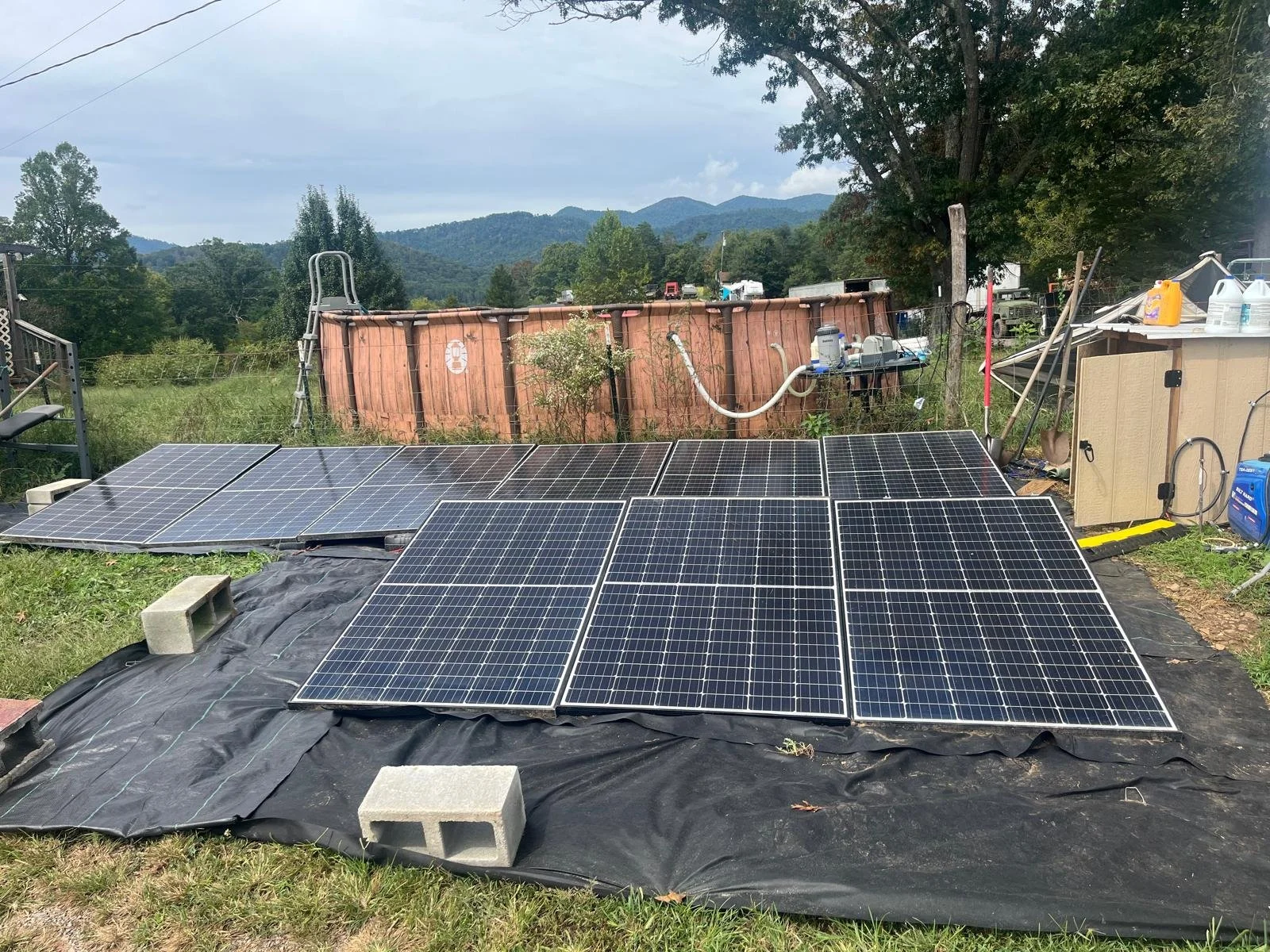
The impact adds up. Kassie’s story isn’t unusual. Families who had been relying on fossil-fuel generators are saving more than $500 a month on fuel, and some have dropped the generator entirely. That money can go toward getting back on their feet, or toward a security deposit on a rental with grid access. Less generator noise and pollution means a better quality of life today. And if another storm like Helene hits, these families will have resilient power through the crisis.
“The solar generator has given us so much more than backup power—it has given us peace of mind. Living on a farm with animals, losing power during severe storms can quickly become a serious concern. Knowing we can keep essential systems running and continue caring for our animals, even during an outage, gives us a sense of security and independence. It has truly made us feel more prepared and resilient when we need it most.”
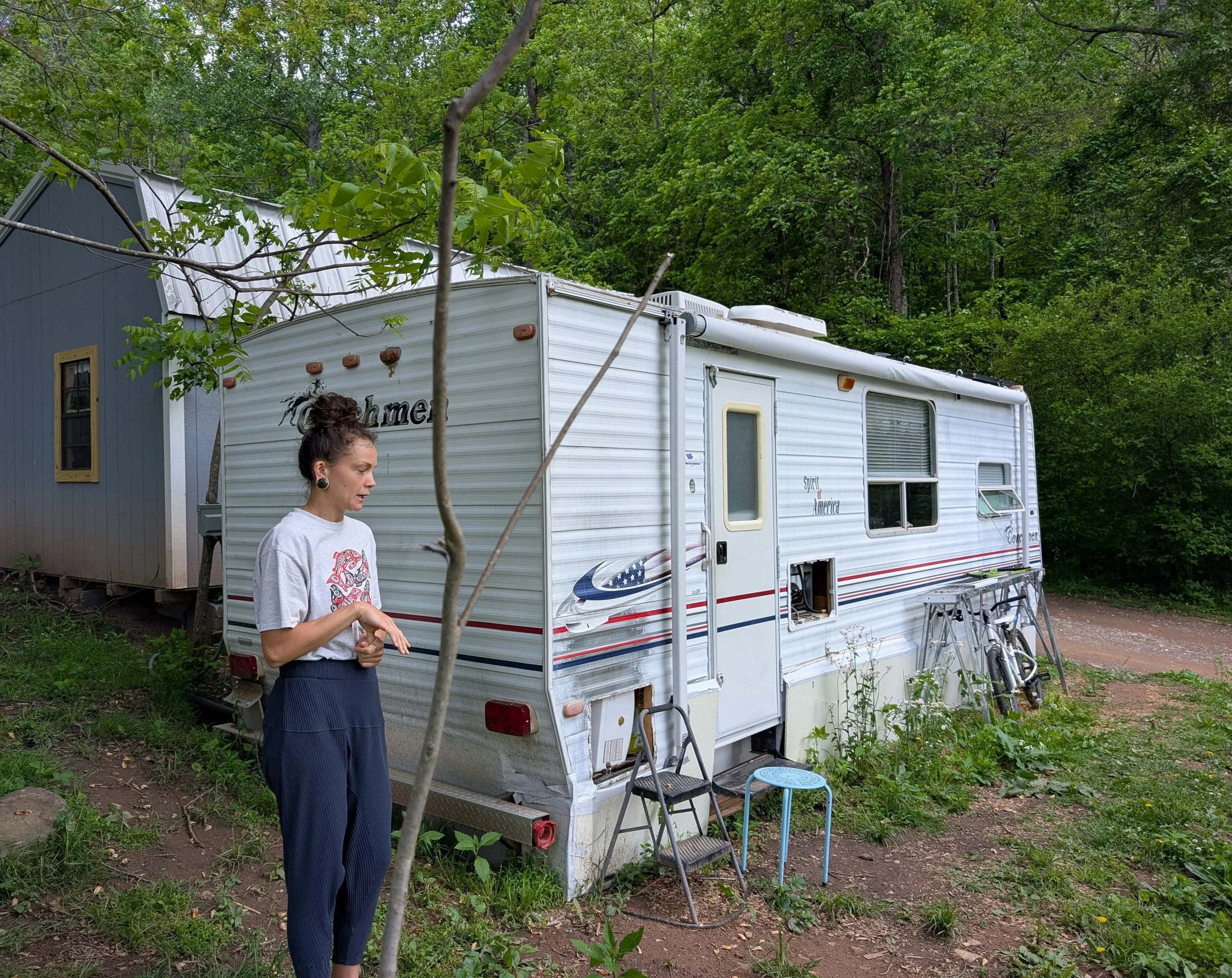
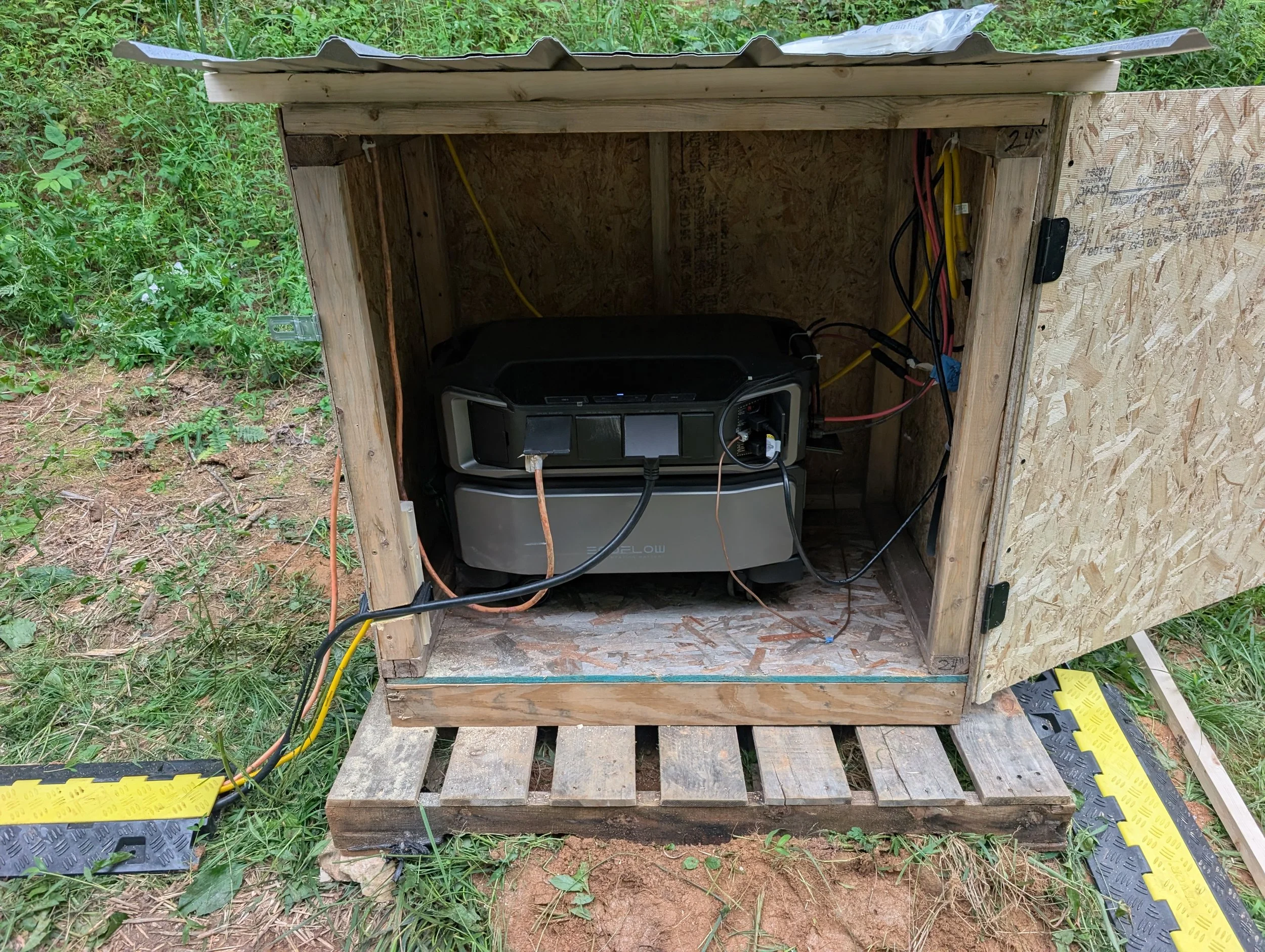
“Footprint Project and the support of the EcoFlow battery system has helped turn my shed into a tiny home. A place that’s given more stability and new beginnings for my son and I, post Helene. It’s been a journey with steps in the right direction. Towards understanding more about electricity, and renewable resource solutions. We are so thankful!”
This program exists because of support from the Center for Disaster Philanthropy (CDP). During the first winter after Helene, we learned the hard way that our solar equipment couldn’t handle North Carolina’s mountain cold. We needed batteries that could heat themselves. CDP’s support allowed us to get the right technology in place and fund the high-touch, labor-intensive staff time this work demands.
Resilience Fest
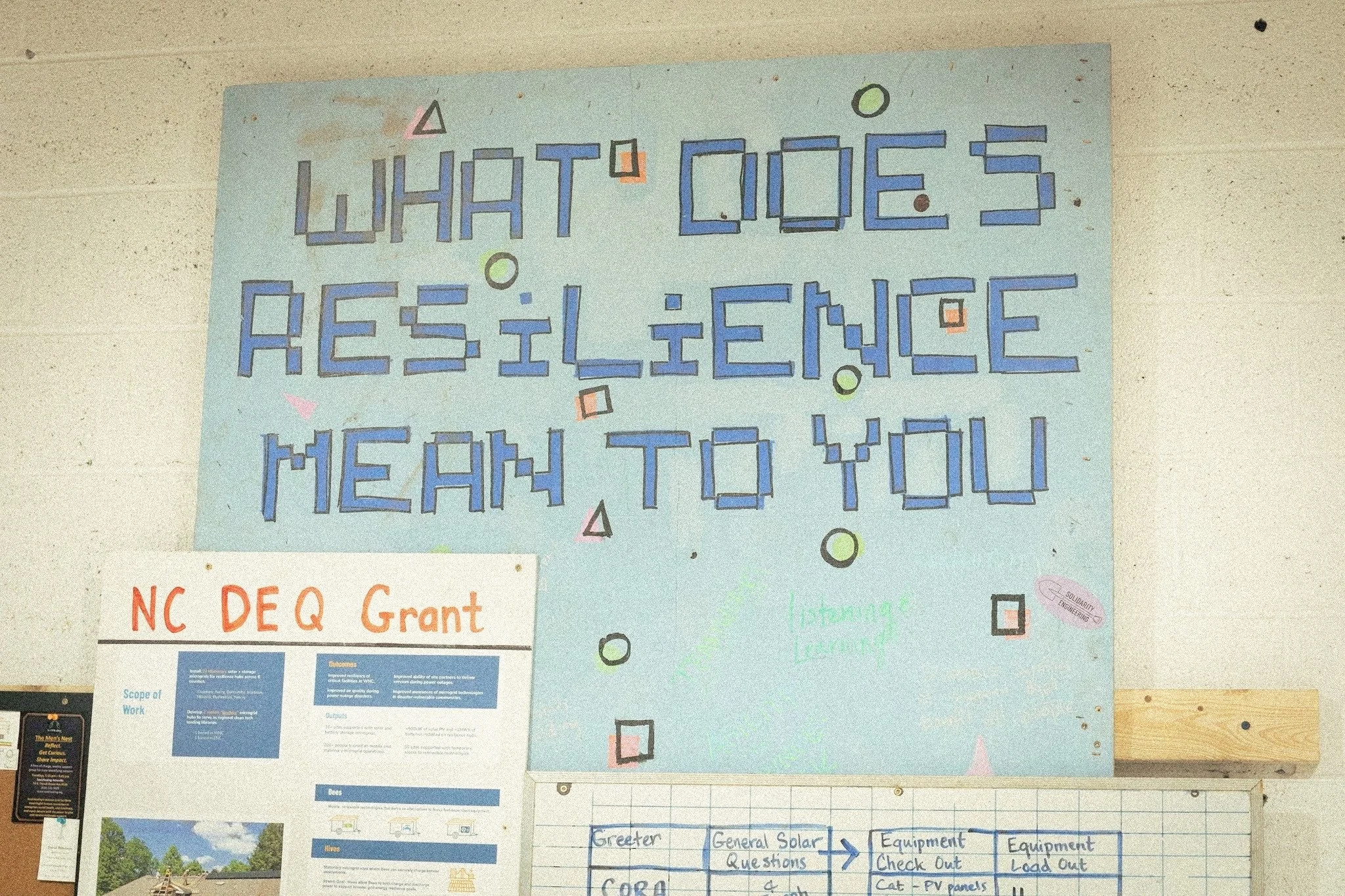
Many things came full circle for us in July 2025, when we gathered in Black Mountain for the first-ever Resilience Fest. For the first time, we came together with our partner network to learn, laugh, cry, dance, scheme, and dream. For many of us, it was the first time we’d seen each other since meeting through disaster, and for many of our partners, the first time they had ever met each other. Gathering so many co-practitioners to share ideas, empathy, and energy was nothing short of soulful.
Check out more stories from Resilience Fest 2025, and keep an eye out for round two in 2027 (dates to be announced soon).
Beehive Microgrid Program
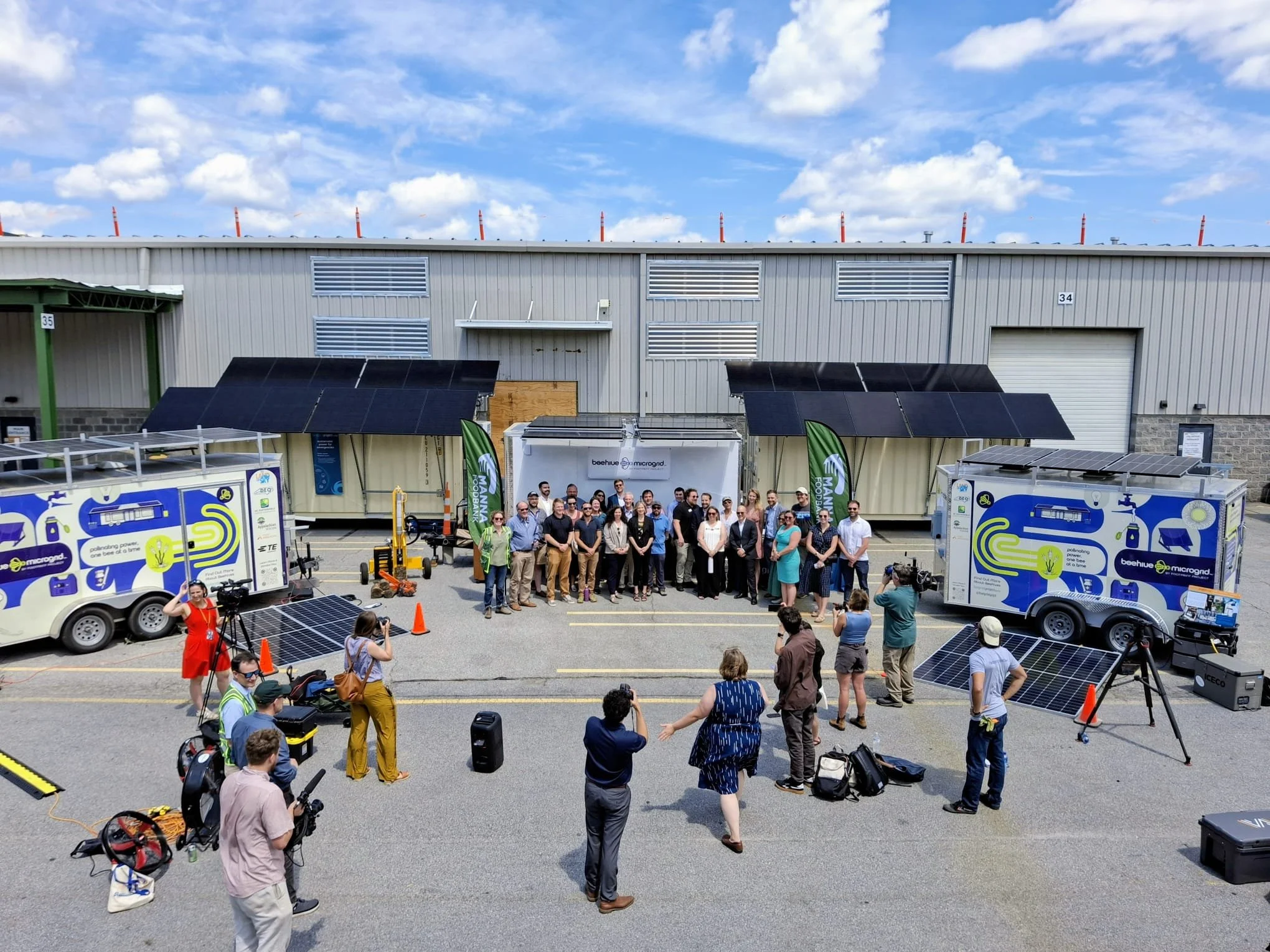
Everything we’ve learned in Western North Carolina, from the first solar generators we set up in shelters to the permanent hubs now powering fire stations, comes together in the Beehive Microgrid™.
A Beehive Microgrid is a dynamic system of rapidly deployable mobile energy assets, built for both disaster response and long-term resilience. It pairs a semi-permanent “Hive” with a fleet of “Bees”: Cooler Bees refrigerate food, medicine, and ice; Power Bees provide reliable off-grid electricity; and Water Bees handle water production, purification, and distribution.
In blue-sky mode, the Hive works as office space and a maintenance base while Bees power food banks, health services, and local operations. In grey-sky mode, Bees deploy to deliver electricity, refrigeration, and clean water, and the Hive itself becomes a community hub and charging station.
MANNA FoodBank, which lost its warehouse, food supplies, and cooling equipment in Helene, was among the first partners to receive a Cooler Bee.

Partners: NC Department of Environmental Quality, Land of Sky Regional Council, NC Sustainable Energy Association, and Invest Appalachia
Learn more: footprintproject.org/beehive-microgrid + DEQ and partners demonstrate mobile microgrid initiative in Western NC
In the Press
“Solar energy helped keep the lights on after Helene, but not how you might think” — WFAE, October 2024, on Footprint Project's early solar response in WNC
“After Helene, solar provided power to western NC, now they’re getting permanent systems” — WSOC-TV, 2025, on Broad River VFD and the Shumont Station microgrid
“After Helene, rural North Carolina turns to solar and battery hubs” — Canary Media, January 2026, on Double Island VFD
“Episode 129: The Role that Microgrids Played in Recovering from NC’s Costliest Natural Disaster” — The Squeaky Clean Energy Podcast, January 2026, with Will Heegaard and Sara Nichols, hosted by Matt Abele
“Building Community Resilience Hubs in Appalachia” — The Appalachian Voice, May 2026, on resilience hub projects across the region
“Building Brighter Communities: Expanding Clean Energy Access” — Sugar Hollow Solar, May 2026, on PODER Emma
“Solar-powered microgrids are ready to support communities in WNC” — The Appalachian Voice, June 2026, on the DEQ Round 1 sites
“Solar companies expand clean energy access in rural NC community” — Solar Power World, June 2026, on PODER Emma
“Post–Hurricane Helene, this community is getting creative with solar” — Canary Media, July 2026, on the Chispas trailer, El Porvenir, and PODER Emma
“‘First Line of Defense’” — The Appalachian Voice, September 2026, on Double Island and Broad River VFDs
Coming up
Trailer solarization with the United Methodist Committee on Relief (UMCOR)
Looking ahead
Two years on, Helene is still with us, in the families still living in campers, the roads and bridges still being rebuilt, and the storms we know are coming. But so are the people who showed up for each other in those first days, and the infrastructure we’ve built together since. As we move through the heart of another hurricane season, we’re carrying both: the unknowns and the connection, the heartbreak and the strength.
Wherever you may be reading this, we hope you stay safe this season, and thank you for being a part of this journey.
— The Footprint Project Team
