
The Fire Station That Didn't Go Dark: Inside Broad River Fire Department’s Solar Microgrids
Video Credit: NC-based Nelson Morlock, Melodic Sorbet Productions
Before, keeping Broad River Fire Department's Shumont Substation running during a power outage meant firing up loud, polluting gas generators that needed constant refueling. Now, a solar microgrid powers the station, and has created a resilience hub that's no longer entirely reliant on the main electrical grid, or gas generators. Community members can rest assured that they have a reliable place to go for clean water, emergency communications, and refuge when facing a natural disaster. Solar power serves as an integral tool to keep the fire department up and running.
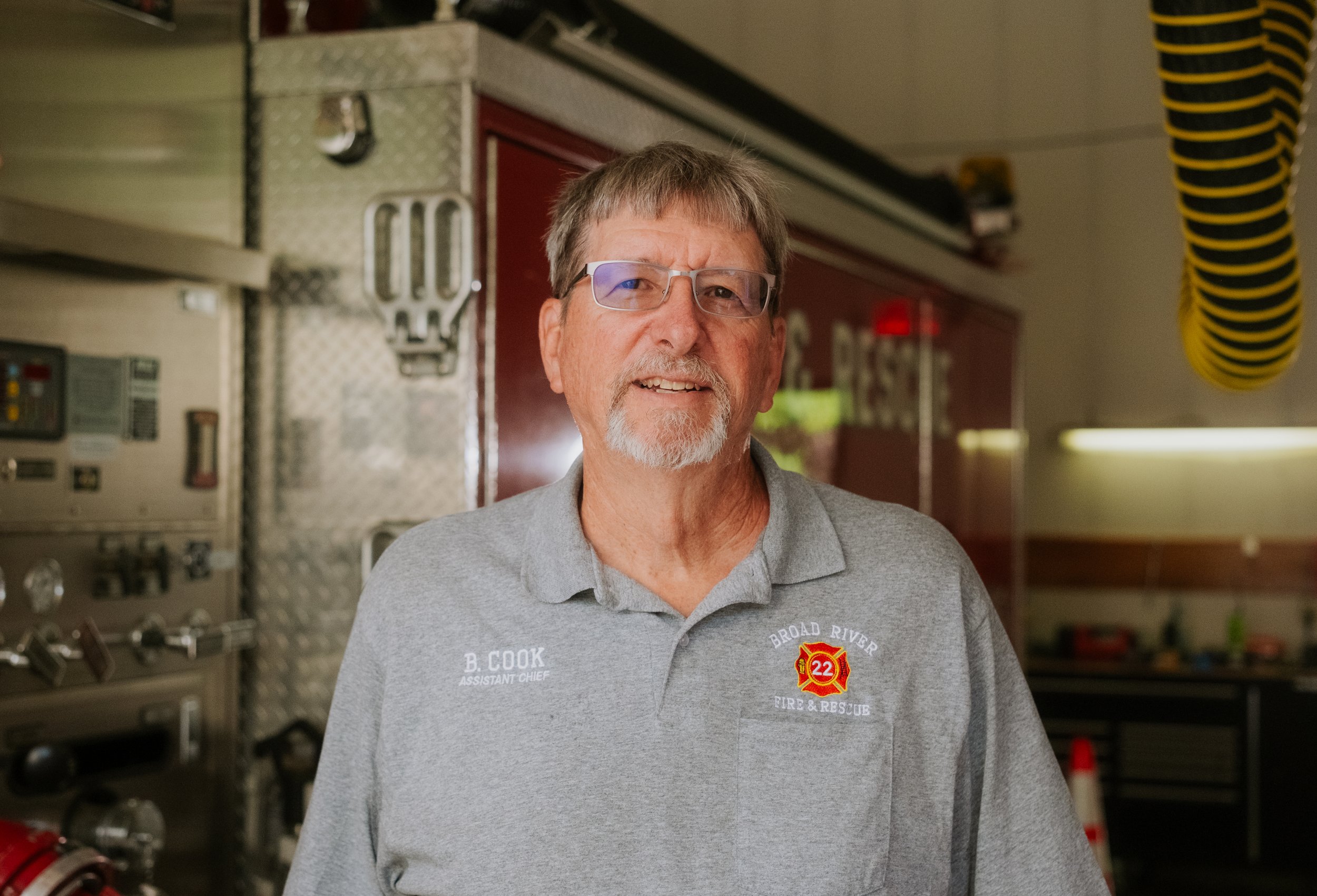
Bruce Cook, Assistant Fire Chief at the Broad River Fire Department, has lived in this part of Western North Carolina for more than 50 years. He took our film crew on a ride-along to show what changed when Footprint Project, the WNC Long Haul Recovery and Resilience Fund, Sundance Power Systems, and Fortress Power installed a permanent solar microgrid at the Shumont Substation.
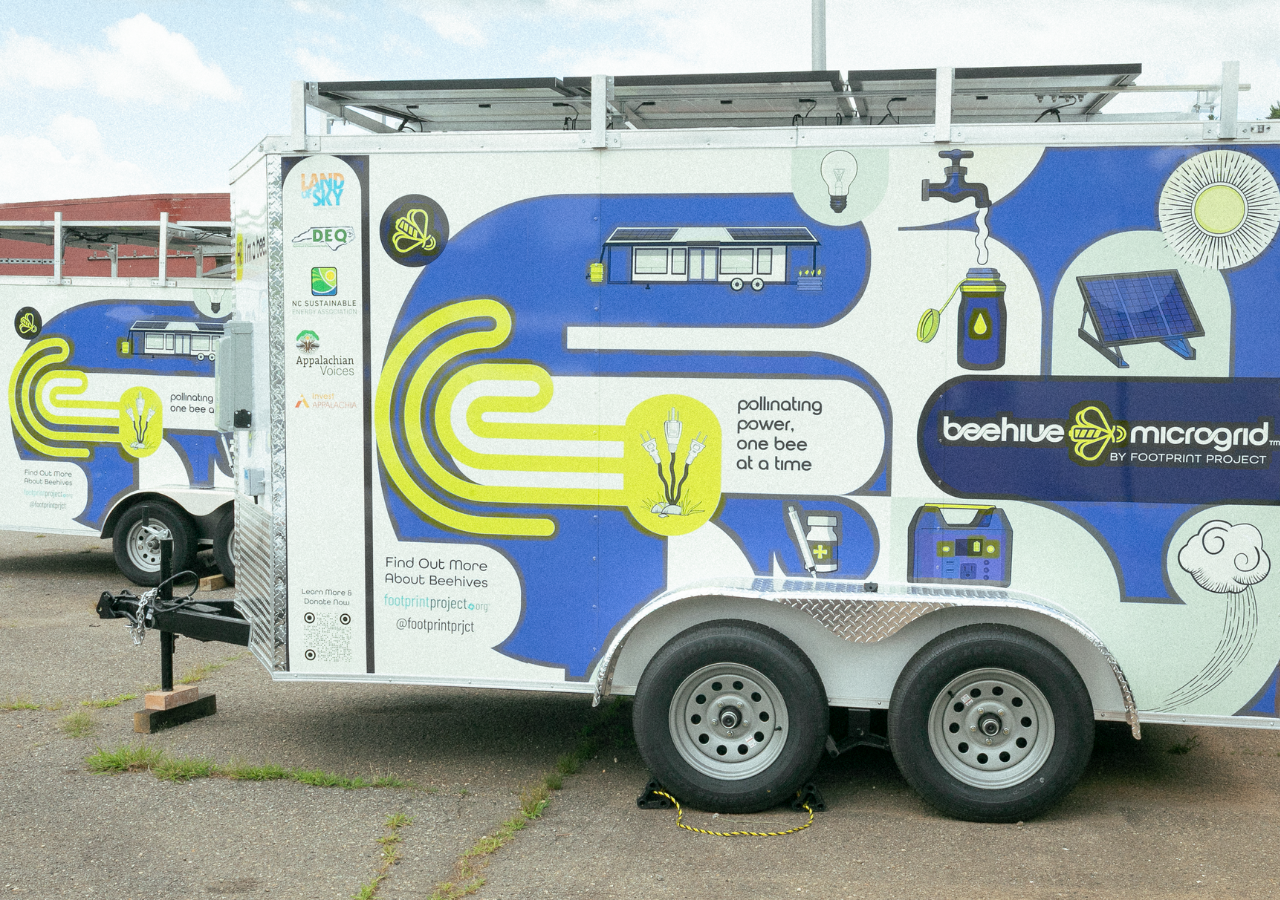
In collaboration with the Land of Sky Regional Council and the NC Department of Environmental Quality, we also donated a solar trailer (aka Power Bee)—through our Beehive Microgrid™ program—to support the fire department's first-response efforts and daily operations.
Building our Beehive
Broad River's Power Bee is one piece of a $5 million effort to bring solar power to up to 24 sites across six counties hit hard by Hurricane Helene — fire stations, libraries, and food banks, the places communities rely on most when the power goes out. This funding will also establish two mobile Beehive Microgrid™ hubs (aka Hives): one for Western, and one for Eastern North Carolina.
With a Little Help from Our Friends
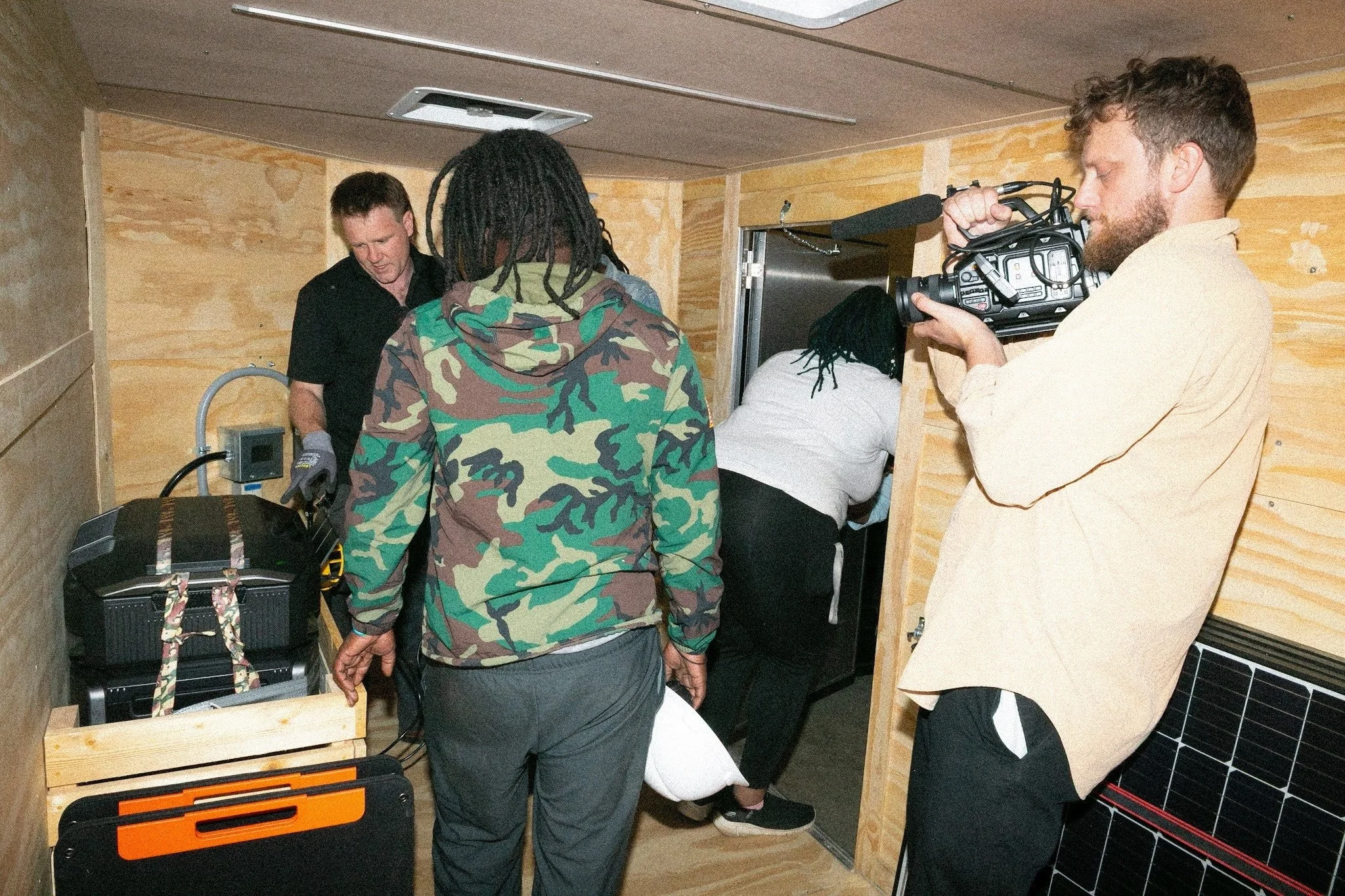
During an educational workshop we hosted for dream.org’s Green Reentry Incubator, we worked alongside members of the incubator to install solar panels on Broad River’s Power Bee. That solar trailer now lives permanently at one of Broad River's fire stations.
In the video, Footprint Project's Jamie Trowbridge explains how the technology works, while Cook shows what it means day to day — a fire station, and a community that doesn't go dark.


In the video, Footprint Project's Jamie Trowbridge explains how the technology works, while Cook shows what it means day to day — a fire station and a community that doesn't go dark.
Why This Matters: The Story Behind the Solar
The microgrid grew out of Hurricane Helene, which left about 14,000 people in remote Appalachian communities without power for more than two weeks, and the Asheville area without potable water for nearly two months.
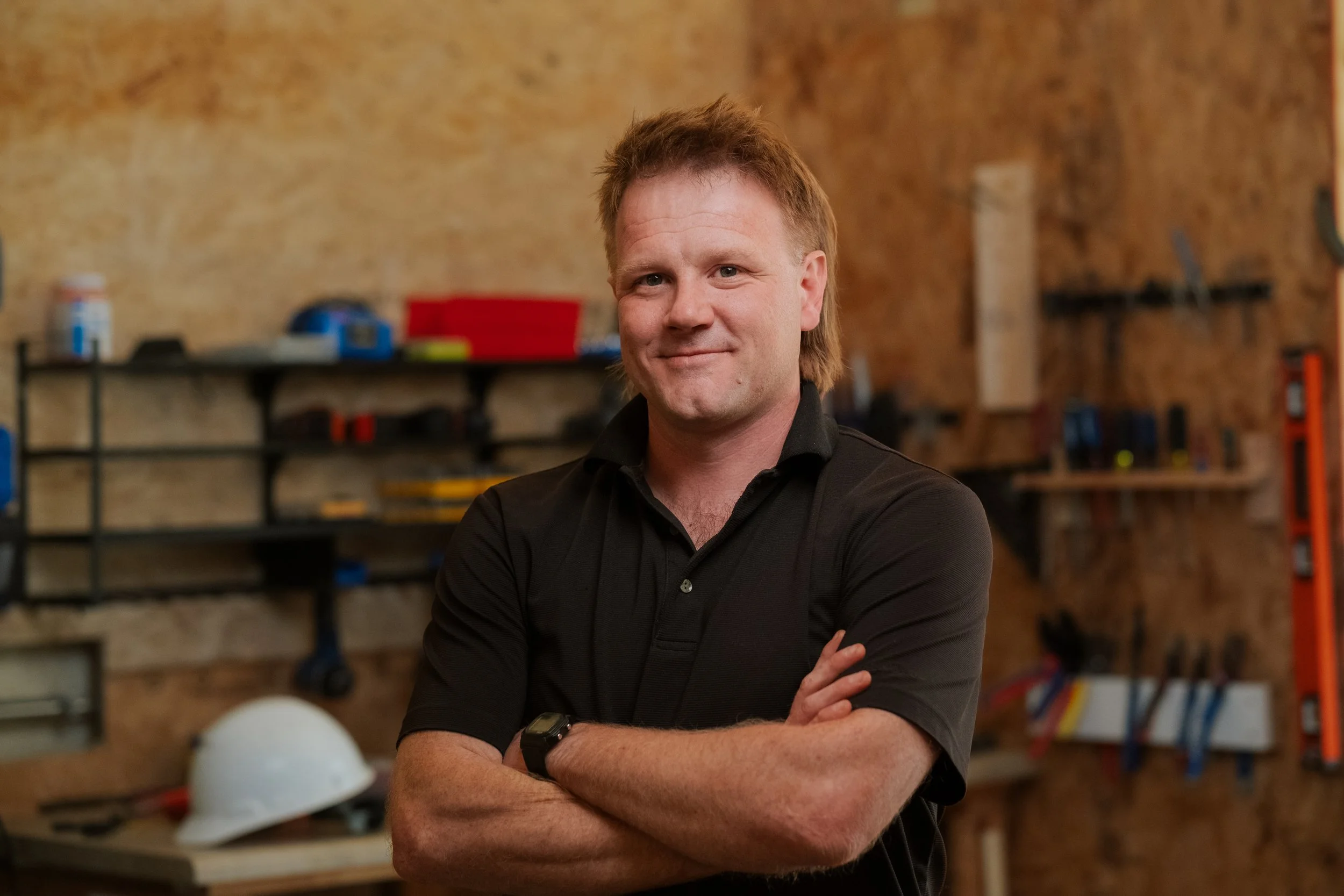
Jamie Trowbridge, a Footprint Project program manager, spends his career on energy resilience — how systems anticipate, absorb, and recover from disasters like Helene. He saw communities respond differently: in his own Asheville neighborhood, residents waited for officials to clear fallen trees; in Barnardsville, neighbors pooled resources and rebuilt a washed-out bridge with an excavator in two days.
He also saw the limits of gas generators firsthand at Haven on the Hill, a makeshift shelter in Waynesville where nearly 50 donated RVs ran generators around the clock. "Solar generators are clean, quiet, and don't require you to get fuel," Trowbridge said. "Doing solar instead for disaster response makes a lot of sense."
That thinking helped shape a $10.4 million investment from North Carolina's state energy office, funded through the Bipartisan Infrastructure Law, with about half going toward microgrids like Broad River's across the six Helene-affected counties by summer 2027.
"We want those places to have water, electricity, and we want people to know they can go there in a disaster and get their basic needs taken care of," Trowbridge said. "Anybody who's been through a disaster will tell you there is a lag between when the disaster strikes and when help starts rolling in."
Broad River Fire Department is what closing that lag looks like in practice.
Thank you to Resource Rural for interviewing Jamie Trowbridge for this story and for producing the video.
We would also like to give a huge shout-out to Nelson Morlock, the amazing filmmaker we worked with to bring this story to life!
Watch the full YouTube Video.