
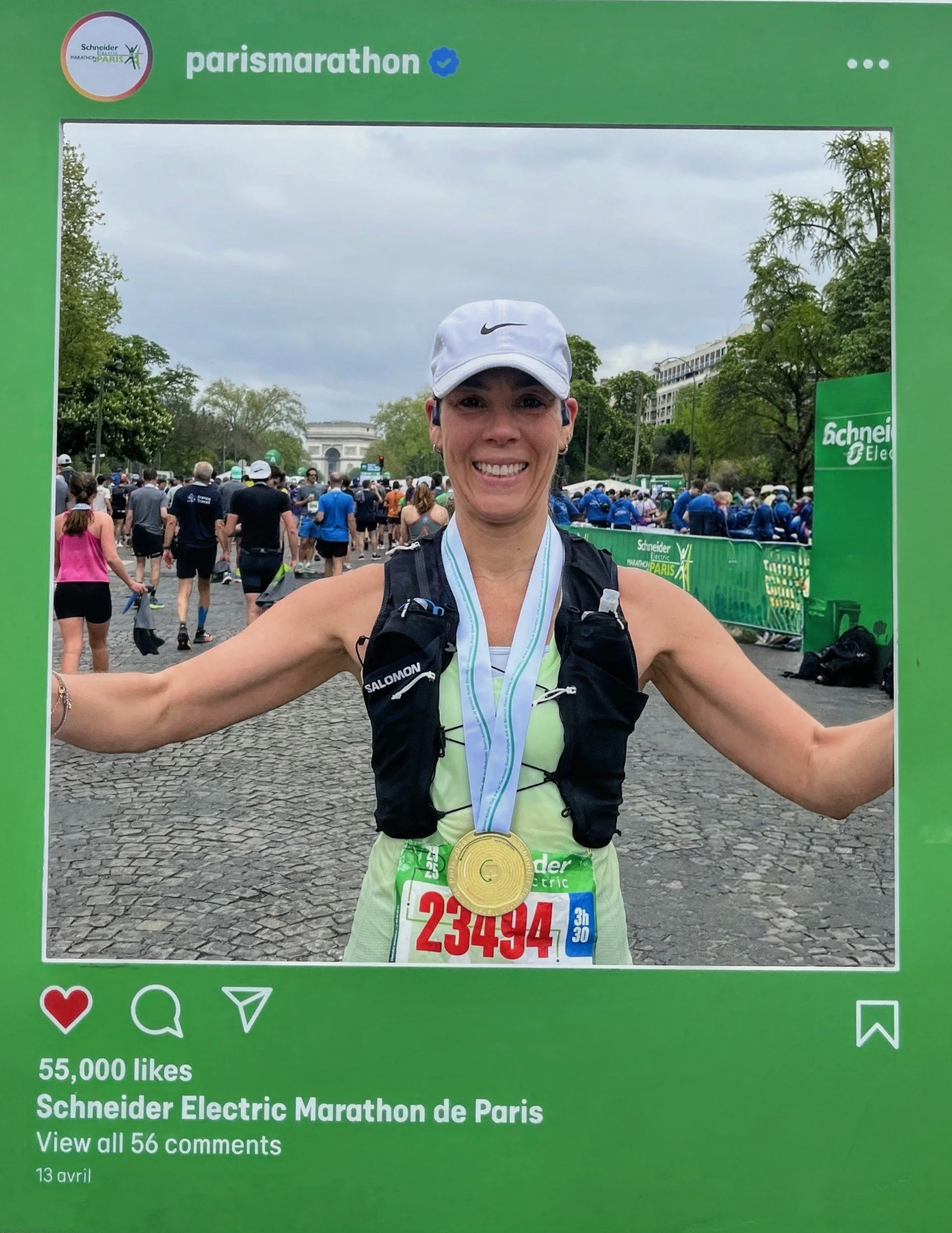
Miriam Doerfer has spent five years at Schneider Electric, where she leads product management and development for a portfolio of offers in the Power Products division. Originally from a small town outside Frankfurt, Germany, Miriam came to the U.S. on a three-year assignment in 2013 and never left. She now lives in South Carolina. This September, she ran the Blue Ridge Relay through the mountains of Western North Carolina for the sixth time. She will run the 2027 Boston Marathon as one of Schneider Electric's #SEGreenRunners, with a goal of raising $1,500 for us. We sat down with her to talk about a range of topics: driving a van full of supplies to Western North Carolina after Hurricane Helene, a playlist for every race, and what resilience looks like at work and on the road.
Support Miriam’s run: https://www.givengain.com/project/miriam-raising-funds-for-footprint-project-133027
INTERVIEWER
What do you do at Schneider Electric, and how long have you been there?
MIRIAM
I had my fifth anniversary in October. I'm in product development at Schneider, at the director level for product management and development, so I drive the roadmap for a full portfolio of offers. That means developing new offers and launching them to the market, and maintaining existing offers with smaller feature adaptations. It's very technical. Big gray boxes kind of deal. But think about your iPhone. Either it's the next-generation iPhone, or you have some feature adaptations in the current iPhone. That's kind of how I explain it to my kids. It's really fun.
The best research you can do is talk to customers. You understand where they're going and what pain points they face. You also watch the technology trends. For example, the [electrical systems are] AC today, and tomorrow it's going to be some mix with DC because of all the renewable energy coming in. Then you work with the development team on what's actually feasible, and you build a strategic offer roadmap for the next three to five years. You keep a close feedback loop with the customer: "This is what we heard, this is what we did. Is that what you wanted?" Those development cycles are long, so you don't want to go down a rabbit hole and find out it's not what the customer wanted.
INTERVIEWER
Does your work connect to clean energy, microgrids, or resilience?
MIRIAM
I'm not in the microgrid-specific area within Schneider, but sustainability is one of our core foundations. It's almost like a license to operate, along the lines of quality and safety. Because I'm in product development, sustainability comes in really early. You think about the impact your offer has, not just during development, but mostly during its life cycle, and also after. That means the type of material and the CO2. That's more and more important for customers, because they need to drive [down] their CO2 emissions. Those products are in the industry for 10, 20, 30 years, so it's critical to make the right choices in the development phase.
INTERVIEWER
Have you ever been through a disaster or power outage yourself, or seen one up close?
MIRIAM
I grew up in Germany, and grid resiliency is not so much of a topic there. You get the typical outage, maybe a couple of hours here or there. Then I moved to the U.S. in my 30s, and suddenly you have to shelter in a room in your house with no windows. This was all new to me. I was freaking out at the beginning when there were hurricane announcements.
INTERVIEWER
What made you sign up to run for Footprint Project?
MIRIAM
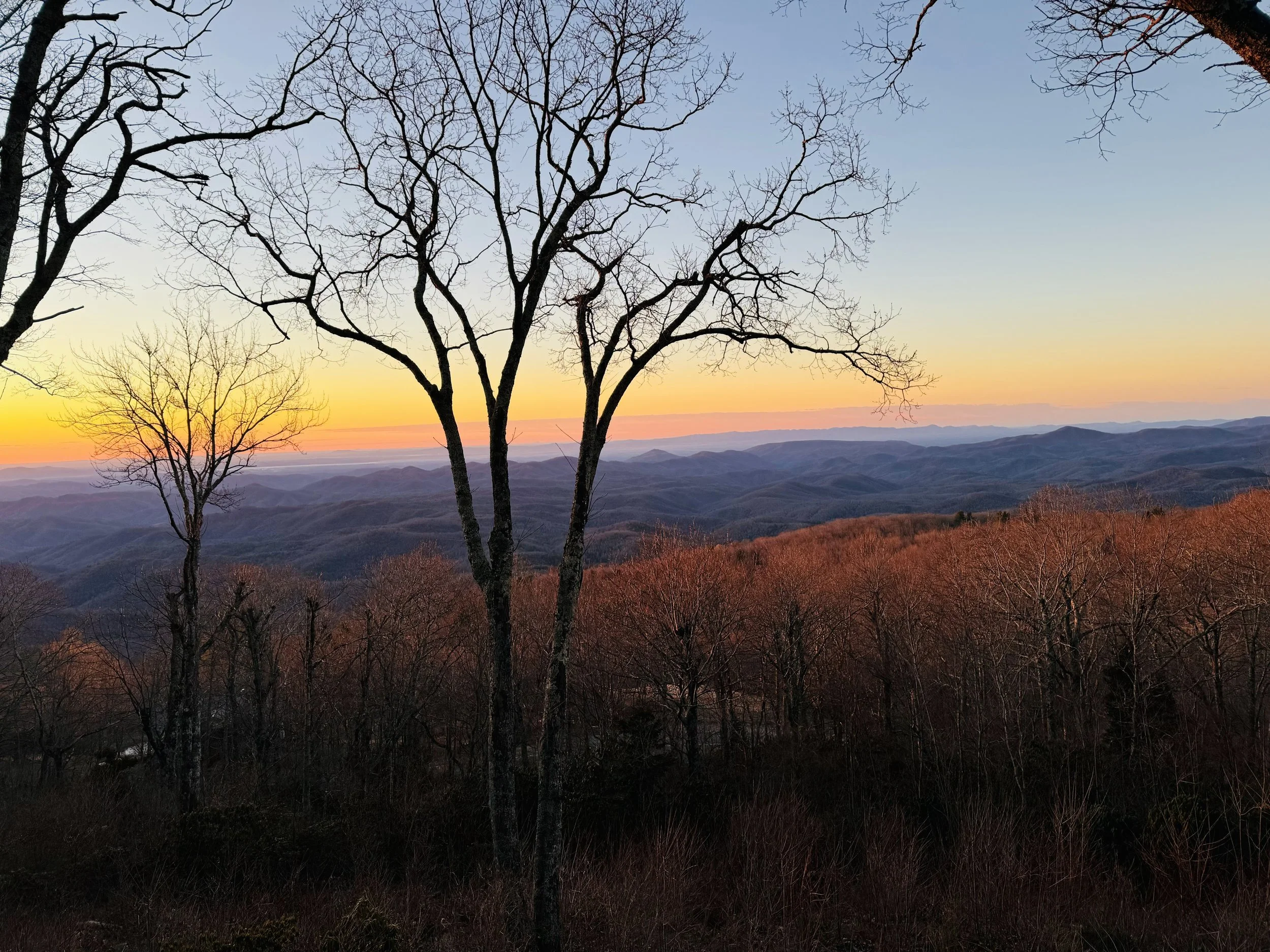
I have a passion for sustainability in a broader sense in my life. And I've always been a runner. One of the fun races I do every year is the Blue Ridge Relay, which is about 200 miles through the Blue Ridge Mountains and ends in Asheville. After Hurricane Helene, I was so impressed by the work you all do. This September was my sixth time running the relay, and you can still see the aftermath. It's so sad.
For me, it was the perfect combination: my passion for running, how you help a region I love so much and visit every year, and Schneider Electric, because of the microgrids and everything. It supports all of my passions.
INTERVIEWER
Have you volunteered with Footprint Project or seen our equipment in person?
MIRIAM
I've not volunteered yet, so this is the first time I'm supporting from a volunteering or fundraising standpoint. But I did see the equipment in person [at Footprint Project's Asheville hub] after Hurricane Helene.
INTERVIEWER
What was it like seeing it after Helene?
MIRIAM
It was very sad to go back there and see the disaster, and the basic, fundamental needs people had and were asking for. Sometimes you'd bring supplies and you couldn't get to the people, because there was no path. I remember people hiking the last mile with backpacks to bring supplies to people in need. That's where the equipment is so easy to set up. It brings hope to those areas and gives back a little bit of those fundamental needs.
INTERVIEWER
You and your husband ran supply trips yourselves. What did that look like?
MIRIAM
We collected supplies in our garage for a couple of weeks at a time. Then we'd pack it all up, rent a van, fill it to the roof, and drive up there. I went up multiple times. We thought about medical needs, baby food, everything.
INTERVIEWER
Is this your first Boston, or your first marathon? What's your running background?
MIRIAM
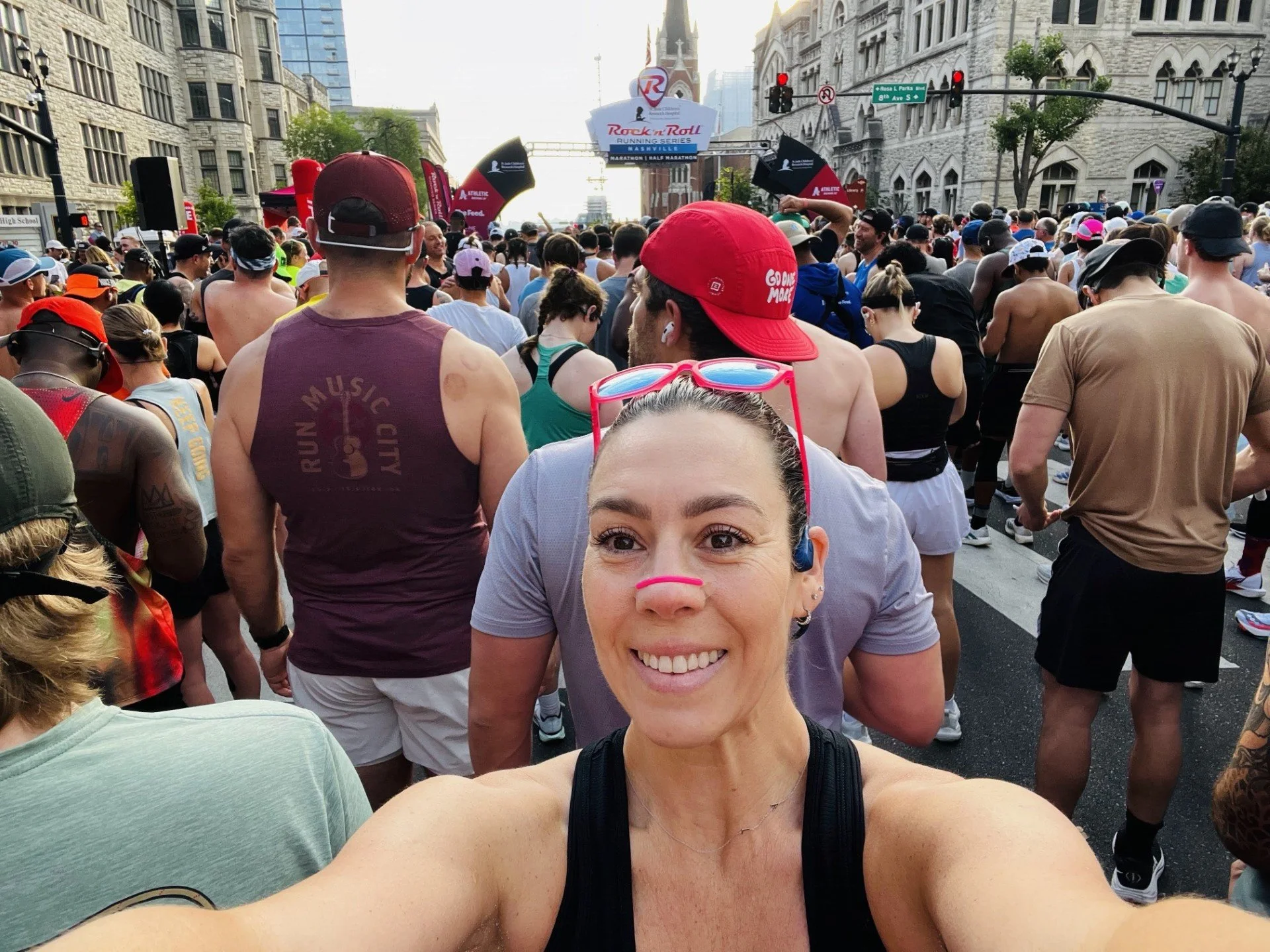
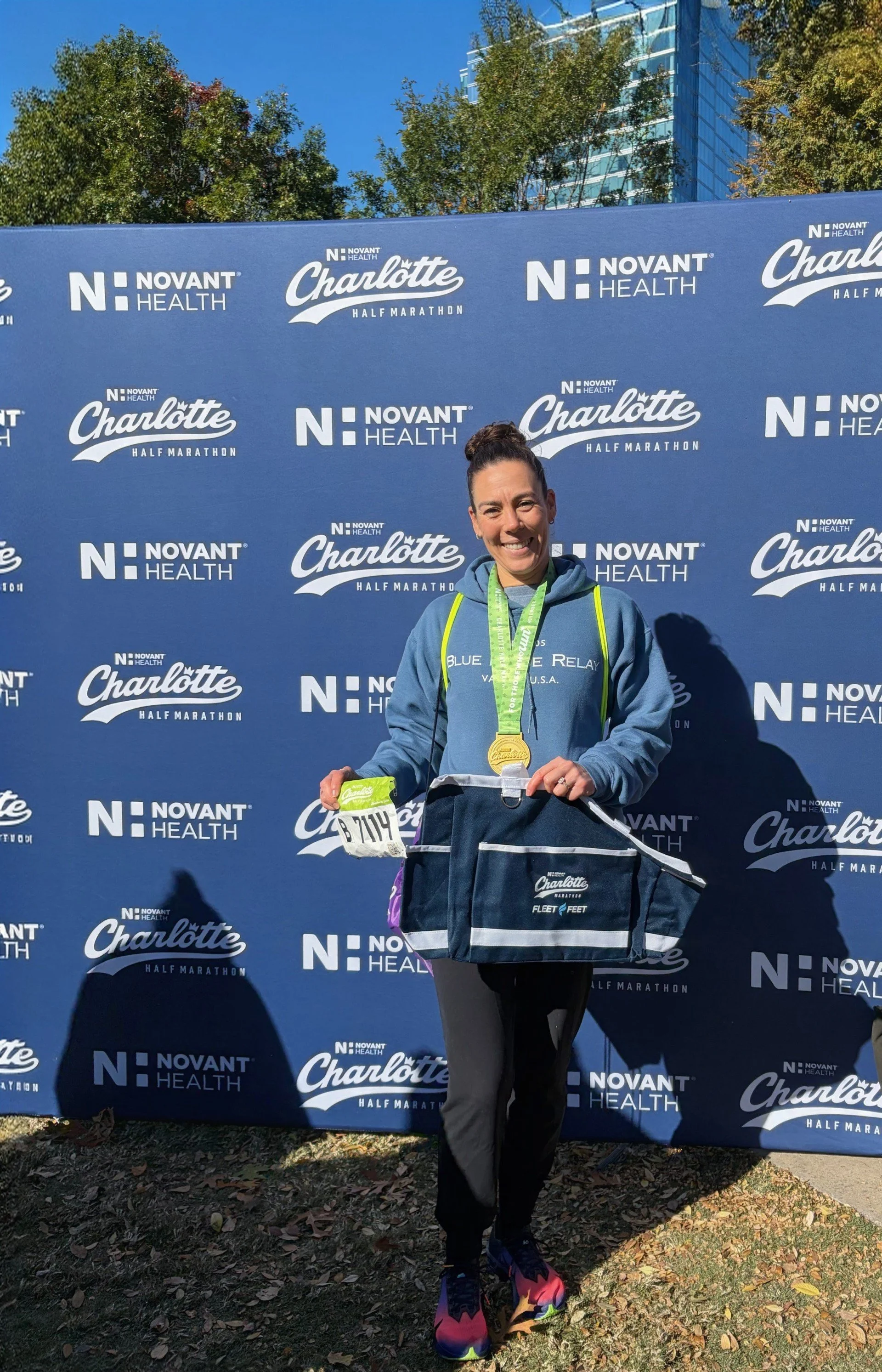
It's my first Boston Marathon, but I've done multiple marathons and ultramarathons. I ran Paris last year, and I just ran the Charlotte half. I actually qualified for Boston, but I didn't make the cut. Then I got drawn from Schneider, which was really cool. Boston is the highlight for every runner, so I'm beyond excited.
INTERVIEWER
How are you approaching training, and what's the hardest part so far?
MIRIAM
I've not started. That's the hardest part!
I'll do a 12-week program starting in mid-January. I train in the morning so I get it out of the way. The tough part is when the weeks really ramp up in mileage. I have two kids, ages 8 and 11, and they have a lot of activities and tournaments on the weekends. A 20-mile training run is almost a half-day activity.
INTERVIEWER
What are you most nervous about, and most excited about?
MIRIAM
There are so many things that can go wrong on race day. There's the weather. Boston can be all of it: a warm day or a super cold day. And there's nutrition. You know the product and what you're taking in, but you don't know how you'll feel that day.
I'm excited about the crowd, the people, and the cheering. When I ran Paris last year, I thought the best part was the random people you don't know who are all in and cheering for you. That vibe is super contagious.
INTERVIEWER
Do you have a race-day ritual, a go-to playlist, or a mantra?
MIRIAM
I always create a playlist and name it after the race, so there's going to be a Boston 2027 playlist for sure. It's a mix of all kinds of things, but it's upbeat, to help me push through. I always eat about two hours before the race.
Maybe I'm a fashionista runner, but I love the full matching outfit. I've already seen our shirts, and I'm already looking for green shoes to match. Afterwards, it's about having fun. Have a little bubbly, enjoy the day, and wear the medal proudly.
INTERVIEWER
Finish this sentence: "I'm running for Footprint Project because…"
MIRIAM
I'm running for Footprint Project because they combine a lot of my passions: supporting communities, sustainability, and running.
INTERVIEWER
What does "resilience" mean to you?
MIRIAM
You can draw a lot of parallels between work life and running life. Resilience means picking it back up. If things don't go as expected and you have a setback, how can you turn it around, learn from it, and grow? Then you take what you learned and apply it in a different way. That goes for work, and it goes for running too.
INTERVIEWER
What's your fundraising goal, and how are you planning to reach it?
MIRIAM
My goal is $1,500. I want to do it in a fun way, with a few milestones. I just ran the Charlotte half, so I posted to our Power Products team in North America: "Hey, Power Products family, I'm halfway there. Who's in? Would you donate $13?" I don't want people to think they need to give a ton. Every amount matters.
I'm also going back to Germany over the holidays, and a lot of my family don't know how to use the donation page, so I'll show them. I try to make it fun.
INTERVIEWER
Finish this sentence: "When I cross the finish line, I'll be thinking about…"
MIRIAM
The people who supported me along the way. I'm lucky to live in a community with a lot of great people I train with. But more so my family, because there are a lot of sacrifices during training and a lot of time missed. So I'll be thinking about the support I get from my kids and my husband.
Miriam's connection to Footprint Project started in the mountains of Western North Carolina. After Hurricane Helene, she and her husband filled rented vans with supplies and drove them up into the mountains she runs through every September. In April, she's bringing that same commitment to Boston. We're grateful to her and to Schneider Electric for carrying Footprint Project's mission to the 2027 Boston Marathon. You can support Miriam's run on her donation page.
